
Media: US and Israel consider a land blockade of Iran
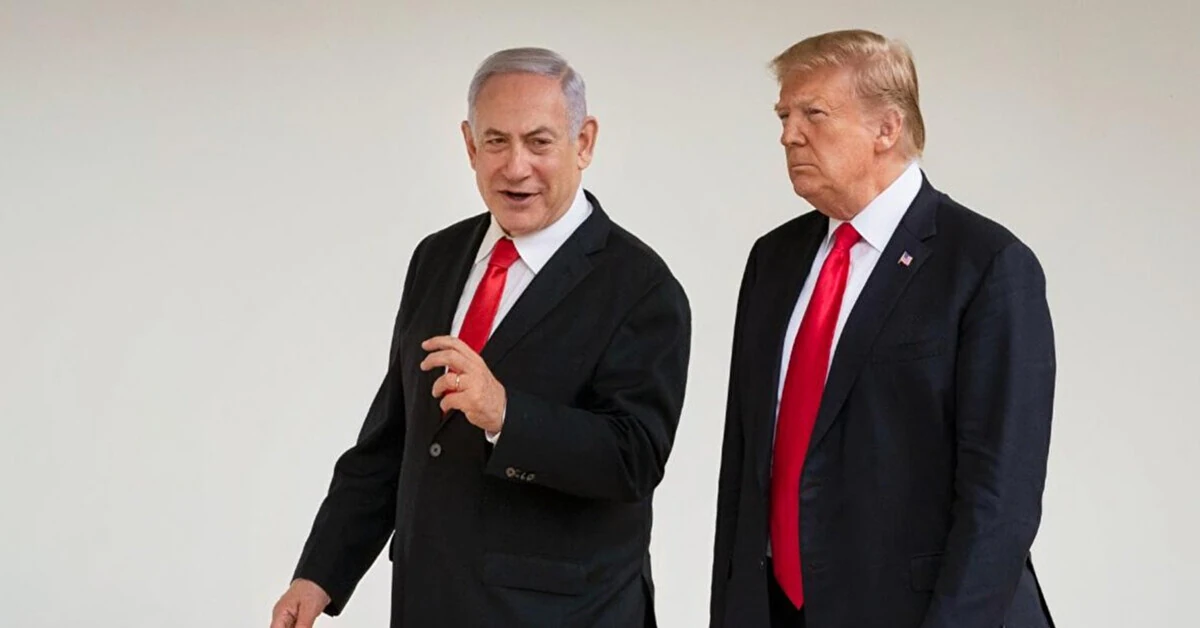
The United States and Israel are considering the possibility of restricting Iran's overland trade to increase economic pressure on Tehran. This option was discussed by US President Donald Trump and Israeli Prime Minister Benjamin Netanyahu during their meeting at the White House, The Telegraph reports, citing a senior Israeli official.
According to the publication, the parties are looking for new ways to influence Iran through both military and non-military means. A final decision on the land blockade has not yet been reached: it is being considered as one of the possible scenarios, along with negotiations, the continuation of a naval blockade and economic pressure, as well as the possibility of delivering new large-scale strikes.
The proposed measure aims to restrict the transport of goods across Iran's land borders as much as possible. To achieve this, neighboring states would have to close or significantly restrict border crossings, not allowing trucks and other commercial shipments to pass.
Iran borders Turkey, Iraq, Pakistan, Afghanistan, Turkmenistan, Armenia, and Azerbaijan. Routes through these countries allow Tehran to import goods and sustain exports after restrictions on maritime transport were imposed.
Implementing such a plan would require the cooperation of the majority of Iran's neighbors. At the same time, some of them maintain close trade relations with Tehran or seek to avoid involvement in the conflict. Pakistan, for example, previously opened additional overland routes to deliver to Iran cargoes that were stuck at ports due to the naval blockade.
American and Israeli officials expect that blocking overland routes will enhance the effect of the current naval blockade. The United States reimposed it in mid-July after a new escalation around the Strait of Hormuz. It applies to Iranian ports, oil terminals, and Iran-linked marine shipping, while the transit of ships to other states formally should not be restricted.
One of The Telegraph's sources noted that restricting overland supplies could hit Iran's economy harder, depriving the country of the ability to compensate for losses from the naval blockade. A scenario is under discussion under which it would not be necessary to introduce foreign troops onto Iranian territory.
However, the complete overland isolation of Iran will be extremely difficult. The country has extensive borders, a multitude of official crossings, and informal routes. Moreover, the blockade could affect not only state revenues and military supplies but also the import of food, medicines, and other civilian goods.
Discussions of the new scenario are taking place against the backdrop of the ongoing standoff over the Strait of Hormuz. Washington accuses Tehran of attacks on commercial vessels and is trying to maintain freedom of navigation along one of the world's most important energy routes. Iran, in turn, calls the American blockade an act of aggression and threatens to restrict the export of energy resources from the region.
Netanyahu previously stated that Iran was the main topic of his talks with Trump. Media reports indicate that the Israeli side is in favor of maintaining maximum pressure, but does not rule out a diplomatic agreement. At the same time, the choice of further strategy remains with the American president.
The publication of information about the land blockade does not mean the start of its implementation. So far, it is one of the options being considered by Washington and Tel Aviv to increase pressure on Iran.
Based on materials from: The Telegraph, Axios
