
"We Don't Count on the State": Business Shares Expectations of the Government After Russian Attacks
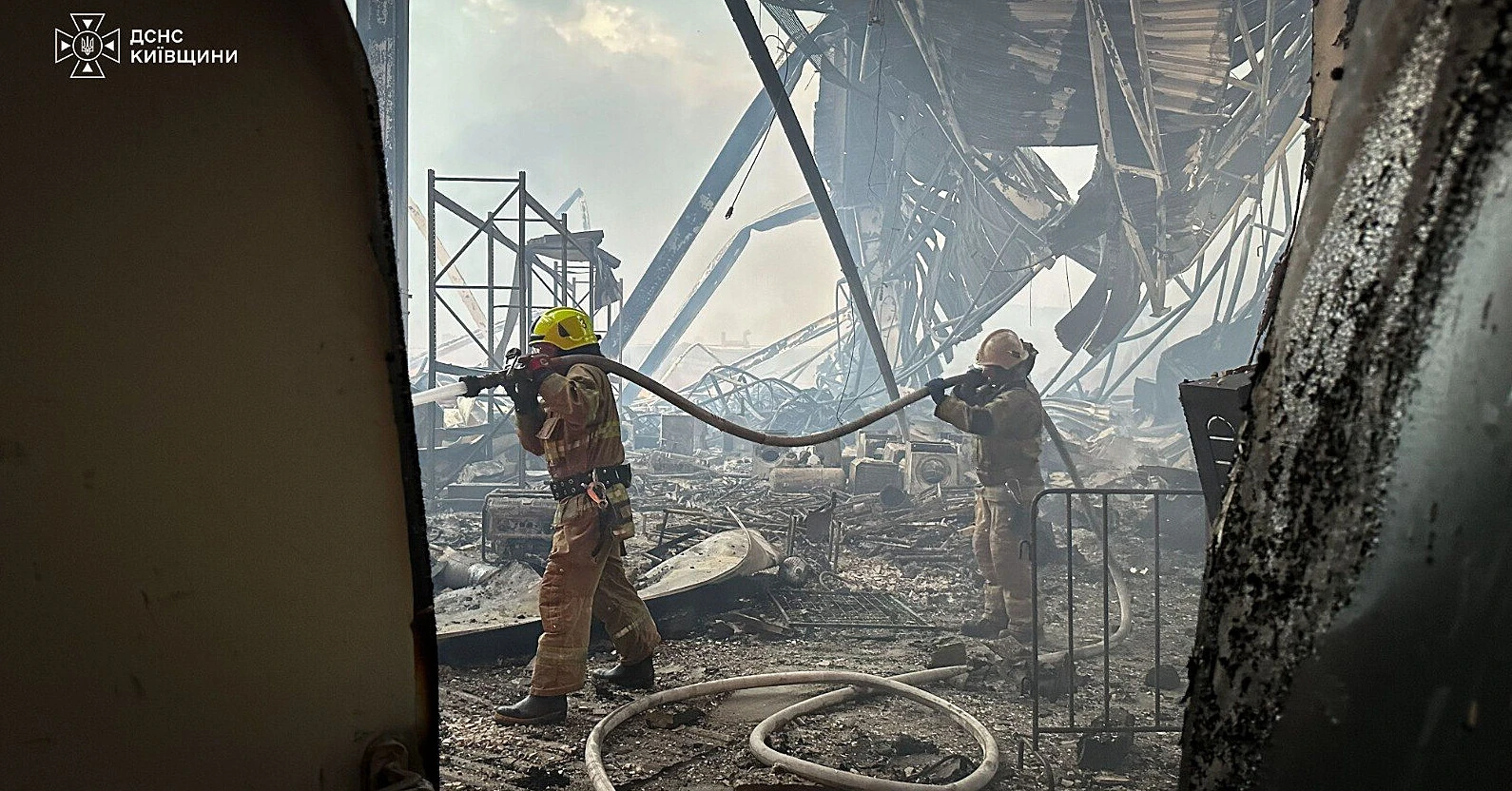
Companies that have suffered from Russian attacks do not expect the state to directly compensate multi-billion dollar losses. Instead, businesses are asking for the creation of mechanisms that will allow them to resume operations independently: affordable loans, comprehensive war risk insurance, tax breaks, and less regulatory pressure.
In early August, Russian strikes damaged warehouses, logistics centers, and production facilities of Rozetka, Fozzy Group, Novus, Epicenter, Nova Poshta, Intertop, Puma, Bosch, Biosphere, Ranok Publishing House, and other companies. Rozetka provisionally estimates direct losses at several billion hryvnias.
After the attacks, Prime Minister Sergiy Koretsky held an urgent meeting with business representatives. The government proposed providing state-owned premises to companies to distribute their warehouses, simplify international logistics, expand war risk insurance, and engage banks in preferential lending for recovery.
Business Expects Concrete Solutions
Nova Poshta has not yet assessed the results of the meeting with the government. The company emphasizes that the announced initiatives are advisory in nature and require formulation as concrete decisions and projects.
Rozetka co-founder Vladyslav Chechotkin also heard little concrete detail at the meeting but acknowledged that a comprehensive aid package cannot be prepared in a single day. The company does not count on direct compensation but does expect accessible tools for recovery.
Epicenter views the prospects for state support skeptically. The company points to experiences from previous years of full-scale war, during which the affected businesses mostly had to recover using their own resources.
Meanwhile, Andriy Zdesenko, founder of the Biosphere corporation, called the meeting with the prime minister productive. According to him, the government is now forming a list of the needs of large businesses, and specific solutions may appear within a week. Enterprises were also advised to prepare several work scenarios and to distribute their assets.
State Warehouses May Not Meet Companies' Needs
Business supports the idea of distributing inventory, but doubts that the state has enough modern warehouse space. The destroyed facilities of many companies were automated complexes with ramps, special equipment, and streamlined logistics processes.
Rental rates, locations, and the technical condition of state-owned properties also remain unknown. Even with available premises, they may be unsuitable for specific logistics routes.
Some industries cannot quickly spread goods across multiple warehouses due to regulatory requirements. For example, facilities with excisable goods must set up mandatory video surveillance systems, which increases costs.
Storing some goods in Poland, Romania, or Moldova is viewed by businesses as a more promising solution. However, for this, the state needs to simplify customs procedures so companies can import small batches of products and equipment rapidly.
Current Insurance is Insufficient for Big Business
War risk insurance remains expensive: the cost of a policy can be 6-10% of the value of the property. Due to difficulties with international reinsurance, insurance companies are also reluctant to take on large risks.
The existing state program provides compensation of up to UAH 30 million per legal entity, but primarily covers buildings and equipment. Commodity and raw material stocks, which constitute a significant portion of retailers' and manufacturers' losses, are not included in the program.
Entrepreneurs propose raising the limit to match the actual value of assets, adding insurance for goods and raw materials, and involving international funds to cover part of the insurance payments. Separately, businesses are asking to extend full coverage to Kyiv and Dnipropetrovsk regions, where large facilities were destroyed during recent attacks.
The Main Problem: Destroyed Property Was Collateral
Business identifies preferential lending as one of the most crucial recovery tools. A significant portion of the damaged warehouses, equipment, and goods were held as bank collateral. After their destruction, companies find it difficult to obtain new loans for reconstruction.
Entrepreneurs suggest introducing recovery loans with state or international guarantees, expanding the “5-7-9%” program, and allowing banks to grant credit holidays without automatically lowering the borrower's status.
Deferral of principal repayment, extension of existing loan terms, and working capital financing at reduced rates are also mentioned among possible solutions. For large companies whose losses are measured in hundreds of millions or billions of hryvnias, business is calling for the creation of a separate program.
Companies Asking for Fewer Inspections and Tax Relief
Affected enterprises suggest suspending scheduled inspections for at least a year in regions hit by massive attacks. Businesses are also asking to expedite the issuance of permits for the reconstruction of warehousing and production facilities.
Among tax proposals are deferring income tax payments, the possibility to allocate profits to recovery without additional taxation, and refund of excise duties on goods destroyed before their sale to the end consumer.
Companies emphasize that they do not expect the full reimbursement of losses from the budget. The fundamental request remains clear rules, access to financing, and the swift adoption of decisions that will enable the restoration of production and logistics.
Based on materials from: Ekonomichna Pravda, Cabinet of Ministers of Ukraine
