
Drone with explosives still crashed into a Ukrainian aircraft in Leipzig, but did not detonate - Die Zeit
New data obtained by German media indicate that Leipzig airport was closer to a disaster than previously thought. This became known to the publication Die Zeit, according to Європейська правда.
According to the publication, it has so far been possible to analyze recordings from the airport's surveillance cameras, which cover most of its territory.
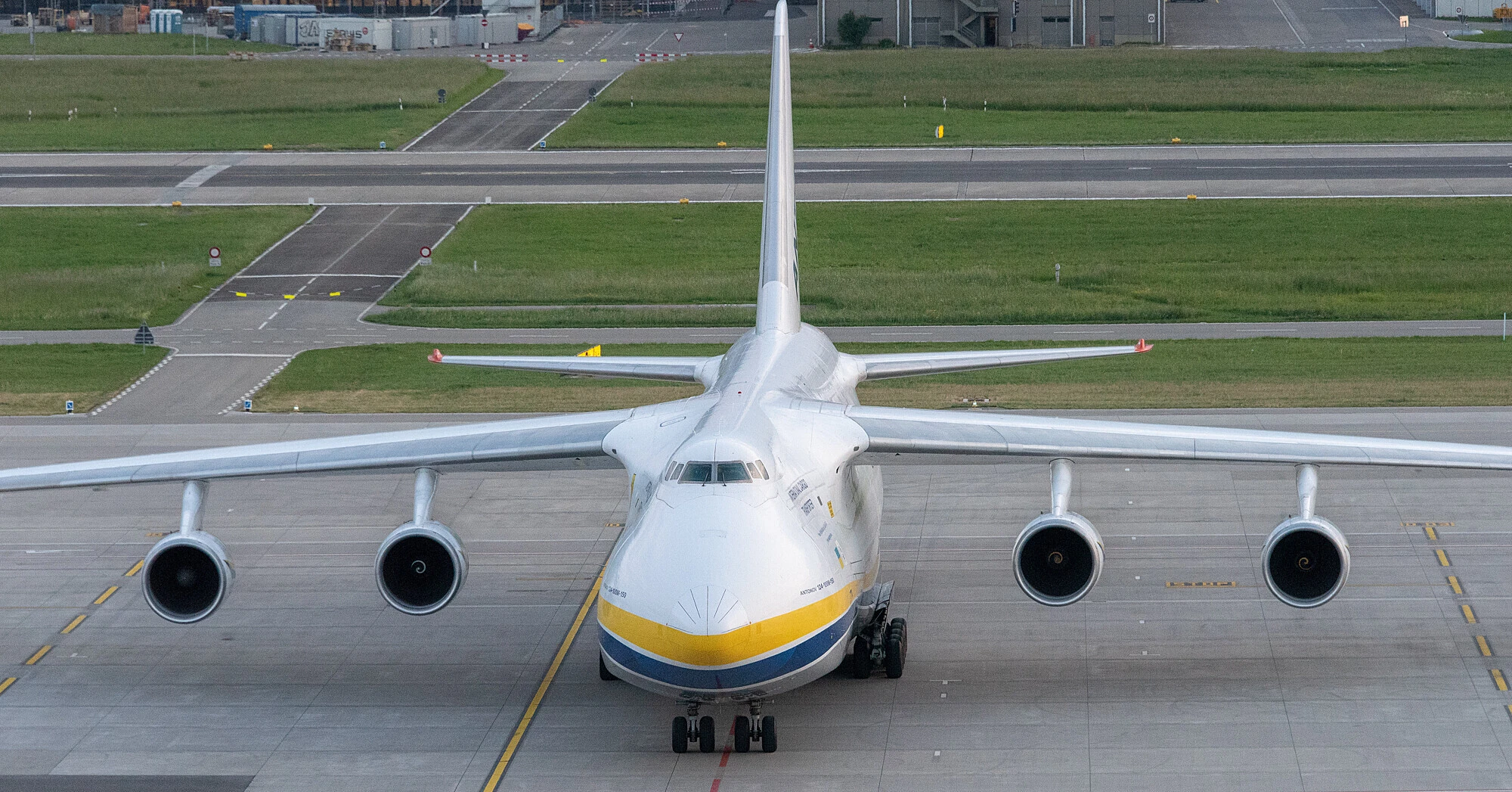
The video shows an Antonov cargo plane standing on a parking ramp at the airport. There, one can also see how on Tuesday evening around 7:30 p.m., some object was flying straight towards that plane.
It eventually hit one of the wings. Wings are particularly vulnerable parts of an aircraft, since fuel tanks are usually located there. Anyone wanting to blow up a plane detonates the bomb exactly there.
However, this did not happen in Leipzig. The recordings show that the object bounced off the wing and fell to the ground. Traces on one of the An-24’s wings confirm this possible course of events. Why the explosive device did not detonate is still unclear.
The drone was only discovered by chance four hours later. Die Zeit newspaper already reported on Wednesday that it was a bus driver who noticed the device.
Earlier reconstructions of the events assumed that he kicked the device and then secured it on the ground. This was also reported by CDU member of the Bundestag Detlef Seif, who - along with other politicians dealing with domestic policy - was informed about the incident by the government on Thursday.
In contrast, the camera recordings show that the drone was already lying on the ground when the bus driver approached. After a brief hesitation, he placed his foot on it and reported to security personnel. Likewise, the explosive device - contrary to what was previously known - was found not on the drone itself, but at some distance from it. It may have become detached during the collision with the aircraft.
This opens new leads for the Federal Criminal Police Office officers who took over the investigation on the weekend.
It has now become clearer how exactly the drone approached the aircraft: not cautiously, but with an obvious intent to damage it.
Also, its purpose has become clearer. Until now, one the investigators’ hypotheses was the assumption that it might have been only a kind of warning. Armed – yes, but not intended for an actual detonation. This hypothesis is now almost impossible to sustain. Leipzig airport barely escaped a devastating terrorist attack.
As of now, the investigation uncovered no clear evidence that Russia was behind the attempted attack. However, a number of details point to the high professionalism of the perpetrators.
Thus, the drone was not bought in a store, but manufactured specifically - in a manner beyond random criminals or amateur tinkerers.
Since the device was a so-called non-commercial drone, it could not be detected by conventional radar devices. The Semtex explosive with which it was fitted has such a great power that it probably would have been capable of blowing up the aircraft. Although occasionally available on the black market, it is normally used by the military.
Therefore, the assumption that a state actor – in some form – was involved in the attack is one of the investigative hypotheses whose likelihood has now increased.
Last week at Leipzig airport a drone equipped with explosives and a detonator was discovered near a Ukrainian plane, having arrived unnoticed.
The American intelligence links the incident to Russia; Russia's embassy in Berlin called the incident in Leipzig a fabricated provocation.
