
American Ammunition Plant for Ukraine Never Launched Production - Investigation
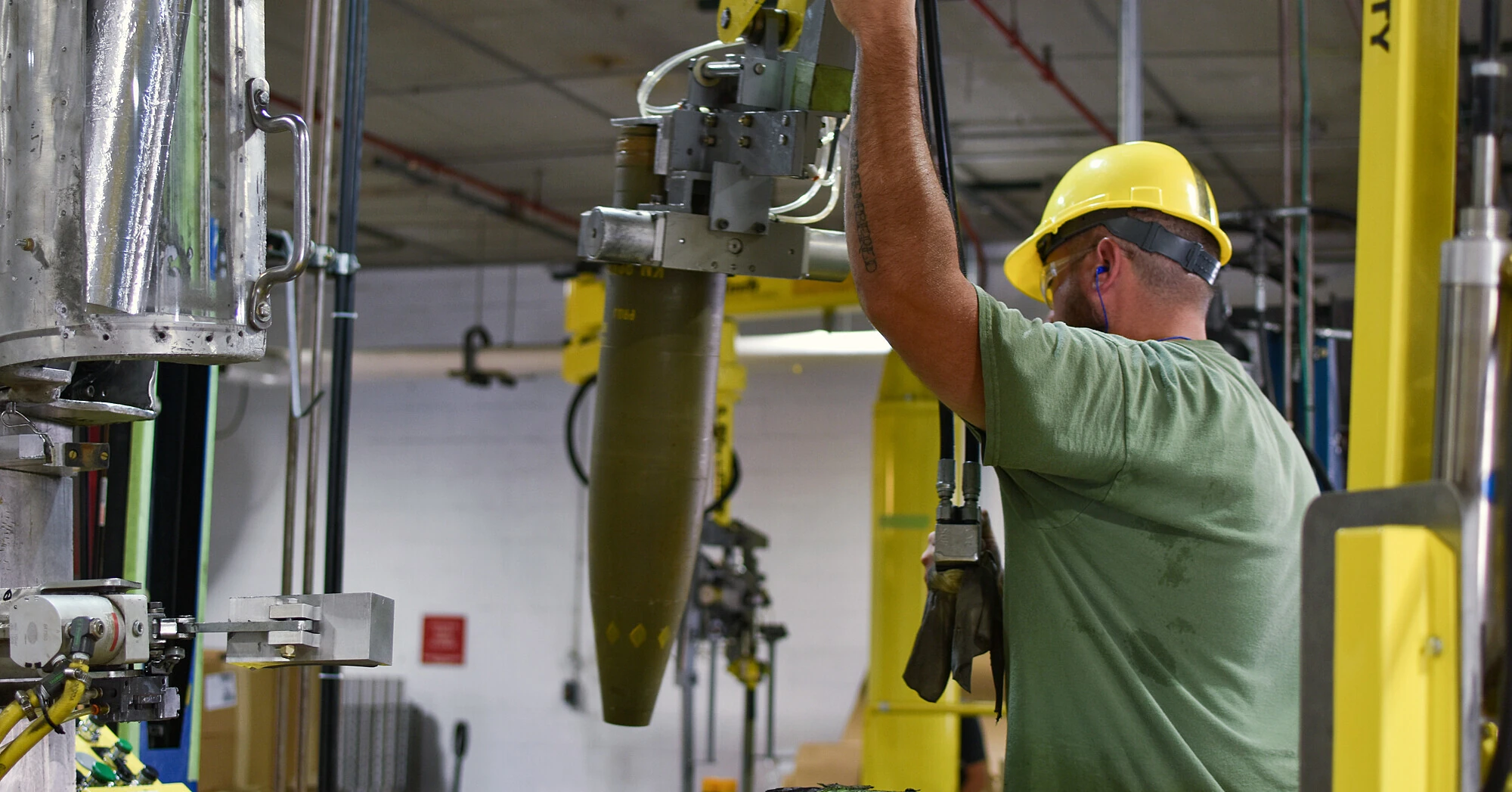
The General Dynamics plant built in Texas, intended to help the US dramatically increase production of 155-mm artillery shells, has not produced a single usable casing that meets army requirements. Total project costs have reached $533 million.
The Universal Artillery Projectile Lines facility is located in Mesquite near Dallas. It was officially opened in May 2024 against the backdrop of acute shell shortages after the start of Russia's full-scale war against Ukraine.
The plant was not meant to produce completely assembled ammunition. Its task was to manufacture metal casings for M795 155-mm shells, which are later filled with explosives and fitted with fuzes at other facilities.
The three production lines were planned to output 30,000 casings per month. The facility was set to become a key part of the program under which the US aimed to increase 155-mm ammunition production from 14,000 to 100,000 rounds per month by October 2025.
However, as of March 2026, the Mesquite plant had not delivered a single casing to the army that met technical requirements. Total production of finished 155-mm ammunition in the US at that time stood at about 36,000 rounds per month - just over a third of the planned target.
According to the investigation, the facility used little-proven equipment from the Turkish company Repkon. Workers reported fires on industrial robots, uncontrolled movement of mechanisms, press breakdowns, and damage to steel blanks. Some equipment had to be regularly repaired, and the manufactured casings failed quality checks.
In August 2025, the US Army halted work on two of the three production lines. By that time, General Dynamics had missed eight set deadlines. Work on the third line continued but also yielded no suitable products.
A report by the inspector general of the US Defense Department indicated that by the end of 2025, $469 million had been spent on the facility. The US Army told ProPublica that the total cost of the failed project later rose to $533 million.
The Army plans to recoup part of the expenses through discounts on other General Dynamics orders and states it will no longer invest public funds in this plant. However, the company remains the operator of the facility and has promised to invest $200 million of its own funds.
General Dynamics intends to replace most of the Turkish equipment with traditional machine tools. After rebuilding, the plant expects to reach a production rate of 20,000 casings per month in 2027 instead of the originally planned 30,000.
General Dynamics disputed the findings of the journalistic investigation and stated that the account of circumstances is false and misleading. At the same time, the company did not specify which facts reported by ProPublica it considers erroneous.
Based on materials: ProPublica; Office of the Inspector General of the US Department of Defense; US Army
