
Russia is building new bases for mass launches of strike drones - The Telegraph
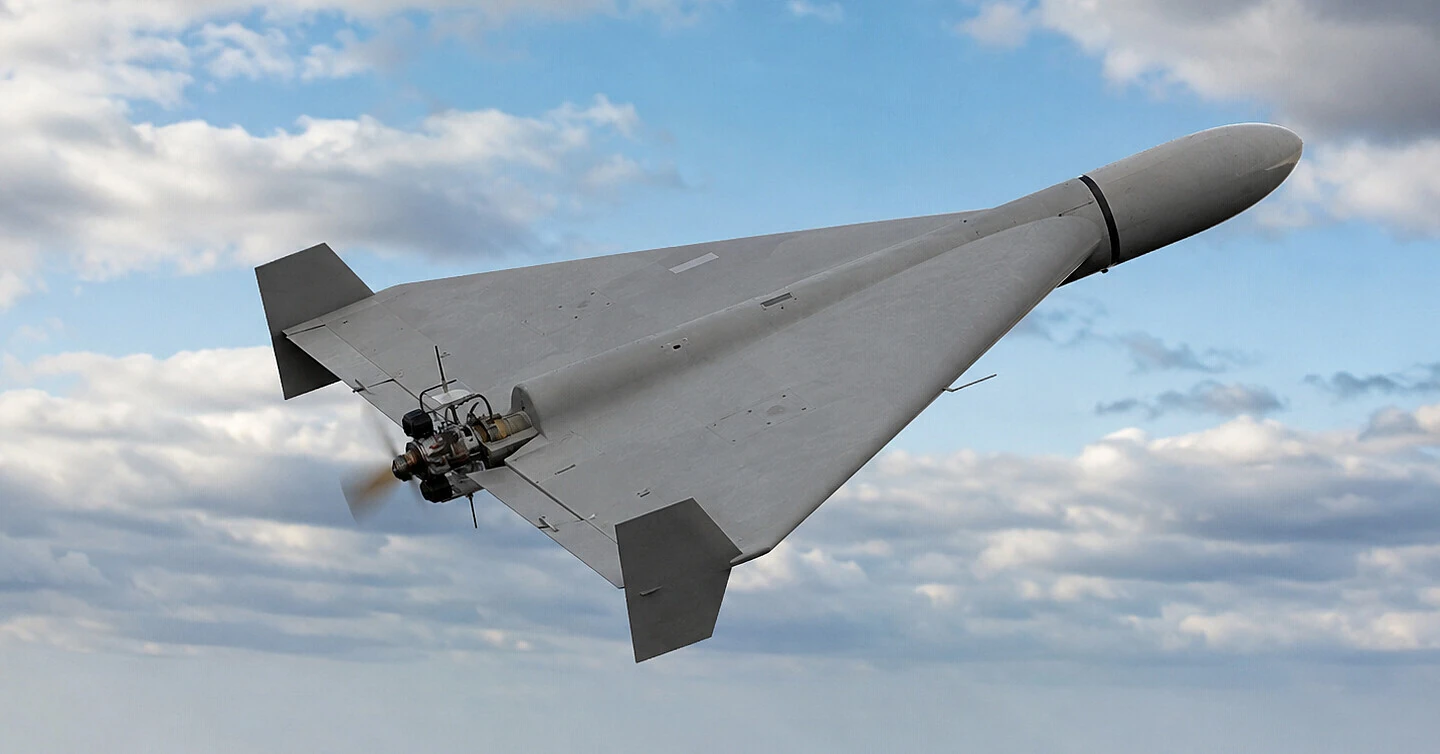
Russia has significantly expanded its network of sites for launching long-range strike drones. A Telegraph investigation based on satellite images and documents has identified at least 10 such facilities and 59 new launch rails near Russia's western borders. Part of this infrastructure is already being used for attacks on Ukraine.
According to the outlet, seven of the ten identified sites were recorded during recent Russian strikes on Kyiv. Some centers were created on the basis of military facilities and airfields, while others were set up separately. DroneSec analysts detected about 20 extended launch rails on satellite images, which could be adapted for new jet-powered drones.
A separate threat is posed by new modifications of the "Geran" family. According to the Main Intelligence Directorate of the Ministry of Defense of Ukraine, the jet-powered UAV "Geran-5" has a warhead of about 90 kg, a cruising speed of 450-600 km/h, and a range of about 950 km. Russian troops began using this type of drone against Ukraine in early 2026.
According to The Telegraph's calculations, launching such drones from separate western sites in Russia theoretically allows reaching the territory of NATO countries, including Poland and Warsaw. At the same time, the outlet emphasizes that there is no data on Russia preparing such a strike on the Polish capital.
The scale of the infrastructure continues to grow. At one of the studied facilities, analysts estimate, capacities have been created for simultaneous storage of over a thousand drones, and additional launch positions are being built at several sites.
NATO is simultaneously strengthening its counter-drone defense. On August 12, after violations of Polish and Romanian airspace, the Alliance announced further strengthening of integrated air and missile defense on the eastern flank. Earlier, NATO reported its intention to invest over $40 billion in counter-drone capabilities over the next five years.
Based on materials from: The Telegraph, Main Intelligence Directorate of the Ministry of Defense of Ukraine, NATO
