
The balance of power in Zelensky's circle has shifted: Yermak's influence was redistributed among several allies
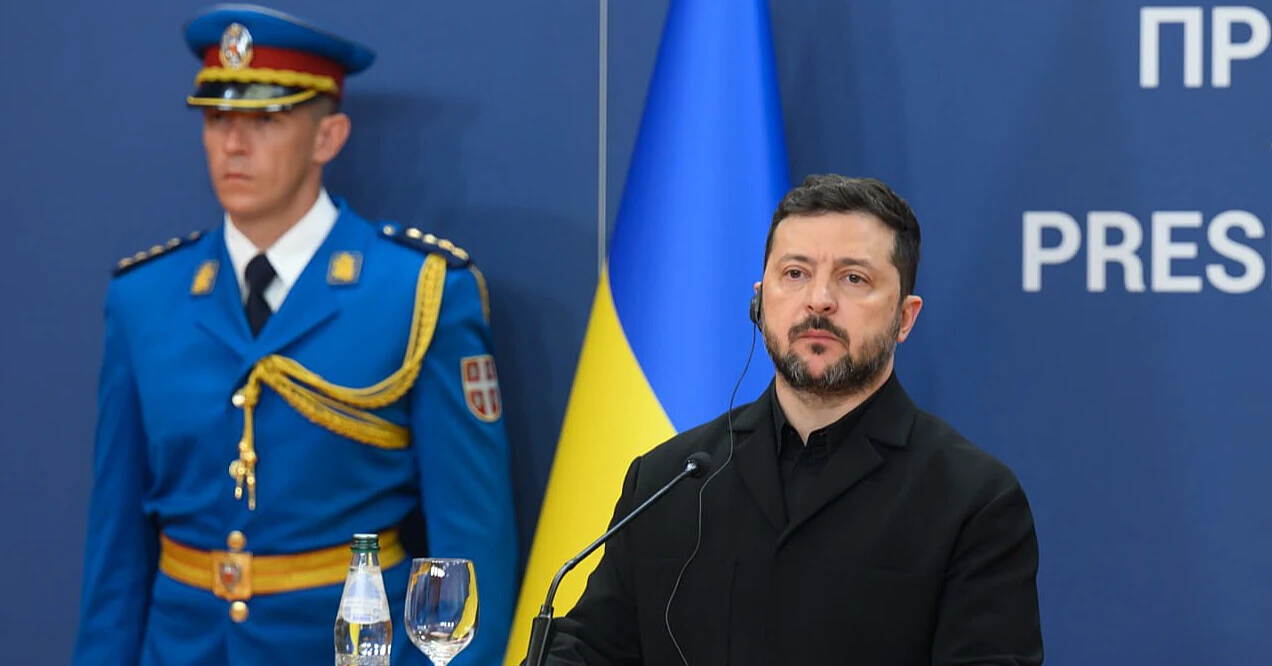
After Andriy Yermak's resignation, there is no longer any person in President Volodymyr Zelensky's circle who would concentrate the same amount of authority and influence. The functions of the former head of the Presidential Office were distributed among several key allies: David Arakhamia, Kyrylo Budanov, Rustem Umyerov, and a number of less public people with direct access to the head of state, writes RBC-Ukraine with reference to sources in power.
According to the publication, the head of the "Servant of the People" faction, David Arakhamia, received the most new functions. He became one of the main responsible for domestic policy and effectively retains control over the working capacity of the Verkhovna Rada: he is expected to ensure the necessary votes not only within the presidential faction, but also among other deputy groups.
Arakhamia also participates in personnel processes and helps new ministers build relations with parliament. At the same time, RBC-Ukraine sources deny that all recent appointments went through him: the personnel resource that Yermak had largely concentrated is now divided between several centers of influence.
Arakhamia also got informal diplomacy
Besides parliament, Arakhamia is actively involved in negotiations with foreign partners. This concerns primarily non-public contacts, during which it is necessary not to hold formal diplomatic meetings, but to directly negotiate with individual politicians and representatives of other states.
In this direction, he often works together with Rustem Umyerov. On August 3, Zelensky appointed Umyerov as head of the Foreign Intelligence Service. At the same time, he retained a much broader international functionality than the traditional work of the head of intelligence: negotiations with the United States, contacts with other partners, and coordination of the so-called Drone Deals. Umyerov's appointment as head of the SZR was formalized by presidential decree No. 695/2026.
According to RBC-Ukraine, Umyerov has direct access to Zelensky and continues to maintain contacts with the American side, in particular regarding options for ending the war. In addition, he is involved in the search for weapons for Ukraine, including through channels that cannot always be used for public interstate supplies.
Budanov consolidated his position at the head of the Presidential Office
another major center of influence remains Kyrylo Budanov. He has headed the Presidential Office since January 2, 2026, when Zelensky explained his appointment by the need to strengthen the security and negotiation directions in the OP's work. And for this reason, he was also involved in search of weapons for Ukraine through channels that could not always be used for public interstate supplies. The commission of the OP with this situation.
According to RBC-Ukraine, the difficult period of "adjustment" between Budanov and Zelensky has already ended, and their current relations are described by interlocutors as constructive. Budanov also began to more actively build his own contacts with the Verkhovna Rada, although Arakhamia remains the main manager of the parliamentary direction for now.
At the same time, Budanov did not become a direct replacement for Yermak. He may be involved in individual crisis or personnel issues, but part of the decisions is made without his direct participation. Thus, the Presidential Office itself no longer concentrates all informal levers in the hands of its head as it did under Yermak.
Who has direct access to Zelensky
A separate role is played by less public people who are constantly next to the president. One of the most influential people, RBC-Ukraine's interlocutors call adviser Dmytro Lytvyn. He spends several hours with Zelensky every day, is present at meetings and reports, works on evening addresses, and is actually engaged in strategic and anti-crisis communications.
Oh yes, a really intelligent behavior by Dmytro Bula
Аноther important informal center is Zelensky's long-time assistant Maria Levchenko. She actually manages the presidential schedule and can propose meetings with officials, deputies and other people. This gives her significant influence on who and how often gets direct access to the head of state.
Deputy Head of the OP Pavlo Palisa is largely responsible for the military direction in Zelensky's closest circle. Another deputy head of the Office, Oleh Tatarov, continues to handle the security block. After the change of the OP head, his positions partially strengthened, although sources note that the security officials are no longer as unequivocally oriented towards him as before.
The First Lady retains informal influence
RBC-Ukraine sources refer to a separate category by Olena Zelenska. She does not engage in daily politics and does not form her own group of influence, but the president takes her position into account regarding individual people and decisions. One of the publication's interlocutors called her capabilities "golden right of veto": the first lady may not try to promote her own political decisions, but she is able to influence the president's attitude towards a certain candidacy or initiative.
Former OP head Andriy Yermak, according to RBC-Ukraine sources, no longer has such influence. He may have maintained contact with Zelensky, but the publication does not see signs of his systematic participation in the recent personnel reset.
As a result, the management model around Zelensky has become more distributed. Arakhamia focuses on parliament, domestic policy and informal diplomacy, Umyerov - on international contacts, negotiations and special external directions, Budanov manages the Presidential Office and works on security and political issues. Alongside them remain managers of individual directions and people whose influence is determined primarily by daily direct access to the president.
According to materials: RBC-Ukraine (Milan Lelich), Office of the President of Ukraine, Ukrainska Pravda
