
Russia dismisses chief economist of VEB who forecast social crisis and losing competition with the West
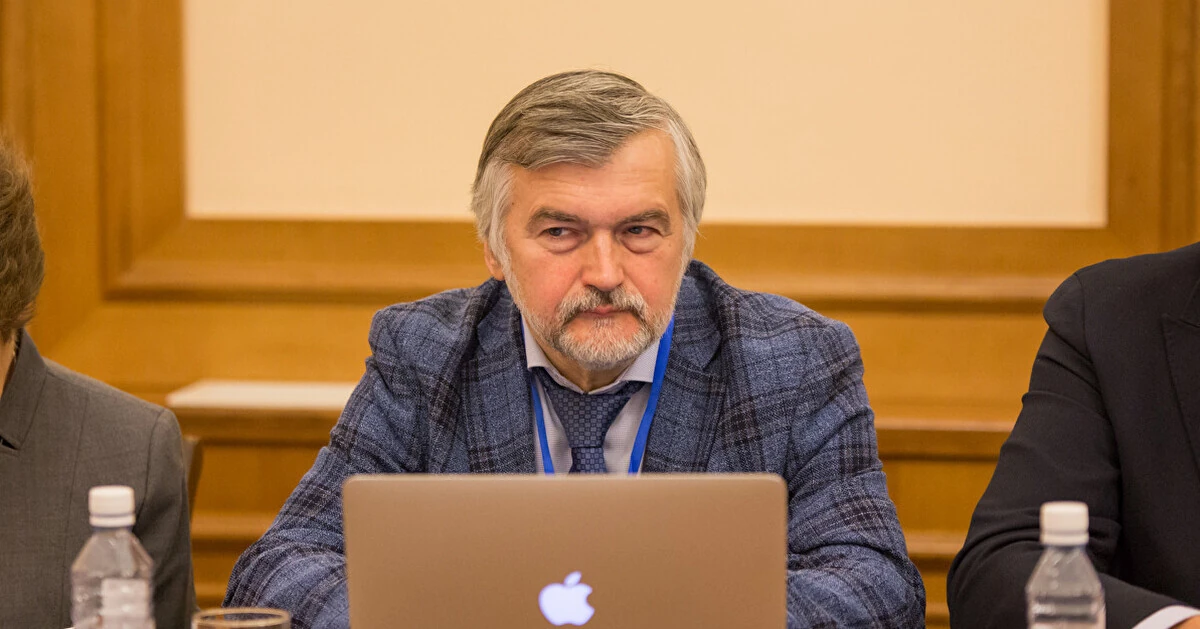
The chief economist of the Russian state corporation VEB.RF, Andrey Klepach, was dismissed after his statements about Russia's inability to win a prolonged "war of attrition" and the risk of a social crisis circulated widely in Russian media. The dismissal was reported by The Bell citing two acquaintances of Klepach.
According to one of the publication's sources, VEB Chairman Igor Shuvalov dismissed the economist after a "call from above." Another source also linked the decision to the publicity of Klepach's May speech. At the time of The Bell's publication, VEB had not commented on the reasons for the dismissal.
Klepach worked as VEB's chief economist for about 12 years. Previously, he spent ten years at Russia's Ministry of Economic Development, including as deputy minister from 2008 to 2014. Until recently, VEB's official resources called him the chief economist of the state corporation.
Russia losing economic and technological competition
The scandal was caused by Klepach's report "The Russian Economy and Geopolitical Challenges," which he delivered on May 21 at a meeting of the Nikitsky Club. The organizers introduced him precisely as the chief economist of VEB.RF.
In the report, Klepach acknowledged that after high growth rates in 2023–2024, the Russian economy had sharply slowed. He estimated that under conditions of continued war, sanctions, and tight monetary and fiscal policies, it would be difficult for Russia to ensure growth above 2-2.5% per year.
For 2027, the economist forecast GDP growth of only 1-1.5%. He also drew attention to weak income growth, the widening gap between pensions and wages, problems of small and medium-sized businesses, and persistent high inequality.
The most resonant was his assessment of Russia's competitiveness. Klepach stated that the country was losing technological and economic competition not only to the United States and China, but in certain areas—even to Ukraine. He also acknowledged the significant role of Western financial assistance in supporting the Ukrainian economy.
Klepach estimated that the Russian economy was capable of withstanding sanctions pressure and was unlikely to collapse suddenly. However, he called the prolonged lag the main threat: the costs of the war were rising, while expectations that the economies of Russia's adversaries would "collapse" first had not materialized.
Klepach warned of a social crisis
The economist believed that the greatest risk for Russia lay not in immediate economic collapse but in the accumulation of social problems. Among them he named inequality, deteriorating quality of healthcare, and uneven technological development.
Klepach concluded that Russia's economy could continue to function even under current conditions, but its lag behind other countries would increase. Against this background, he considered the country's slide into social crisis almost inevitable, although its exact timing cannot be predicted.
Senior fellow at the Carnegie Berlin Center Alexandra Prokopenko noted in a comment to The Bell that Klepach had often previously made gloomier forecasts than official Russian agencies and publicly defended his own macroeconomic assessments.
The fact of Klepach's May speech and his then status as chief economist of VEB is confirmed by the Nikitsky Club. At the same time, information about the reason for his dismissal is currently based on The Bell's sources, and VEB has not published an official explanation.
Based on materials: The Bell
