
Zaporizhstal attacked with missiles again: Rada warns of critical situation
Russian troops again launched a missile strike on the Zaporizhstal metallurgical plant on the night of August 27, which has not yet resumed operations after the previous large-scale attack. Five missiles hit the same area of the plant as during the previous shelling. He called the consequences of the new strike extremely serious, and the terms for resuming the plant's operations remain uncertain.
This was reported by Musa Mahomedov, head of the subcommittee on industrial policy of the Verkhovna Rada Committee on Economic Development.
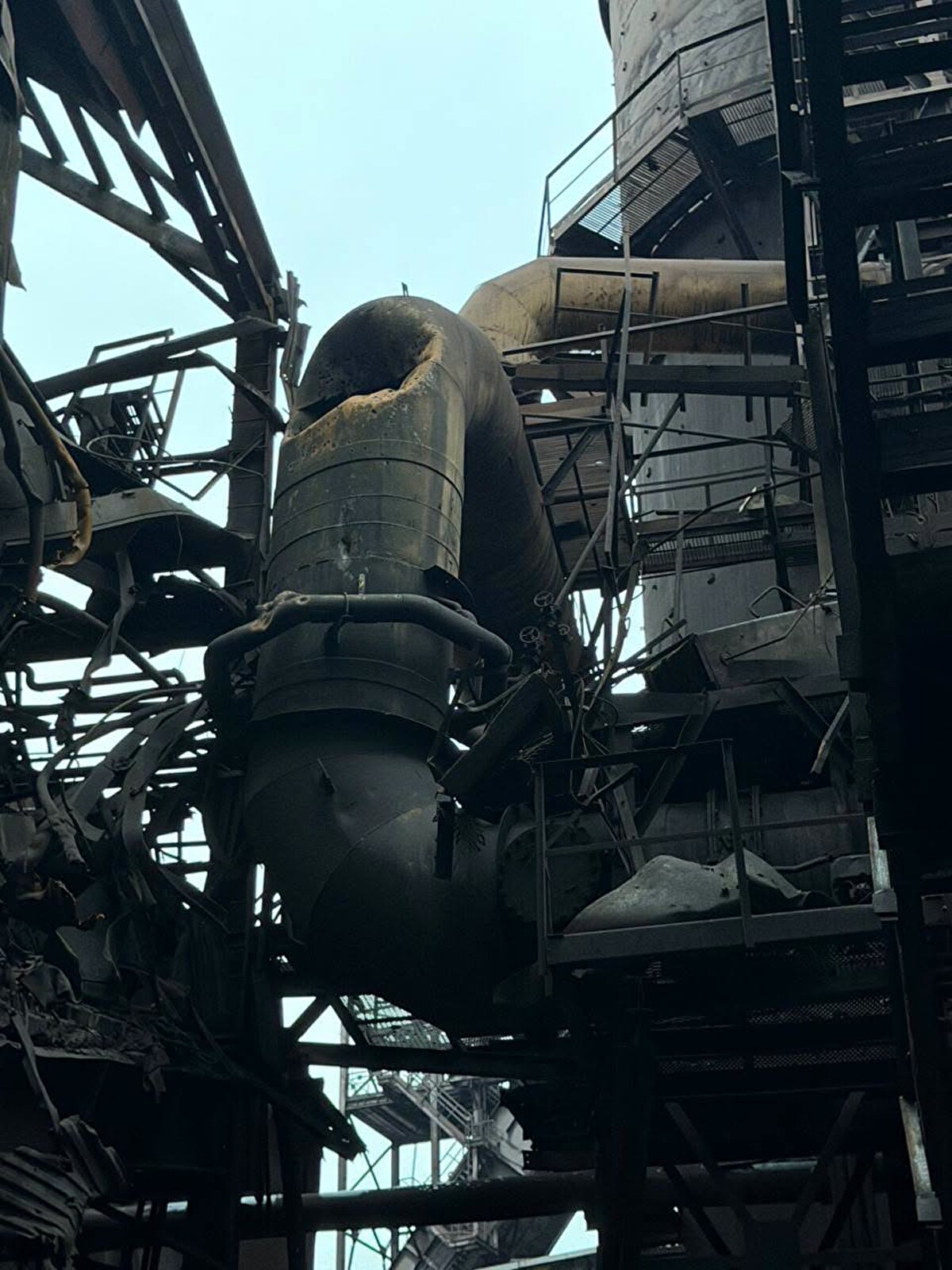
He said that during the night attack, five Russian missiles hit the same spot at Zaporizhstal that had already been damaged during the previous massive strike.
It was after that attack that the plant was forced to completely halt production. The Russian strike damaged the plant's energy and production infrastructure at that time, and there were deaths and injuries among employees.
"The consequences of these strikes are extremely serious, and when Zaporizhstal will be able to resume operations is currently a big question", Mahomedov said.
New strike hit already damaged plant
Thus, the new attack occurred before one of Ukraine's largest metallurgical plants could recover from the previous shelling.
Mahomedov stressed that Russian strikes are effectively destroying the production base of Ukraine's metallurgy in succession. In his assessment, the situation in the industry has already become critical, and without urgent government decisions, Ukraine may by spring face a halt of a significant portion of metallurgical capacities.
The problem of the mining and metallurgical complex was discussed this week at a meeting of the parliamentary committee with the participation of the government. On Friday, the issue is planned to be considered separately at a meeting with the prime minister.
Mahomedov emphasized, however, that meetings alone are insufficient, as enterprises are simultaneously facing the consequences of Russian strikes, problems with exports, growing logistics costs, and restrictions on key external markets.
Crisis spreads to entire mining and metallurgical complex
According to the parliamentarian, due to the blockade of the ports of Greater Odesa, extraction at the Pivdennyi GZK has already halted, and production by other Kryvyi Rih ore mining and processing plants may be about 30% below the annual average of 2025 by end of August.
The industry cannot fully replace maritime exports with rail or other routes due to limited throughput capacity and significantly higher transportation costs.
Additional burden is the 30% increase in freight tariffs of Ukrzaliznytsia. Mahomedov estimates that the share of rail costs in the cost of metallurgical products has increased two to three times because of this.
After several years of full-scale war, enterprises' ability to compensate for cost increases from their own funds is practically exhausted.
CBAM and new EU quotas increase pressure
Another challenge for Ukrainian metallurgists is the European carbon border adjustment mechanism CBAM. According to estimates cited by Mahomedov, it can add €50-100 in costs per tonne of steel to Ukrainian producers.
In addition, new European quotas for Ukrainian steel amount to about 1.05 million tonnes per year. This is about 60% less than actual volumes of Ukrainian steel exports to the European Union in 2025.
According to estimates cited by the parliamentarian, just due to the reduction in available quotas, Ukraine risks losing about $1 billion in export revenue and over 17 billion UAH in budget revenues.
Mahomedov noted that the simultaneous impact of all these factors — Russian strikes, loss of maritime logistics, rising rail tariffs, CBAM and reduced access to the EU market — poses a threat not just to individual enterprises, but to the entire mining and metallurgical complex.
"If logistics become more expensive at the same time, export opportunities are closed, new restrictions are introduced, and enterprises are under Russian strikes daily — soon there will simply be no one to support", he stated.
Metallurgy remains one of Ukraine's key export industries, providing foreign currency earnings, tax revenues and tens of thousands of jobs in industrial regions.
Based on materials: Musa Mahomedov, Zaporizhstal
