
Russia could mobilize 600,000 people after State Duma elections - Ukrainian intelligence
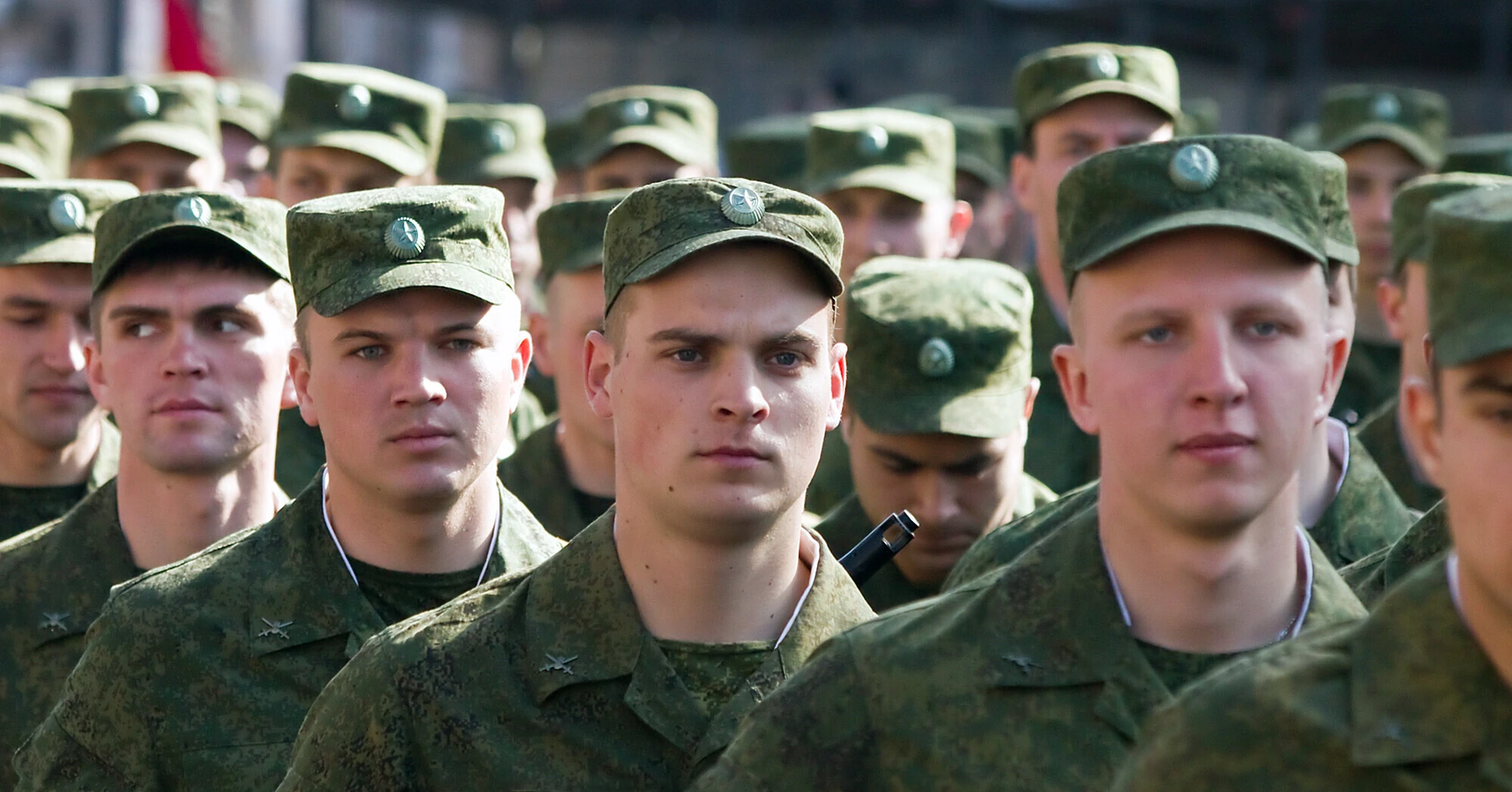
The Russian General Staff has prepared an option for an additional mobilization of 600,000 people in 2026-2027 - 300,000 each this year and next. According to the Main Intelligence Directorate of the Ministry of Defense and the Foreign Intelligence Service of Ukraine, Moscow is being pushed to this step by growing losses at the front and a slowdown in the recruitment of contract soldiers. Ukrainian intelligence considers the period after the State Duma elections in the Russian Federation on September 18-20 to be the most likely time for a political decision.
This was stated in a joint briefing by the Main Intelligence Directorate of the Ministry of Defense and the Foreign Intelligence Service of Ukraine, published by the Office of the President.
According to Ukrainian special services, the Russian leadership is considering an additional wave of mobilization as a response to the deteriorating situation with army replenishment, growing losses, and, according to intelligence assessments, Russia losing the initiative in the war.
In January-July 2026, Russian troop losses, according to Ukrainian data, amounted to about 240,000 people, of which at least 140,000 were irrecoverable. During the same period, about 232,000 people were recruited under contract to the Russian occupation force.
Thus, contract recruitment no longer compensates for the overall losses of the Russian army.
300,000 people each this year and next
Ukrainian intelligence claims that the Russian General Staff has already prepared a scenario for the mobilization of a total of 600,000 people within specified timeframes during 2026 and 2027.
First of all, they plan to use the new servicemen to replenish formations and units fighting against Ukraine, as well as new units that Russia is currently forming.
The training of mobilized personnel, depending on their level of training and planned use, may last from only 15 to 60 days. The Main Intelligence Directorate and the Foreign Intelligence Service of Ukraine do not rule out that part of the personnel may be trained at training grounds in Belarus.
Expanding recruitment among prisoners
In parallel, Russia is changing legislation and secondary regulatory acts to increase the number of people available for military service.
In particular, the list of convicts who can be recruited for military service is being expanded by another 11 articles of the Criminal Code of the Russian Federation.
This concerns, among others, those convicted of smuggling poisonous, radioactive and explosive substances, weapons and drugs, banditry, participation in criminal organizations, organization of illegal migration, as well as illegal handling of nuclear materials and radioactive substances.
According to Ukrainian intelligence, the Russian leadership has also approved extending mobilization or contract recruitment to certain numerically significant categories of women serving sentences in prisons and colonies.
In addition, quotas are being prepared for the Ministry of Internal Affairs, the Federal Bailiff Service, the Federal Penitentiary Service, the Investigative Committee and other law enforcement agencies - they are to send some of their employees to military service.
Fewer contract soldiers
In internal Russian documents referenced by the Main Intelligence Directorate and the Foreign Intelligence Service of Ukraine, the preparation for mobilization is linked, among other things, to growing dissatisfaction with the war in the regions. According to certain indicators, it allegedly reaches 69%, which is accompanied by a decrease in the number of those willing to voluntarily sign a contract.
The situation with recruitment is especially difficult in the Oryol and Vladimir regions and Dagestan.
In the Kurgan region, monthly recruitment plans since the beginning of 2026 have been fulfilled by only 57-69%. In the Volgograd region, the number of potential contract soldiers has decreased by 40% compared to 2025.
In several other regions, the number of people from categories that Russia has actively used in recent years to replenish the army has decreased by 30-40%: debtors, convicted persons, representatives of the criminal milieu and migrants.
Separately, Ukrainian special services report the failure of the student recruitment campaign, in which most Russian universities were involved.
Electronic draft notices and new restrictions
At the same time, the Russian authorities are strengthening the military registration system and enforcement mechanisms.
Electronic mobilization orders have already been introduced in the Russian Federation. Expansion of restrictions for those who do not comply with military commissariat requirements is also being worked out.
Possible measures include a ban on leaving Russia, restrictions on obtaining loans, real estate transactions, revocation of driver's licenses, and freezing of funds in bank accounts.
At enterprises, units dealing with mobilization work and military registration are being expanded. According to intelligence, as of the end of July, more than 2,500 new vacancies for such structures were posted on Russian job search websites.
Decision may be postponed until elections
The Main Intelligence Directorate and the Foreign Intelligence Service of Ukraine believe that Vladimir Putin will most likely make a final decision on a new wave of mobilization after the State Duma elections, voting in which is scheduled for September 18-20, 2026.
The Russian authorities are also preparing for possible social and economic consequences of the new mass conscription. According to Ukrainian special services, a set of forceful measures is being developed in case of public dissatisfaction and the transition of individual regions to a stricter military regime.
Western and Russian media also reported on Russia's preparations for a possible new wave of mobilization. Earlier, The Wall Street Journal, citing Western intelligence representatives, wrote that Russian military personnel are checking the readiness of infrastructure in the regions to receive, accommodate and equip a large number of mobilized personnel.
Russian publications "Verstka" and "Important Stories" also reported on discussions of mobilization after parliamentary elections. Officially, the Russian leadership has not confirmed plans for a new wave of mass mobilization.
Based on materials from: Office of the President of Ukraine
