
Ukraine's grain exports collapse, with corn shipments falling the most
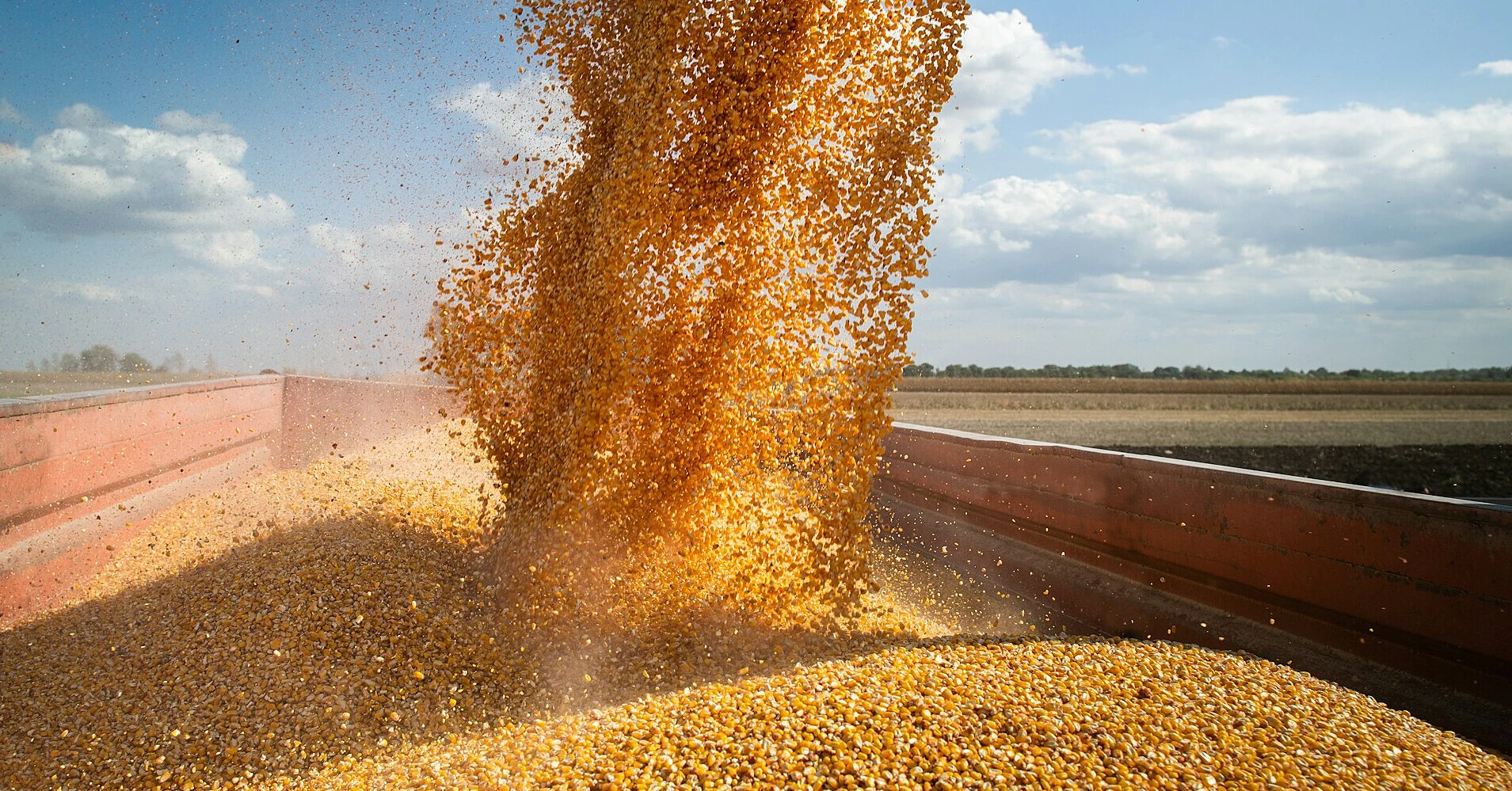
In August, Ukraine sharply reduced shipments of corn and other major grain crops abroad. From August 1–27, corn exports totaled only 190.7 thousand tons — 84.3% less than in the same period in July. Amid the decline in grain, the total physical volume of agricultural exports dropped by nearly half, while rapeseed shipments soared and cargo flows shifted more actively toward the western border.
According to Spike Brokers analysts, in the first 27 days of August Ukraine exported 1.726 million tons of agricultural products, compared to 3.287 million tons in the same 27 days of July. Thus, the physical volume of shipments decreased by 1.561 million tons, or 47.5%.
In monetary terms, the decline was significantly smaller. Exports of agricultural goods (UKT ZED groups 01–24) amounted to $1.06 billion versus $1.424 billion a month earlier, a decrease of 25.6%.
The notional value per ton of exported products rose from about $433 to $614. Spike Brokers emphasize that this is primarily a result of the change in the export structure — the share of cheaper bulk grains fell sharply, so this dynamic should not be interpreted as a corresponding increase in prices for Ukrainian agricultural products.
Corn showed the biggest drop
It was grain that accounted for the bulk of the agricultural export decline. Combined shipments of wheat, corn, and barley for August 1–27 totaled about 740 thousand tons, compared to 2.427 million tons in the same July period. The drop reached 69.5%.
The share of these three crops in total agricultural exports fell from 73.9% in July to 42.9% in August.
Corn declined the most — down 84.3% to 190.7 thousand tons. Spike Brokers name the disappearance of large July volumes of corn as the largest single factor in the overall tonnage decline.
Barley exports decreased by 74.5% to 62.6 thousand tons. Wheat shipments proved more resilient but still fell by almost half — 49.8% — to 486.6 thousand tons.
Rapeseed moved in the opposite direction
Against the backdrop of the collapse in grain shipments in August, rapeseed exports surged. In 27 days, 255.2 thousand tons of seed were shipped abroad, compared to only 11.8 thousand tons in July. Thus, the volume increased 21.6 times.
Rapeseed's share in total physical agricultural exports jumped from 0.4% to 14.8%.
At the same time, Ukraine increased rapeseed oil exports from 15.2 thousand to 69.4 thousand tons — about 4.6 times. Overall, seed and rapeseed oil accounted for about 324.6 thousand tons of exports, versus only 27.1 thousand tons in July.
Meanwhile, other processing products showed much more stable dynamics than grain. Combined exports of sunflower, rapeseed, and soybean oils totaled 234 thousand tons — 16.7% less than in July. Shipments of sunflower and soybean meal/cake decreased by only 6.4% to 153.8 thousand tons.
Within this group, trends also differed: sunflower oil exports were 131.3 thousand tons, down 42.5%, while sunflower meal shipments rose 28% to 83.1 thousand tons.
Grain shipments to Greater Odesa ports dropped 95%
Along with changes in the commodity structure, the logistics of grain cargoes changed dramatically.
For the current August period, about 230.6 thousand tons of grain were transported by rail toward port stations, including inland delivery to Izmail. In July, this figure was 1.265 million tons. Thus, the volume fell by 81.8%.
The flow to Greater Odesa ports fell even more sharply — from 1.238 million tons in July to only 55.7 thousand tons in August, or by 95.5%.
In particular, shipments to Chornomorsk-Port-Export station dropped by 93.5%, to Odesa-Port by 92.2%, and through Chornomorska station for TIS by 97.8%.
Overall, as of August 26, 951 thousand tons of grain cargo were transported by rail — 42.4% less compared to the previous month and 57% less than a year ago.
Western border, on the contrary, increases flow
Against this backdrop, rail logistics through western border crossings intensified significantly.
In the first 25 days of August, average daily handover of grain wagons through the western border was 173.7 wagons per day. In July, the figure was only 71.3 wagons. Thus, intensity increased approximately 2.4 times.
The approach of rolling stock to the border also grew: as of August 26, 9,822 wagons had accumulated toward western crossings, of which 1,508 were with grain cargo.
The road channel also showed positive dynamics. From August 1–27, 279.3 thousand tons of agricultural products were exported through road checkpoints, versus 251.1 thousand tons in July — up 11.3%.
Germany overtook Turkey
The geography of Ukrainian agricultural exports has also changed substantially. In July, Turkey was the largest destination with 544.8 thousand tons of shipments, but in August its volume dropped 79% to 114 thousand tons.
Germany took first place, receiving 195.7 thousand tons of agricultural products in the first 27 days of August. Its purchases grew about fourfold, largely thanks to seasonal rapeseed exports.
Next among the largest destinations were Italy with 159.7 thousand tons, Poland — 151.9 thousand tons, the Netherlands — 147.2 thousand tons, and Spain — 125.3 thousand tons.
In the rapeseed segment itself, Germany purchased 109.2 thousand tons of Ukrainian seed, the Netherlands 84.3 thousand tons, and the Czech Republic 25.1 thousand tons. These three countries accounted for about 86% of August shipments.
Thus, August agricultural exports from Ukraine were characterized by a sharp drop in large grain volumes, especially corn, a rapid seasonal increase in rapeseed exports, and a stronger role of European destinations and overland logistics.
Source: Spike Brokers
