
Russia secretly helps Iran build supersonic cruise missiles - FT
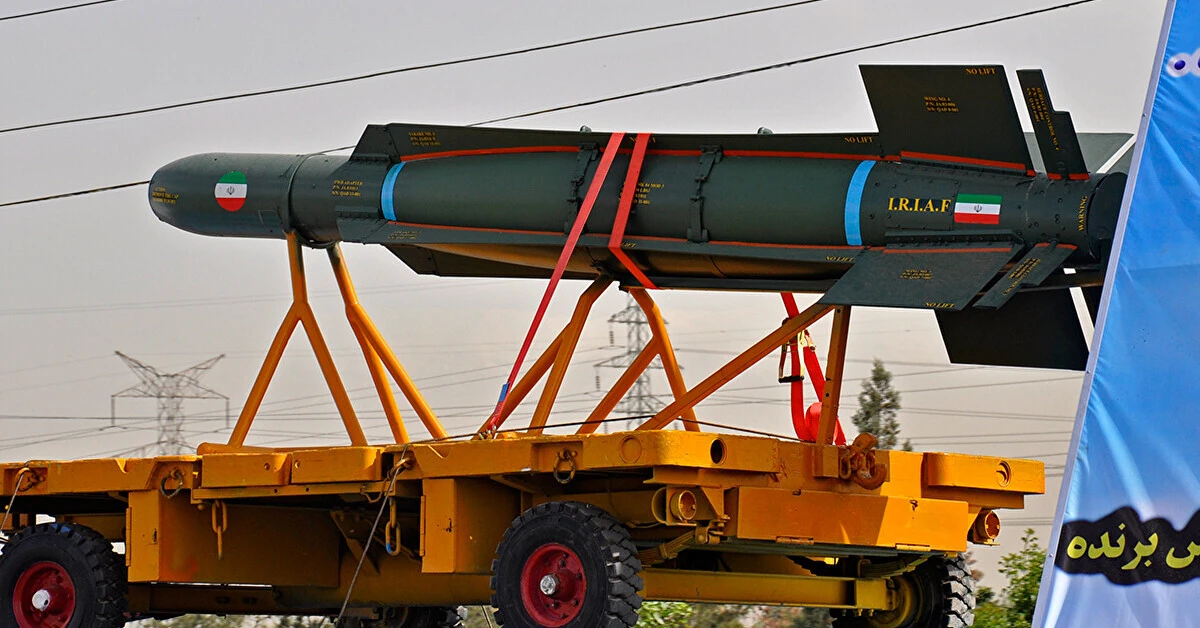
Russia is secretly helping Iran develop a new class of supersonic cruise missiles capable of posing a threat to American aircraft carriers and other military ships in the Middle East. The secret multi-year program, code-named C430L, has been operating since at least 2023 and continued into 2026.
This is stated in an investigation by Financial Times, which is based on leaked Russian correspondence, data on specialist travel, and analysis of military patents.
The main objective of C430L is to help Iran develop a ramjet engine. Such a powerplant allows a cruise missile to fly for an extended period at speeds several times higher than the speed of sound. According to experts interviewed by FT, the technology is almost certainly intended for anti-ship missiles and weapons for strikes against ground targets.
Supersonic cruise missiles combine high speed with the ability to fly at low altitude, reducing the time that air and missile defense systems have to detect and intercept them. This is especially important for Iran in the Persian Gulf, where the US and its allies have advanced ground and sea-based air defense systems.
According to FT, Iran has already built and conducted flight tests of its own ramjet powerplant. At the same time, there is no evidence that a supersonic cruise missile developed with Russian assistance has been adopted or deployed so far.
The secret project was organized by the Russian state arms exporter Rosoboronexport, which coordinated work with NPO Mashinostroyeniya, one of Russia's leading developers of missile weapons. The contract for the C430L program with the Ministry of Defense and Armed Forces Logistics of Iran was officially signed in November 2023.
Prior to that, representatives of Rosoboronexport and senior engineers from NPO Mashinostroyeniya repeatedly visited Iran. Among them were specialists in naval cruise missiles, ramjet engines, aerodynamics, and ballistics.
In 2025, the Russian side received a significant volume of Iranian technical materials on the ramjet engine. Engineers analyzed data from one of the flight tests and sent detailed questions to Tehran regarding the operation of the fuel system, combustion stability, air intake, and engine nozzle.
In April 2025, Rosoboronexport proposed sending a delegation of about two dozen Russian specialists to Iran for technical consultations within C430L. The correspondence shows that cooperation did not cease even after the start of the US and Israel war against Iran.
In June 2026, the Russian and Iranian sides were still discussing the next stage of the program and technical reports prepared by Russia. At the same time, FT could not establish whether the next phase of development had already begun.
Experts call C430L one of the most sensitive examples of transfer of Russian military technologies to Iran. Unlike the supply of ready-made weapons, Moscow is effectively helping Tehran acquire its own technological competencies, which can later be used to create new generations of missiles without dependence on foreign suppliers.
The program is developing against the backdrop of deepening military cooperation between the two countries. Iran has previously supplied Russia with Shahed attack drones and helped organize their production on Russian territory. Western and Ukrainian officials have also accused Moscow of providing Tehran with satellite data, drone assistance, and weapons components.
The Kremlin, Rosoboronexport, NPO Mashinostroyeniya, and the Iranian government did not respond to Financial Times requests for comment on the secret program.
Source: Financial Times
