
Lower Manhattan's population has doubled since 9/11: how the Wall Street district turned into a 24/7 neighborhood
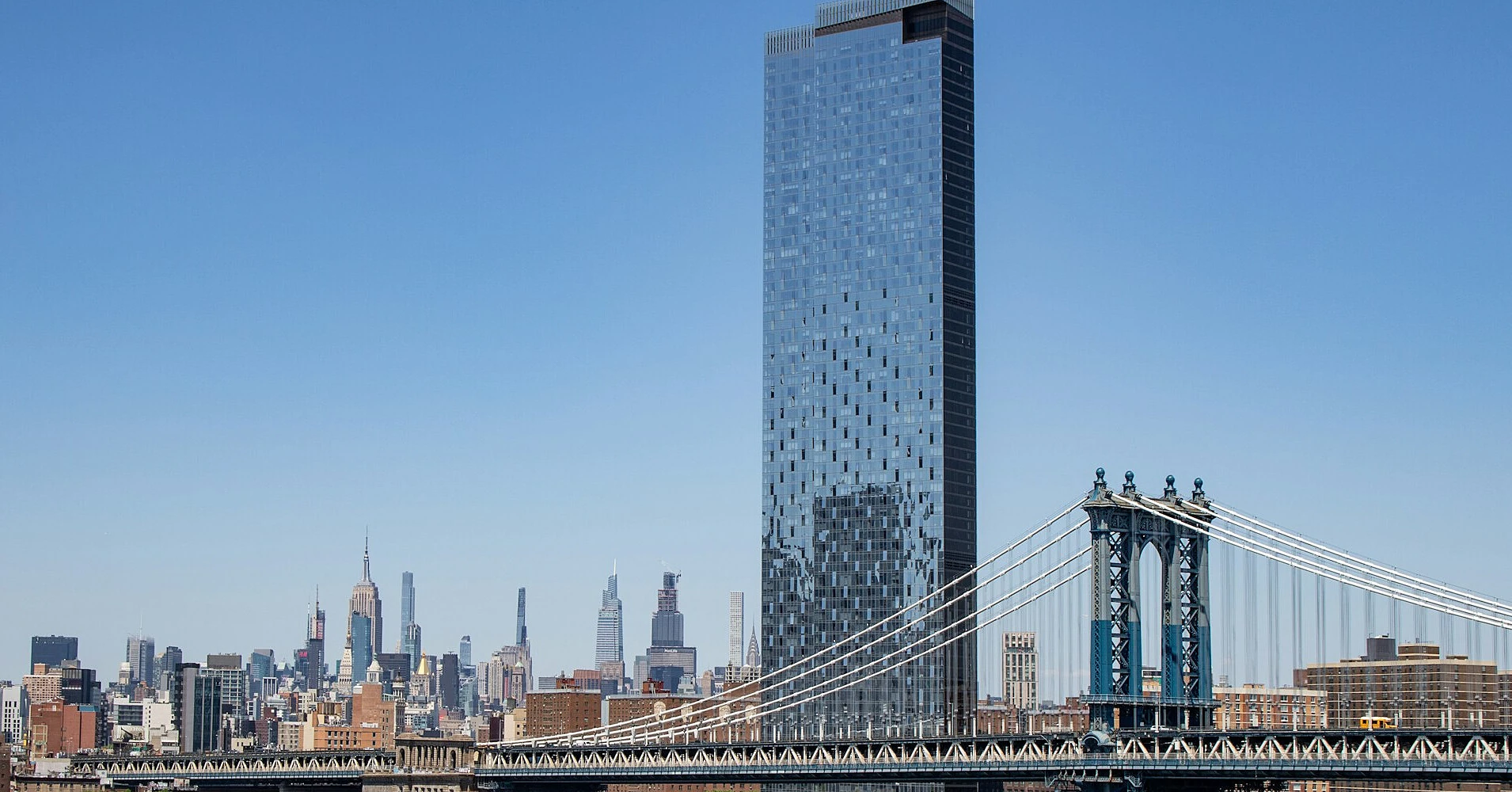
25 years after the September 11 attacks, Lower Manhattan looks very different from the early 2000s. The district, primarily associated with Wall Street, office towers, and the nine-to-five workday, has turned into a place where tens of thousands of people now permanently live, work, study, and spend their free time.
New data from the New York State Comptroller shows the scale of change. In 2000, 32,446 people lived in Lower Manhattan. By 2024, the population had grown to 70,761 people — more than double.
At the same time, the housing stock increased from 21,337 units in early 2002 to 46,194 in 2026. And the transformation is not finished yet: permits have already been issued for more than 5,300 additional apartments.
After 9/11, the future of the district was in question
The September 11, 2001 attacks claimed 2,977 lives and destroyed the World Trade Center complex. Lower Manhattan became not only the site of tragedy, but also a district with huge economic losses and an uncertain future.
The main question was whether companies, employees, and investors would return here.
But New York decided not to limit itself to restoring the destroyed buildings. The city, state, and federal authorities invested in transportation, public spaces, and new infrastructure, while simultaneously supporting the conversion of some old office buildings into housing.
As a result, the district gradually ceased to live solely by the rhythm of a financial center.
Residential space increased by 30.8 million square feet
One of the most visible shifts occurred in the real estate market.
Since 2002, 24,857 additional apartments have appeared in Lower Manhattan — more than the district's entire housing stock at the beginning of this period.
The total area of residential real estate between 2002 and 2025 increased by approximately 30.8 million square feet.
Commercial space, on the contrary, decreased by approximately 11.6 million square feet.
The Financial District changed especially actively. Many buildings constructed decades ago exclusively as offices received new life as residential complexes.
Old offices are being turned into thousands of apartments
This process continues even today.
One of the most notable examples is the skyscraper 25 Water Street. After extensive reconstruction, the former office building was turned into a residential complex with 1,320 apartments.
The State Comptroller calls it the largest completed office-to-residential conversion of a single building in the United States.
The project at 111 Wall Street, where more than 1,500 rental apartments are planned, could be even larger.
About 1,100 apartments are expected in the building at 85 Broad Street.
In total, at the beginning of 2026, construction or creation of another 5,328 residential units was permitted in Lower Manhattan. Almost 98% of this future housing is accounted for by the Financial District.
But Wall Street has not disappeared
The district's transformation into a residential area does not mean that Lower Manhattan has ceased to be a major business center.
In 2024, there were 257,187 private sector jobs here — 6.4% more than in 2000.
What has changed primarily is the employment structure.
In 2000, the financial sector accounted for 48.5% of all private sector jobs in the district. By 2025, its share had decreased to 33.6%.
At the same time, business services — including legal, professional, technology, and other companies — increased their share from 24.5% to 30.5%.
The importance of education, hospitality, restaurants, and the entertainment industry also grew.
Thus, the financial industry remains the largest part of the district's economy, but now it exists alongside a much more diverse set of sectors.
Lower Manhattan has become a district of very affluent residents
The increased attractiveness of the district is noticeable also in income levels.
In 2024, the median household income in Lower Manhattan exceeded $200,000 per year.
This is almost twice the Manhattan average and more than double the median for all of New York City.
But such popularity has a downside — the cost of housing.
The median gross rent in the district exceeded $3,500 per month. For comparison, the Manhattan figure was $2,709, and the New York City overall figure was $1,881.
In other words, the transformation of a former primarily office center into a sought-after residential district simultaneously made it one of the expensive places to live.
The post-pandemic office market is once again forcing buildings to change
Interestingly, today's wave of office-to-apartment conversions is already linked not so much to the aftermath of 9/11, but to another crisis — the COVID-19 pandemic.
Remote and hybrid work have hit demand for less modern offices.
At the end of 2019, the office vacancy rate downtown was about 11.7%. In 2025, it reached 22.2%.
Class B and C buildings are particularly suffering, losing to new office complexes in technology, amenities, and energy efficiency.
As a result, New York City is again using the mechanism that already helped change Lower Manhattan after the early 2000s: old commercial spaces are being converted into housing.
At the same time, the most expensive offices continue to be built
The paradox of Lower Manhattan is that the reduction of some old office spaces goes hand in hand with the emergence of new premium offices.
One World Trade Center, opened in 2014, has more than 3.5 million square feet of office space.
And now a new major phase of World Trade Center development is beginning.
At the 2 World Trade Center site, construction has started on the last major tower of the complex. It is to become the global headquarters of American Express.
The project provides for 55 floors and more than 2 million square feet of offices. Completion is expected in 2031.
This shows a new market logic: old and less sought-after offices can become housing, while modern top-class buildings continue to attract large corporations.
$5.4 billion for just two transportation projects
Transforming the district would have been significantly harder without huge investments in transportation.
After the attacks, part of the transportation infrastructure around the World Trade Center had to be actually reassembled.
One of the largest projects was the World Trade Center Transportation Hub with the Oculus at a cost of about $4 billion.
Another roughly $1.4 billion was spent on the Fulton Transit Center, which linked numerous subway lines.
Stations, terminals, and ferry infrastructure were restored. Lower Manhattan received rapid connections to other parts of New York City and New Jersey.
This is critically important for a residential district: people must be able not only to arrive in the morning at Wall Street, but also to commute daily from here to different parts of the metropolitan area.
Tourism has become another part of the district's economy
Before 2001, Lower Manhattan was known to tourists for Wall Street, the Statue of Liberty, and historical landmarks.
After the restoration of the World Trade Center, another huge flow of visitors appeared.
In 2025, about 11.3 million people visited the 9/11 Memorial, and the museum about 2.4 million.
Among the museum's foreign visitors, there are especially many tourists from the United Kingdom, Germany, France, Italy, and Spain.
In Lower Manhattan itself, at least 41 hotels with almost 8,000 rooms are currently operating.
However, the tourism sector has not yet fully recovered after the pandemic: the total number of visitors remains below 2019 levels.
From a 'nine-to-five' district to a 24/7 neighborhood
Perhaps this best describes the transformation that has taken place.
Previously, a significant part of the Financial District came to life in the morning when employees arrived at work, and sharply emptied after the offices closed.
Now, more than 70 thousand people call Lower Manhattan their home.
Schools, supermarkets, restaurants, parks, cultural institutions, and the infrastructure needed not by office visitors but by permanent residents have appeared in the district.
Roughly every fifth local household already includes children under 18.
The average age of Lower Manhattan residents is about 34 years, significantly below the figure for New York City as a whole.
And the transformation is not complete yet
The coming years may blur even more the old boundary between 'business' and 'residential' Lower Manhattan.
On the one hand, thousands of additional apartments are in the preparation and construction stages.
On the other hand, new offices, cultural spaces, and projects to protect the coast from floods and rising sea levels are emerging.
Therefore, Lower Manhattan cannot be described simply as a former financial district that became residential. Wall Street remains here, as do the New York Stock Exchange, the Federal Reserve, and the headquarters of major companies.
But 25 years after 9/11, the main change is visible in that the district no longer depends on a single function. The population has more than doubled, housing has more than doubled, and the share of the financial sector in employment has significantly decreased. Lower Manhattan has turned from a place where people mostly came to work into a part of New York City where people stay after the stock exchange closes.
