
Russia destroyed an object that accounted for a quarter of Sumy region's generation
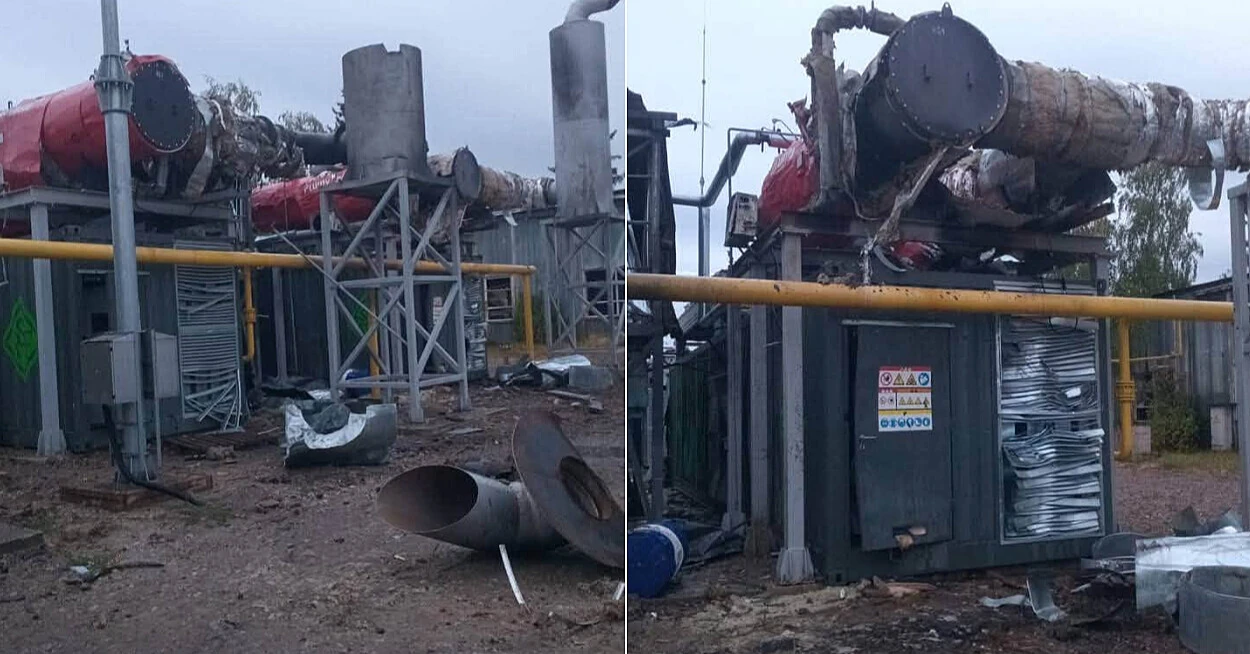
Russian strikes completely destroyed a 36.6 MW generation facility in the Sumy region, owned by one of the members of the Association of Distributed and Maneuverable Generation Entities. According to the association's estimate, the total generation capacity in the region is about 145 MW, so the lost facility accounted for roughly a quarter of that volume.
This was reported by the Association of Distributed and Maneuverable Generation Entities (ADMGE).
Two days ago, the association reported the first hit on a facility of one of its members in the Sumy region. After that, the energy infrastructure was attacked again - ADMGE reports three more hits.
As a result, the 36.6 MW facility has been completely destroyed, and there is currently no electricity production at it.
The association does not disclose the name of the enterprise and its exact location for security reasons.
One facility accounted for about a quarter of the region's capacity
According to ADMGE data, the total generation capacity in the Sumy region is about 145 MW. Thus, the loss of the 36.6 MW unit means the loss of approximately a quarter of the region's existing generating capacity.
It is this proportion that makes the attack indicative for front-line energy. Distributed generation in Ukraine has been actively developed as an alternative to large power plants that Russia could incapacitate with one or more massive strikes.
Instead of concentrating production at a few large sites, the approach envisages the creation of many smaller gas-piston, gas-turbine, and cogeneration units. The loss of an individual such unit theoretically should not critically affect the power supply of an entire region.
However, the situation in the Sumy region demonstrates the limitations of this model for regions with a relatively small total volume of local generation. Even one medium-sized facility here can constitute a significant share of the regional energy balance.
New megawatts actually replace destroyed ones
ADMGE draws attention to another problem of front-line regions: construction of new generation and restoration of destroyed ones are taking place simultaneously.
As a result, part of the new capacity being added by investors and energy companies does not increase the actual amount of available generation, but merely compensates for losses from Russian attacks.
Meanwhile, in industry statistics, newly built units may be recorded as new megawatts added. Therefore, the formal growth of installed distributed generation does not always mean a corresponding increase in the real available capacity in a specific region.
ADMGE believes that this factor needs to be separately taken into account when preparing front-line regions for the heating season: planned indicators for new generation commissioning must be compared with capacities that are simultaneously being destroyed or damaged as a result of attacks.
Restoration of such facilities takes months
Quickly compensating for the loss of capacity is also difficult. Construction of distributed generation facilities requires the procurement of equipment, the production and delivery times of which can be long, the attraction of financing, design, and connection to the grid.
After the destruction of a unit, a significant part of this cycle effectively has to be repeated. In front-line regions, the process is further complicated by the constant threat of new attacks and restrictions on construction and installation work.
The association also calls for separately addressing the issues of physical protection of small generation facilities and the availability of war risk insurance for companies ready to invest in the energy sector of front-line regions.
In effect, to maintain the energy balance of such regions, new capacities are no longer enough to be built simply according to an approved plan: they must be brought online at least at a rate that simultaneously compensates for the facilities that Russia is putting out of commission with strikes.
Based on materials from: Association of Distributed and Maneuverable Generation Entities, ExPro Consulting
