
Rada criminalizes the work of fraudulent call centers
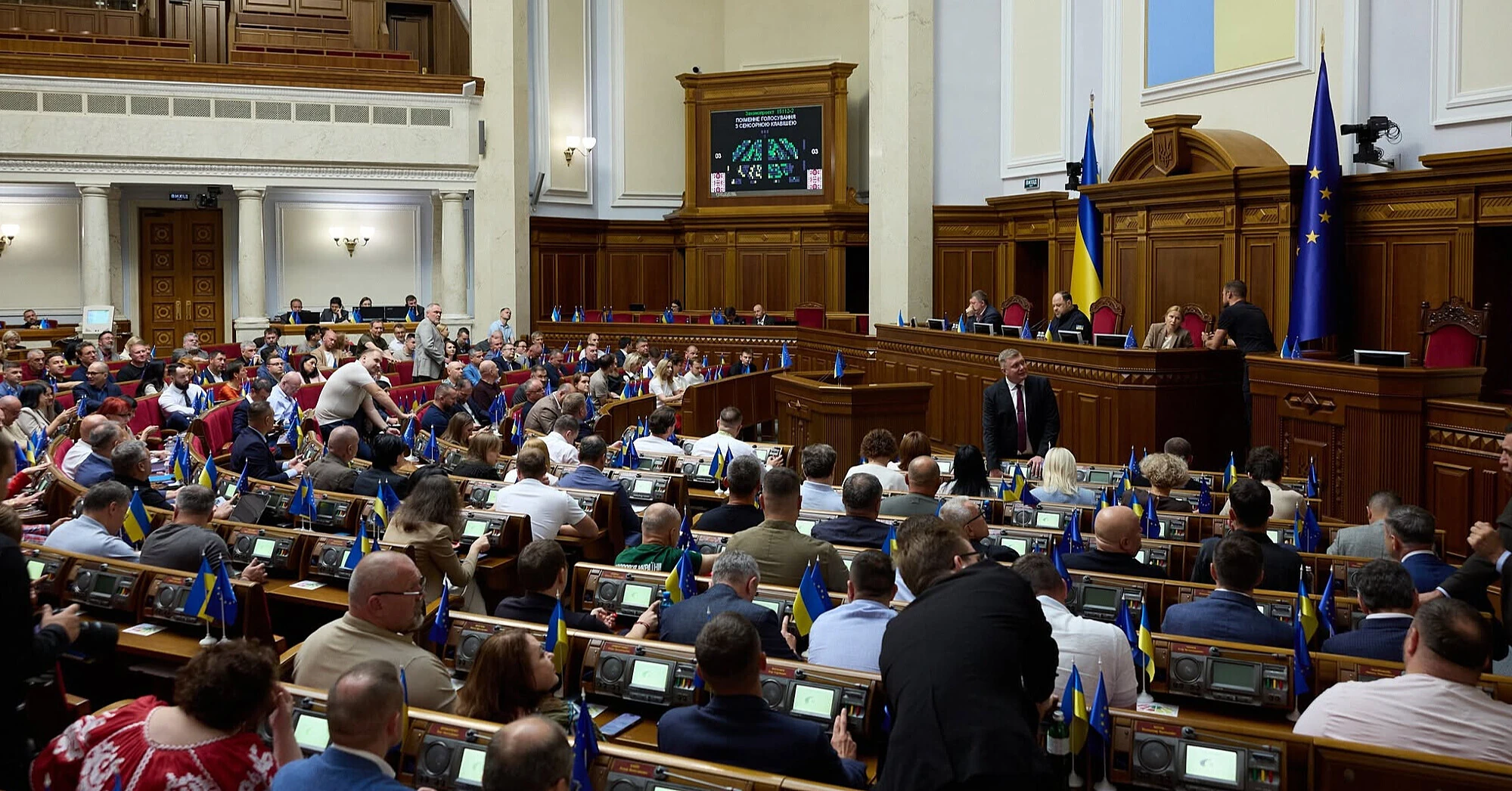
The Verkhovna Rada has adopted in its entirety bill No. 10190, which introduces separate criminal liability for electronic communication fraud, the creation and operation of fraudulent call centers, as well as involving people in such organizations.
313 MPs voted for the law in its entirety, MP Yaroslav Zheleznyak reported. The relevant law enforcement committee recommended on September 14 that parliament pass No. 10190 in the second reading and in its entirety. The previous day, the Rada also agreed to return to the document after it was not possible to move to consideration of another bill on a similar topic.
No. 10190 had been in parliament for almost three years. It was registered back in October 2023, and in May 2024 the Rada supported the document in the first reading with 267 votes.
E-fraud punishable by up to 12 years
The Criminal Code is supplemented with a new article 190-1. Electronic communication fraud is understood as the illegal collection, storage, processing and use of personal data, bank secrecy, payment card details, authorization codes and other payment information for taking possession of others' money or property through electronic communications.
The basic offense carries from three to eight years of imprisonment. If committed repeatedly or by a group of persons by prior conspiracy – from five to ten years.
For such actions in conditions of martial law or state of emergency or as part of an organized group, from seven to twelve years of imprisonment with confiscation of property are provided. The court may also ban the convicted person from holding certain positions or engaging in certain activities for up to three years.
Separate punishment for call center organizers
Another new article – 255-4 – relates directly to electronic communication fraudulent organizations.
For the creation of such a group or its leadership, from seven to twelve years of imprisonment with confiscation of property are provided. For participation in a fraudulent organization or provision of services to it – from five to ten years with confiscation.
If such crimes are committed in conditions of martial law or state of emergency or by an organized group, the punishment may be from eight to thirteen years.
The most severe sanction is provided for the creation of a community of two or more fraudulent organizations or its leadership – from ten to fifteen years of imprisonment with confiscation of property.
At the same time, an ordinary participant who, before being notified of suspicion, voluntarily tells law enforcement about the organization's activities and helps to expose it, under conditions defined by law, may be released from criminal liability. This provision does not apply to organizers and leaders.
Recruiting to fraudulent schemes will be punished
A separate article 255-5 establishes liability for involving people in fraudulent organizations. This includes, in particular, offers of employment or provision of services to such a call center, as well as distributing information in order to find new participants.
This carries from three to five years of imprisonment with confiscation of property. For repeated violation, actions during martial law or state of emergency or as part of an organized group – from five to ten years.
This is not the drop accounts law
No. 10190 should be distinguished from another bill – No. 16013, which the Rada supported only in the first reading with 299 votes on September 15. It is primarily aimed against the use of so-called drop accounts – transfer of payment cards, accounts, electronic wallets and access to them for fraud or other crimes.
Thus, No. 10190 establishes liability directly for electronic fraud and the activities of organized fraudulent structures, while No. 16013 separately regulates the illegal circulation and use of payment instruments.
The adopted amendments No. 10190 will come into force on the day following the official publication of the law.
Based on materials from: Yaroslav Zheleznyak, Verkhovna Rada
