
The Rada supported the reboot of the National Energy Commission in the first reading
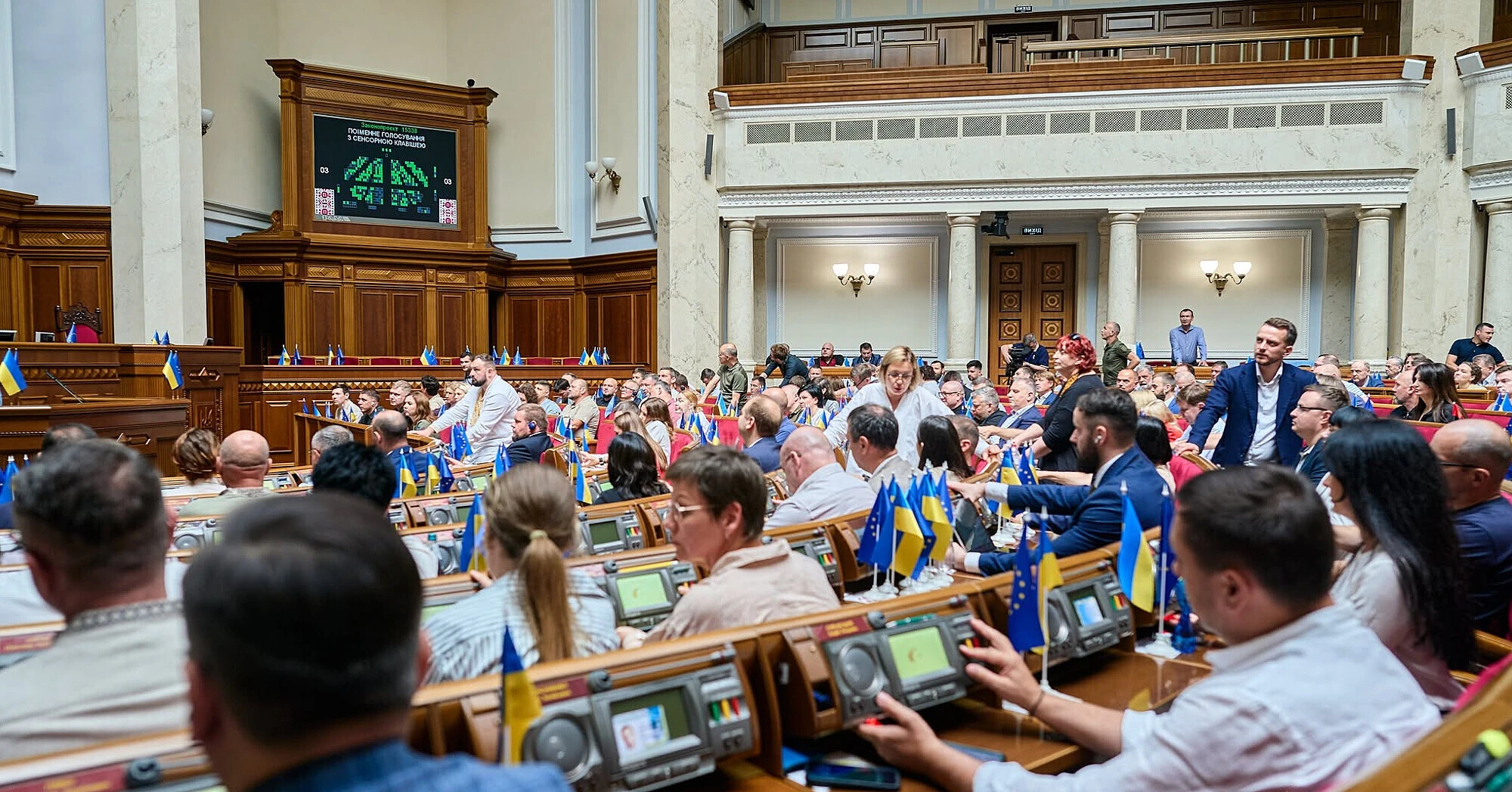
The Verkhovna Rada on September 16 supported in the first reading draft law No. 14282 on strengthening the independence of the NEURC and changing the procedure for forming its composition. 249 people's deputies voted in favor of the basis.
The result of the vote was announced by one of the co-authors of the document, Yaroslav Zheleznyak. On the website of the Verkhovna Rada, the draft law already has the status "being prepared for the second reading" - it has been adopted as a basis with further refinement.
One of the key provisions of the version submitted for the first reading provides for the early termination of powers of all current members of the NEURC and the actual reset of the regulator's composition. Zheleznyak stated that by the second reading the procedure is planned to be further refined.
The procedure for selecting new members of the Commission is also significantly changed. It is proposed to form the competition commission of six persons: two nominated by the relevant committee of the Verkhovna Rada, one - from the central body that formulates state policy in the fuel and energy complex, and three determined by the Cabinet of Ministers based on a joint proposal of the European Commission and the Energy Community Secretariat.
The competition itself is proposed to be held in two stages. First, candidates will undergo an interview to test professional knowledge, after which their moral and business, managerial, communication and analytical qualities, as well as compliance with the integrity criterion, will be assessed. Based on the results of the second stage, an open ranking of candidates should be formed.
The draft law also strengthens formal guarantees of the independence of the NEURC. It is proposed to directly prohibit the regulator from requesting or executing instructions or orders of the president, prime minister, members of the Cabinet of Ministers, other authorities, business, political parties and other persons. Such instructions should be considered unlawful influence.
In addition, the Energy Community Secretariat should conduct an independent assessment of the guarantees of the independence of the NEURC at least once every three years. It also provides for strengthening financial autonomy: the body that formulates state budget policy will be able to provide an opinion on the Commission's budget, but will not have the right to independently make changes to it or require such changes from the regulator.
At the same time, the provision on the simultaneous reset of the entire composition of the NEURC is debatable. The Commission itself back in December 2025 opposed the early termination of powers of all its members, stating that full rotation contradicts the European principle of phased renewal of the regulator's composition. At the same time, the NEURC supported the strengthening of institutional and financial independence and a greater role of European institutions in the competitive selection.
The Verkhovna Rada Committee on Ukraine's Integration into the EU in February also concluded that the draft law only partially complies with Ukraine's European integration commitments and needs refinement, in particular regarding the terms of office of NEURC members and taking into account the recommendations of the Energy Community Secretariat. Therefore, the final procedure for resetting the regulator may change by the second reading.
Based on materials: Verkhovna Rada of Ukraine, NEURC, Yaroslav Zheleznyak
