
Le Pen: France can no longer financially support Ukraine on the current scale
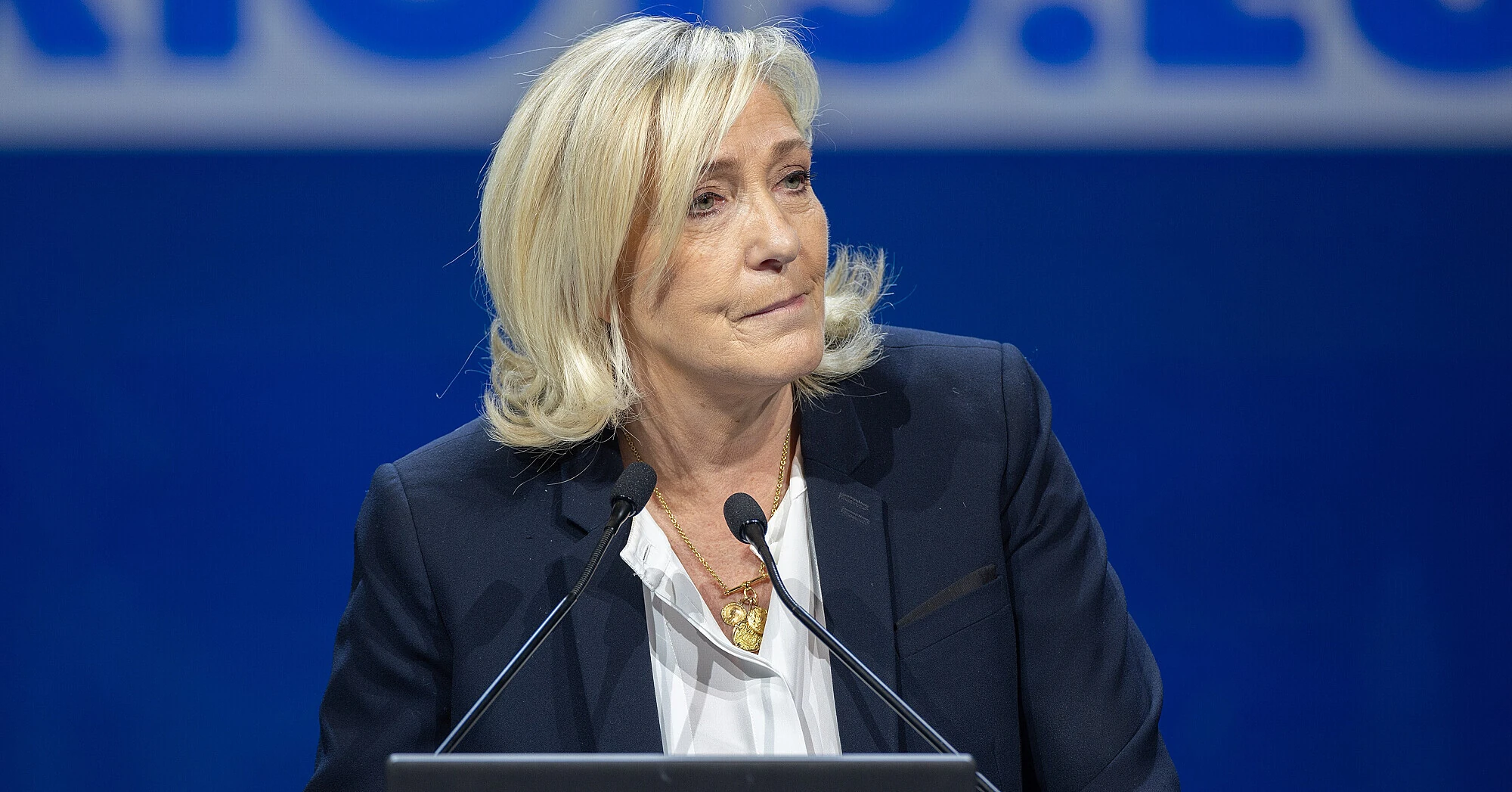
France can no longer provide financial assistance to Ukraine on the current scale due to the difficult state of public finances, said Marine Le Pen. At the same time, she is in favor of continuing the training of Ukrainian military personnel and the transfer of military equipment to Ukraine, but argues against the involvement of French Rafale fighter jets in the defense of Ukrainian airspace.
The leader of the National Rally made the statement in an interview with LCI, during which she outlined in detail her views on Russia's war against Ukraine, possible negotiations with Moscow, NATO's role, France's relations with the U.S., and the war in the Middle East.
Speaking about France's budgetary problems, Le Pen said that Paris must set priorities in spending state funds. It was in this context that she touched on financial aid to Ukraine.
According to her, France cannot continue to finance Ukraine "in the same proportion" as it has so far. At the same time, Le Pen stressed that she does not view this position as hostile to Ukraine.
"We can continue to train their soldiers, their army, we can continue to provide them with equipment so that they can defend themselves. But financially we can no longer," she said.
Le Pen linked this primarily to France's budgetary situation. She put aid to Ukraine on a par with the debate over French pensions and the country's contributions to the EU budget.
She stated that France currently pays around €26 billion to the EU budget, and the net contribution is approximately €10 billion. Should the National Rally program be implemented, Le Pen wants to limit France's net contribution to the EU budget to around €6 billion.
In a broader economic context, she also announced an intention to present a budget program cutting state spending by €125 billion. She said that she plans to save primarily on administrative costs, state agencies, anti-fraud measures, migration-related costs, and EU contributions, rather than on French pensions.
Le Pen against Rafale over Ukraine
Le Pen was separately asked about the idea of using French combat aircraft to defend Ukraine's airspace — in particular, the possible involvement of Rafale fighter jets.
In her opinion, President Emmanuel Macron is right to so far not consent to such a step. Le Pen believes that direct participation of French military aircraft in intercepting Russian targets over Ukraine could make France a party to the war.
"This act could put us in a state of complicity in the war," she explained.
Le Pen also reiterated her long-standing position on the need for an international peace conference. She said that she sees two dangerous scenarios: a direct involvement of NATO in the war, which in her view would risk a large-scale international escalation, or a continuation of the war for many years.
At the same time, she particularly noted the courage of the Ukrainian military, saying that young Ukrainians show "absolute bravery," but that a whole generation is paying an extremely high price for the war.
Wants to seat Zelensky and Putin at the same table
When asked whether she would invite Volodymyr Zelensky and Vladimir Putin to Paris for negotiations, Le Pen said yes.
However, she said, the negotiation format should not be limited only to Ukraine and Russia. Germany, Poland, and Turkey should also be at the table.
Le Pen believes that France should try to create conditions for negotiations preceding a peaceful settlement. As a historical example, she mentioned the negotiations on ending the war in Vietnam, which took place in France.
She also disagreed with criticism that negotiations while part of Ukrainian territory is occupied would mean capitulation or a "new Munich."
Describing her broader concept of foreign policy, Le Pen referred to Charles de Gaulle. In her view, France should maintain a distance from great powers and define its international policy primarily based on French national interests.
It is precisely maintaining channels of communication with various parties that, according to her, should ensure that France is not left outside the negotiating process at the time of an international crisis, particularly the war in Ukraine.
Criticized Trump for war against Iran
In the interview, Le Pen also made rather critical remarks about U.S. military actions against Iran.
She stated that these actions, in her opinion, do not comply with international law. At the same time, Le Pen did not go so far as to call the U.S. an adversary of France and stressed that Washington remains an ally.
She assessed that Donald Trump's administration has not achieved the declared military objectives in Iran, and that the escalation has created new global economic risks.
Le Pen drew particular attention to the situation in the Strait of Hormuz and the Bab-el-Mandeb Strait. According to her, problems on these key global trade routes for energy resources could trigger a global wave of inflation, the consequences of which would be felt by various countries.
Meanwhile, she said that she would not prohibit American military aircraft from using French airspace. In her view, Paris should instead try to convince Washington not to expand the war.
Thus, in the interview, Le Pen described a foreign policy course under which France would continue to help Ukraine with military equipment and training of troops, but would reduce direct financial support, would not involve French aviation in defending Ukrainian airspace, and would more actively promote negotiations with Russia.
Based on materials from: LCI / YouTube - full interview with Marine Le Pen
