
Politico: CDU discussing possible replacement of Chancellor Merz, he cancels trip to UN General Assembly
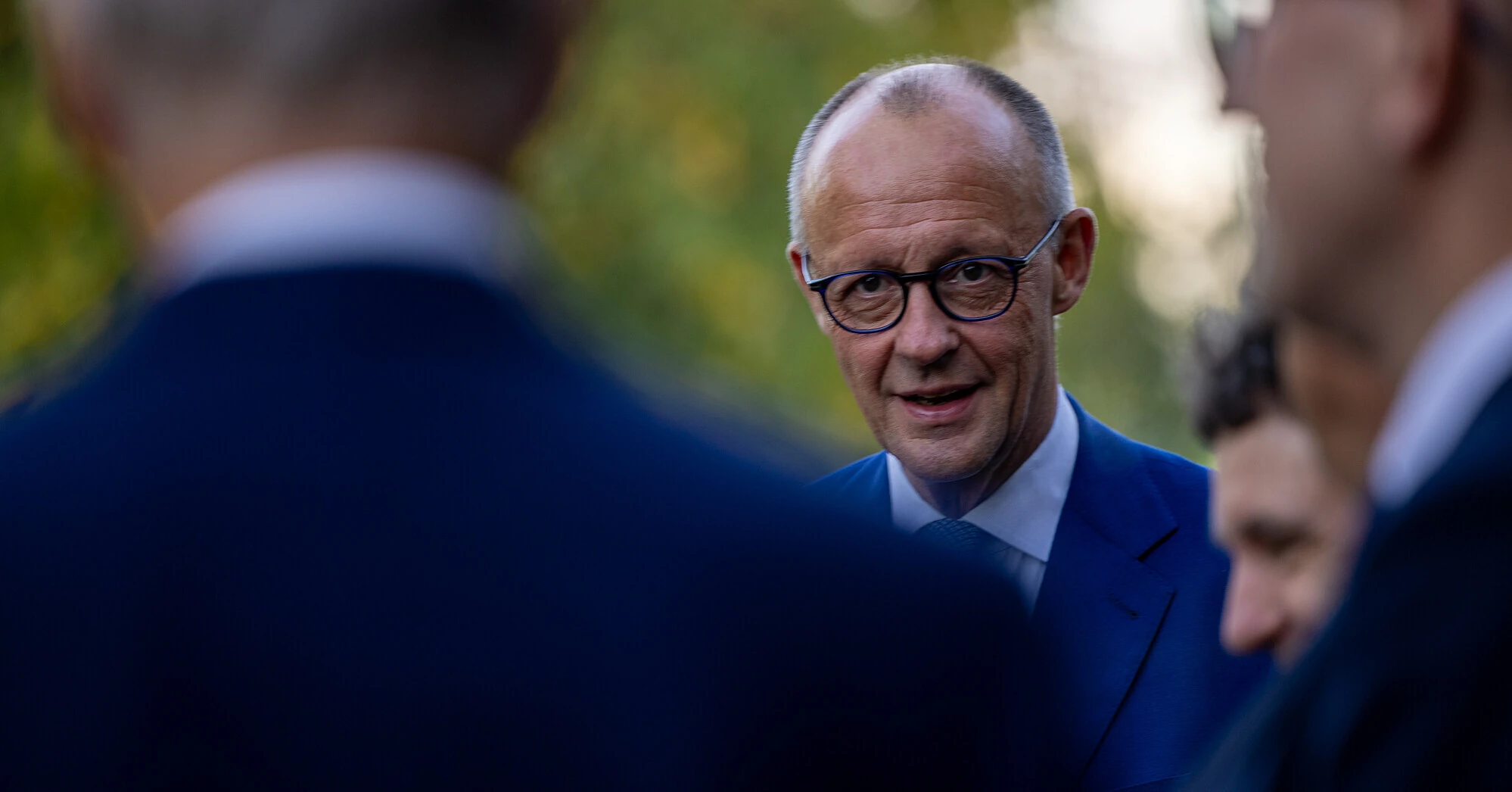
In the leadership of the German conservative bloc, they have started discussing the possibility of replacing Chancellor Friedrich Merz if the CDU performs poorly in the elections in Berlin and Mecklenburg-Western Pomerania on September 20. Political pressure has already forced Merz to cancel his planned trip to the UN General Assembly in New York.
Internal discussions about the so-called Kanzlertausch - change of chancellor without holding regular federal elections - are reported by Politico. This discussion has already gone beyond one outlet: German ZDF and ARD also report on disputes about Merz's future within the CDU after the party's unsuccessful elections in Saxony-Anhalt.
On Sunday, September 20, elections to the parliaments of Berlin and Mecklenburg-Western Pomerania will take place simultaneously. After them, the CDU will call an extraordinary meeting of the presidium. Officially, the party plans to analyze the voting results, but German media report that against the background of discussions within the party, the question of Merz's own future political position may also arise.
In Mecklenburg, the CDU has approached the threshold
The situation in Mecklenburg-Western Pomerania remains especially difficult for the party. According to a poll by Forschungsgruppe Wahlen for ZDF, conducted on September 7-10 among 1053 voters in the state, the CDU received 7% support - only two percentage points above the five percent threshold. In the previous state elections in 2021, the party got 13.3%.
ZDF emphasizes that such polls reflect only the mood at the time of the study and are not a prediction of the election result; the statistical margin of error is approximately 2-3 percentage points depending on the party's level of support. In the local CDU branch, they are already publicly talking about the risk of not making it into the state parliament.
In Berlin, the situation for the CDU is better, but the party also does not have confident leadership. The same ZDF poll among 1100 voters gave the Christian Democratic Union 21%, and the Left Party 23%. The current coalition of CDU and SPD, according to these figures, would lose its majority in the state parliament.
Merz cancels speech at UN General Assembly
The scale of domestic political problems became noticeable also on the chancellor's foreign policy schedule. Merz refused a trip to New York planned for next week, where he was to speak at the UN General Assembly.
In German government circles, they explained the decision to ARD by saying that the chancellor's presence after Sunday's elections will be needed in Berlin.
At the same time, part of the CDU leadership is trying to stop public talk about changing the chancellor. On September 16, all eight prime ministers of the federal states from the CDU issued a joint statement, in which they called for focusing on the government's work instead of personnel discussions and declared readiness to work together with the chancellor.
Merz himself perceived the document as a sign of support.
Changing the chancellor without elections is possible, but requires a majority in the Bundestag
Politico examines several possible paths of the crisis - from a voluntary resignation of Merz and a coalition agreement on a new chancellor to a vote in parliament or a vote of confidence initiated by Merz himself.
The German constitution significantly limits the possibility of simply removing the chancellor. The Bundestag can express no confidence in him only through the so-called constructive vote of no confidence: deputies must simultaneously elect a new chancellor by an absolute majority. After such a decision, the President of Germany is obliged to dismiss the incumbent head of government and appoint the elected successor.
Another mechanism can be triggered by Merz himself - to raise the question of confidence in the Bundestag. If a majority of deputies does not support him, the chancellor can propose to the Federal President to dissolve parliament. The President has the right to do so within 21 days, but early elections in such a case do not happen automatically: parliament can still form a majority around another chancellor. This is exactly the mechanism used by Merz's predecessor Olaf Scholz at the end of 2024.
Therefore, even a serious internal party conflict by itself will not mean the immediate loss of office by Merz. To change the head of government, the CDU/CSU will also have to negotiate with the Social Democrats, who are partners of the conservatives in the federal coalition.
Merz's political position has deteriorated after the elections in Saxony-Anhalt and the drop in the nationwide ratings of the CDU/CSU. According to a YouGov poll published on September 15, the CDU/CSU bloc received 18% support, and AfD 29%. This is a measurement of current respondent sentiment, not a prediction of future federal elections.
So, the immediate test for Merz will be the results of the two state elections on September 20 and the reaction of the CDU leadership afterwards. Legally, changing the chancellor will require a separate parliamentary process and the formation of a majority around the successor.
Based on materials from: Politico, Tagesschau, ZDF
