
Toyota to equip hundreds of thousands of industrial robots with physical AI
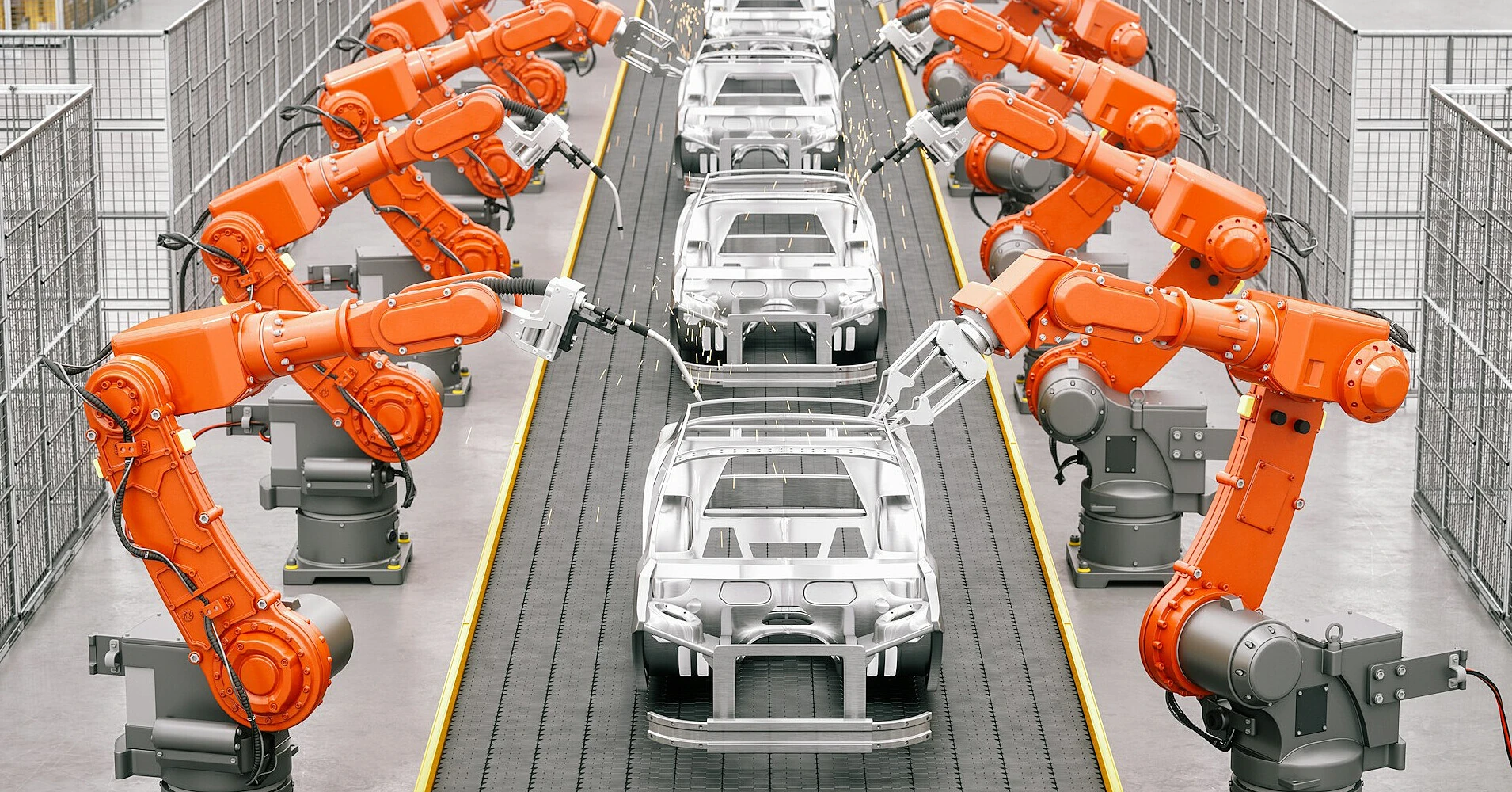
From 2028, Toyota Motor plans to invest around 1 trillion yen ($6.36 billion) annually in updating its production facilities and robotization. The program will cover approximately 60 factories in various countries and a fleet of about 400,000 industrial robots of Toyota Group and its suppliers.
The company's plans were presented by Executive Vice President and Chief Technology Officer Hiroki Nakajima during a meeting with investors at Toyota Motor Europe's European headquarters.
This is not a one-time purchase of 400,000 new robots. Toyota plans to gradually modernize the existing equipment fleet and production lines. Of the approximately 400,000 machines, about 150,000 operate at Toyota and other group companies' enterprises, and about 250,000 at suppliers.
One of the key elements of the modernization will be the introduction of so-called physical artificial intelligence. Toyota wants to use Large Behavior Models, which give robots the ability to learn to perform physical tasks based on human demonstrations.
The company is developing this technology at its Toyota Research Institute. Unlike traditional industrial robots, which are programmed for a clearly defined sequence of movements, systems with physical AI should adapt their actions to the situation and master new operations through learning.
As an example, Toyota presented the ELEY robot - Embodied Learning robot for Enhanced Yield. During the demonstration, the machine learned to fold a T-shirt, initially repeating the actions shown by a human, and then performing the task independently.
Toyota expects that such systems will gradually be able to perform more complex production operations where traditional automation is not flexible enough. The company also plans to unite equipment and factories into a single digital manufacturing system.
Toyota calls this approach the next stage of factory automation. Robots, production lines, and information systems should be connected end-to-end - from an individual operation to the entire production process.
Robotization for Toyota is associated not only with reducing manual labor. The company names among the main goals: increasing productivity, easing physically difficult work, and solving the problem of labor shortages and transfer of production skills.
Earlier, Toyota stated that it sees robots primarily as partners of people in production. The company believes that combining decades of experience in mass automobile production with modern AI models can make it possible to automate operations that were previously difficult to transfer to machines.
Based on materials from: Nikkei Asia, Car Watch, Toyota Motor Corporation
