
Zelenskyy spoke about the results of the "Carpathian Eight" summit
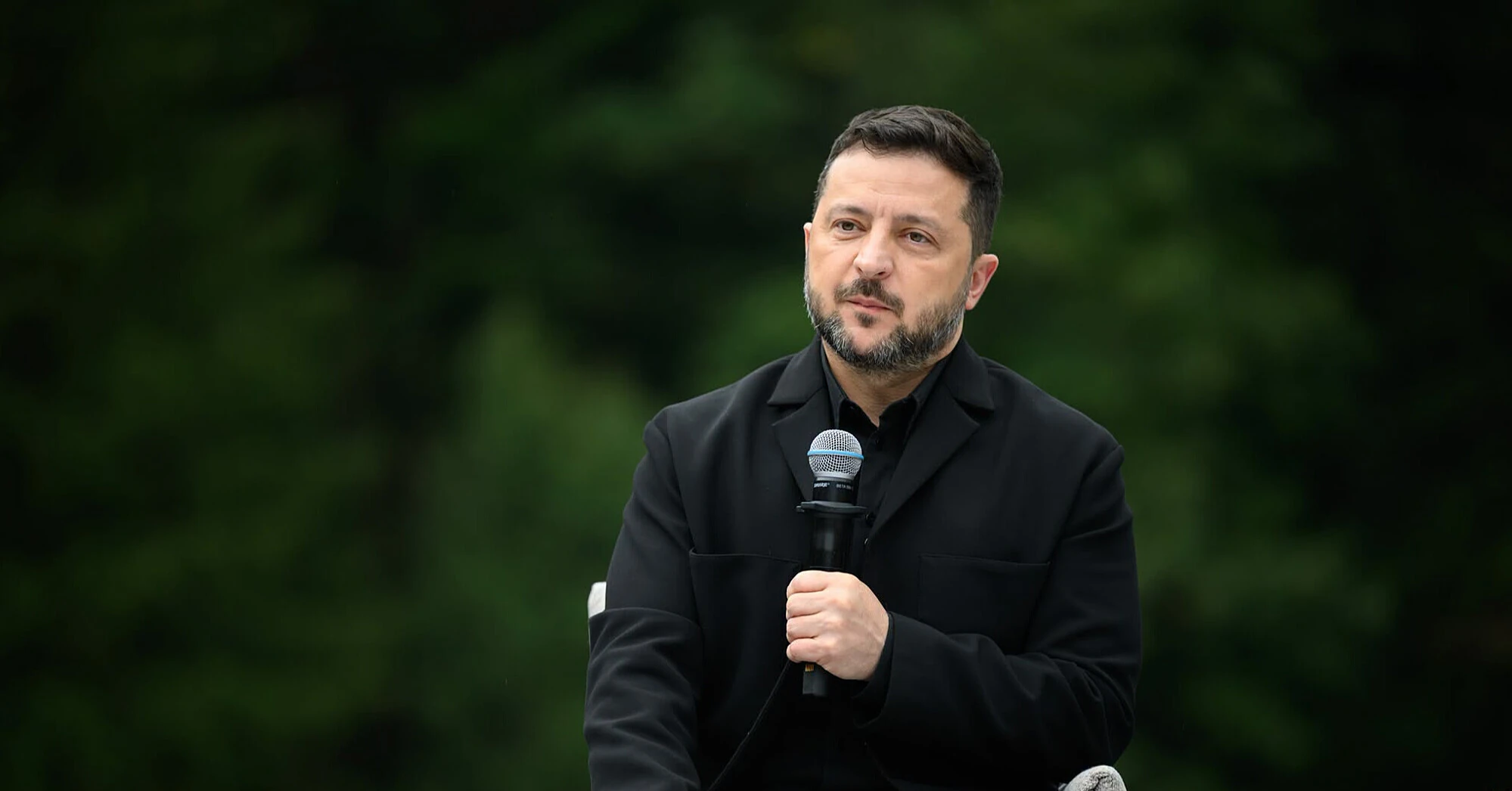
Following the first summit of the Carpathian Integration Initiative, more than 50 agreements totaling over €1 billion have been prepared for signing. A significant part of the overall investment portfolio is related to energy, and Ukraine proposes turning the Carpathian region from a predominantly transit space into a major energy supplier for the European Union.
This was stated by President Volodymyr Zelenskyy during the international economic forum "Carpathian Integration Initiative", which is taking place on September 18 in the Ivano-Frankivsk region.
According to the president, the Carpathian macroregion presented itself for the first time as a single market with a common investment portfolio. About 550 business representatives took part in the economic part of the initiative, and the countries of the region presented almost 100 business projects with a total value of about €40 billion.
"Also, more than 50 agreements worth over one billion euros have been prepared for signing today. And this is only the beginning", — stated Zelenskyy.
Almost half of the investment portfolio is in energy
Energy is to be one of the main directions of the new initiative. According to Zelenskyy, about half of the presented investment portfolio is related to this sector.
Among the main directions, the president named the construction of solar and wind power plants, the development of electricity storage systems, the creation of new interstate interconnectors, and the more active use of the region's large underground gas storage facilities.
A separate project may be the Carpathian wind energy cluster with a capacity of 1.5 GW. According to the Ukrainian side's plan, such projects should allow the Carpathians to become a supplier of energy for other EU countries, and not only a territory through which energy and trade routes pass.
Zelenskyy linked the development of the region's energy potential with Europe's long-term task of reducing dependence on Russian energy resources. The Carpathian region already has large underground gas storage facilities and developed cross-border energy connections.
The region unites a market with a GDP of more than $3.4 trillion
The Carpathian Integration Initiative is designed for cooperation between Ukraine, Austria, Poland, Romania, Slovakia, Hungary, Czechia and Serbia. In these eight countries within the wider Carpathian macroregion, about 126 million people live, and its combined GDP is estimated at more than $3.4 trillion — about 15% of the European Union's GDP.
Key industries of the region include mechanical engineering, production of equipment and electronic components, chemical industry, mining, and agro-industrial complex.
The President's Office believes that in the coming years the economy of the Carpathian macroregion could potentially grow about twice as fast as the European Union average. This is an assessment of the Ukrainian side, not an approved EU forecast.
Ukraine proposes faster modernization of roads and railways
The second major block of the initiative will be transport and logistics infrastructure. Kyiv proposes to increase the capacity of transport corridors, modernize roads and railways, border crossings, and develop infrastructure for transporting large volumes of cargo.
Zelenskyy emphasized that the Carpathians are located on routes between the Black Sea, Central Europe, the South Caucasus and Asia. Cargo, electricity and passenger flows going through Constanța, Varna or Odesa to Central Europe pass through this macroregion.
Special attention is proposed to be given to the so-called military mobility — infrastructure that allows faster movement of equipment, cargo and other resources between the states of the region.
In the final declaration, the participants also agreed to support projects for integrating regional transport and logistics infrastructure into the pan-European transport network and modernizing border infrastructure.
A separate EU strategy for the Carpathians is sought
Ukraine proposes to raise cooperation to the level of a separate macro-regional policy of the European Union. This refers to the creation of the EU Strategy for the Carpathian Region — EUSCARP.
Similar instruments already operate for other European macroregions, in particular the Danube and Alpine ones. Their existence allows to systematically combine infrastructure and economic projects of several countries and use EU financial programmes for them.
In the declaration of the Carpathian Summit, the participants agreed to consider developing such a strategy on the basis of the existing EU Strategy for the Danube Region. It is also proposed to make more active use of Interreg and Interreg NEXT programmes to finance cross-border projects.
In addition to infrastructure and energy, areas of cooperation include the development of production chains, critical mineral resources, civil protection systems, tourism, creative industries, support for local communities and joint cross-border projects.
The first summit took place in the Ivano-Frankivsk region
The first plenary session of the Carpathian Summit took place in Huta, Ivano-Frankivsk region. Along with Zelenskyy, it was attended by President of Romania Nicușor Dan, President of Serbia Aleksandar Vučić, Prime Minister of Poland Donald Tusk, President of the Federal Council of Austria Christina Schwarz-Fuchs, First Vice-President of the Senate of Czechia Jiří Drahoš, and State Secretary of the Ministry of Foreign and European Affairs of Slovakia Marek Eštok. Representatives of Hungary were to join the economic part of the forum.
In the declaration adopted following the summit, the participants defined the Carpathian Integration Initiative as a platform for coordinating the actions of states, regional and local authorities, European Union institutions and international partners.
It is expected that the platform will be used not only for implementing investment projects, but also for the European integration of candidate countries, developing the energy and transport connectivity of the region and strengthening its resilience.
Thus, the almost €40 billion of potential projects presented at the first summit significantly exceeds the value of agreements already prepared for signing. At this stage, we are talking about more than 50 specific agreements worth over €1 billion, while the rest of the portfolio remains a set of projects for further elaboration and attraction of financing.
Based on materials from: Volodymyr Zelenskyy, Office of the President of Ukraine, Declaration of the Carpathian Integration Initiative, Office of the President — on the results of the summit
