
Fedorov: General Staff asked to buy shells, of which there were 800 thousand in warehouses
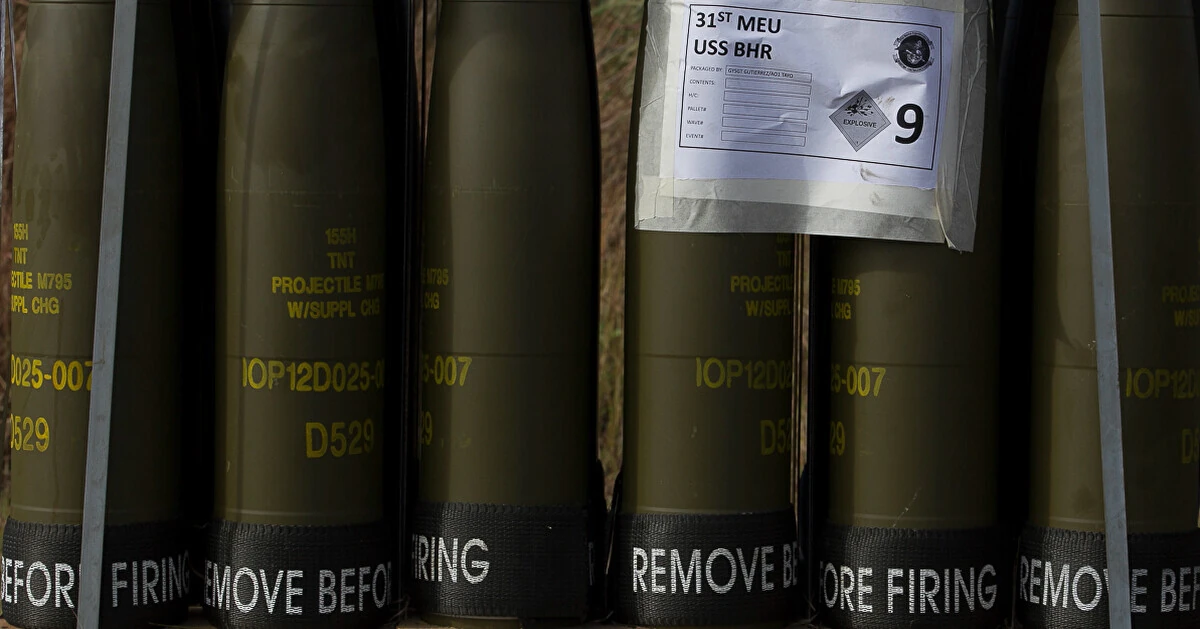
Former Defense Minister Mykhailo Fedorov stated that during his tenure he repeatedly refused to approve certain requests from the General Staff for arms procurement. In particular, according to him, the military command asked to purchase additional 122-mm and 152-mm shorter-range ammunition, although there were already about 800,000 such shells in warehouses.
Fedorov told this in an interview with "Ukrainska Pravda." He cited this case as an example of disputes between the Ministry of Defense and the General Staff over which types of weapons to allocate limited resources to.
Fedorov also stated that differences arose regarding armored vehicles. According to him, the General Staff proposed purchasing heavy large armored vehicles, while the Ministry of Defense team insisted on buying pickup trucks with subsequent armoring.
There is no independent confirmation of Fedorov's data about 800,000 shells in open sources. The General Staff has not publicly commented on this specific statement by the former minister so far.
The official defense procurement system stipulates that it is the General Staff that forms the needs of the Armed Forces of Ukraine - determines the type of weaponry, the required quantity, and delivery timelines. The Ministry of Defense processes and approves the list, sets priorities, and passes it to the Defense Procurement Agency, which then conducts the procedure and concludes contracts. Therefore, the situation described by Fedorov actually concerned disagreements between the General Staff and the Ministry of Defense leadership over the priority of certain stated needs.
Public decisions of the Ministry of Defense during Fedorov's tenure show that the department tried to reorient part of artillery procurement to longer-range ammunition. In May, the Defense Procurement Agency completed the largest purchase by value in its history - a batch of long-range 155-mm shells. Six suppliers won in the procedure, and competition allowed reducing the initial cost by 16%, or billions of hryvnias. The entire contracted volume is to be delivered throughout 2026.
In June, Fedorov already named artillery ammunition with a range of at least 30 km as one of three main areas where Ukraine needs additional partner assistance. The other two are strengthening air defense and scaling up drone and missile production.
The same approach Ukraine proposed to apply to international military aid. In June, Denmark agreed to transfer an additional 15,000 long-range artillery shells to Ukraine. According to Fedorov, Kyiv asked Copenhagen to revise part of the already planned support and reorient resources from shorter-range ammunition to long-range ones. Part of this batch had already been delivered to Ukraine at that time.
Fedorov explained this priority by the expansion of the so-called drone kill-zone near the front line: the greater range of artillery allows keeping systems further away from the zone of mass drone usage and simultaneously hitting Russian logistics and command posts.
At the same time, the restructuring of the procurement system under Fedorov was accompanied by disputes both with the General Staff and with manufacturers. His team tried to broader transition to competitive tenders and create Centers of Competence that were supposed to formulate weapons requirements based on battlefield data. However, the preparation of technical specifications was delayed, and Fedorov himself after resignation accused the General Staff of slowing down the creation of these structures. Representatives of the defense industry, for their part, warned about the risk of delays in contracting and future deliveries.
Based on materials: Ukrainska Pravda, Ministry of Defense of Ukraine, Ministry of Defense of Ukraine
