
US and Italy sign agreement on critical minerals
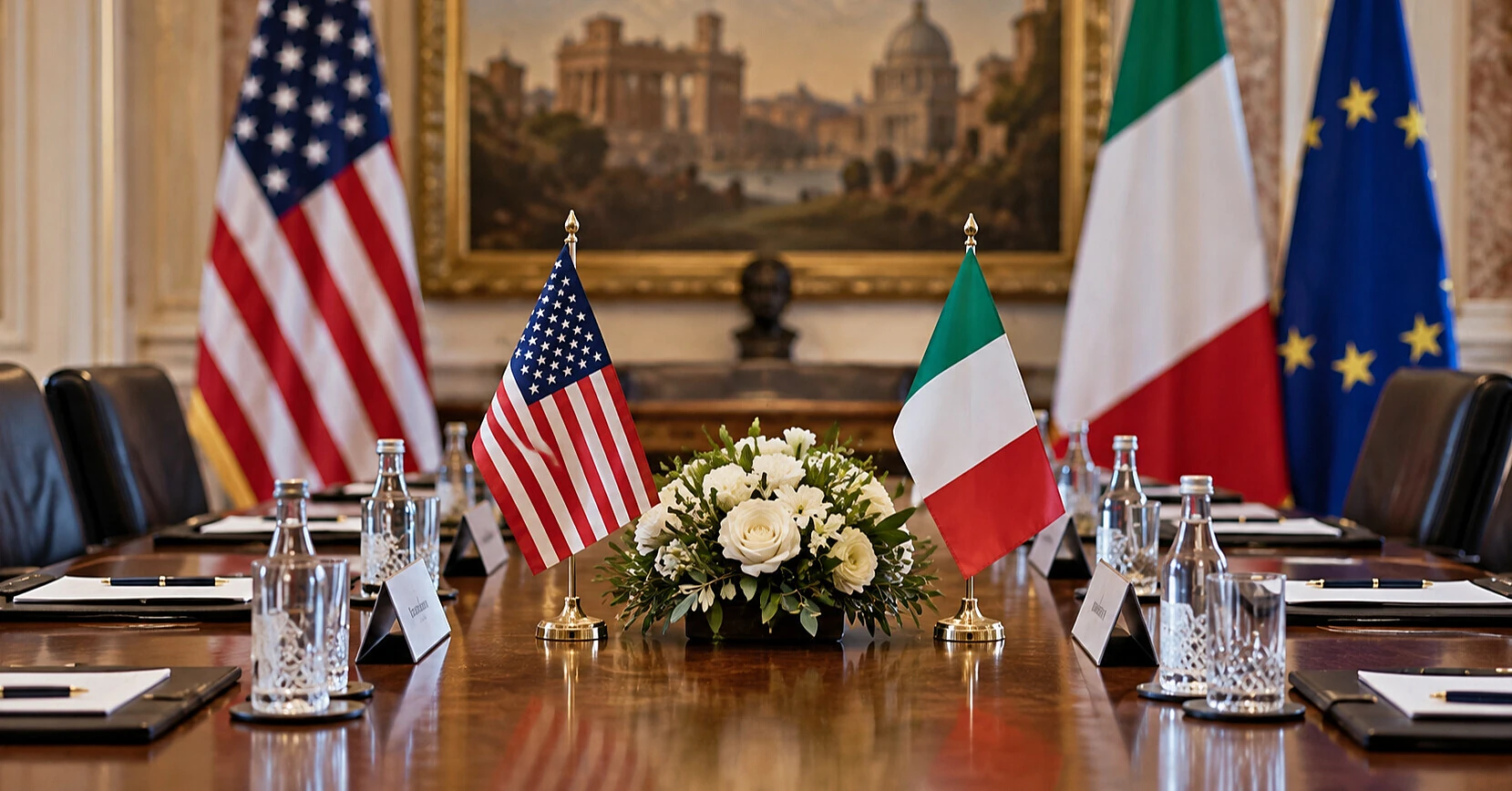
The US and Italy have signed a memorandum of cooperation in the field of critical minerals and rare earth elements. The agreement provides for joint work to protect supply chains of raw materials needed for the production of semiconductors, artificial intelligence systems and other strategic technologies.
The document was signed on September 21 in New York by US Secretary of State Marco Rubio and Italian Foreign Minister Antonio Tajani. The parties will establish a separate technical working group to handle the practical implementation of the agreement.
Washington and Rome intend to exchange information and expertise, as well as attract public and private capital into projects for the extraction, processing and recycling of critical raw materials. Italy expects, in particular, to engage its own companies specializing in the processing and recycling of materials.
A separate area of cooperation concerns prices for critical minerals. Italy and the US plan to work together with other partners to develop pricing mechanisms that should make the market less dependent on individual suppliers.
Tajani previously explained that one of the goals of the partnership is to create an alternative market for critical raw materials, where China cannot unilaterally determine price conditions. He called the agreement a concrete industrial and trade policy project, beneficial for both countries.
The new agreement is also linked to the American initiative PAX Silica, which Italy joined on July 31. Its task is to increase the resilience of supply chains for artificial intelligence and semiconductor manufacturing industries.
In addition, Italy participates in the US-launched FORGE forum, dedicated to geostrategic cooperation in the field of critical resources. The bilateral memorandum is intended to complement the agreement on critical minerals that the US and the European Union concluded in April, as well as G7 initiatives to diversify raw material supplies.
Critical minerals and rare earth elements are used in electronics, batteries, energy, defense industry, microchip production and other high-tech products. The US and European countries have been expanding investments in alternative supply chains in recent years to reduce dependence on dominant suppliers.
Based on: Italian Foreign Ministry
