
BP halts work on two major wind farms in Germany
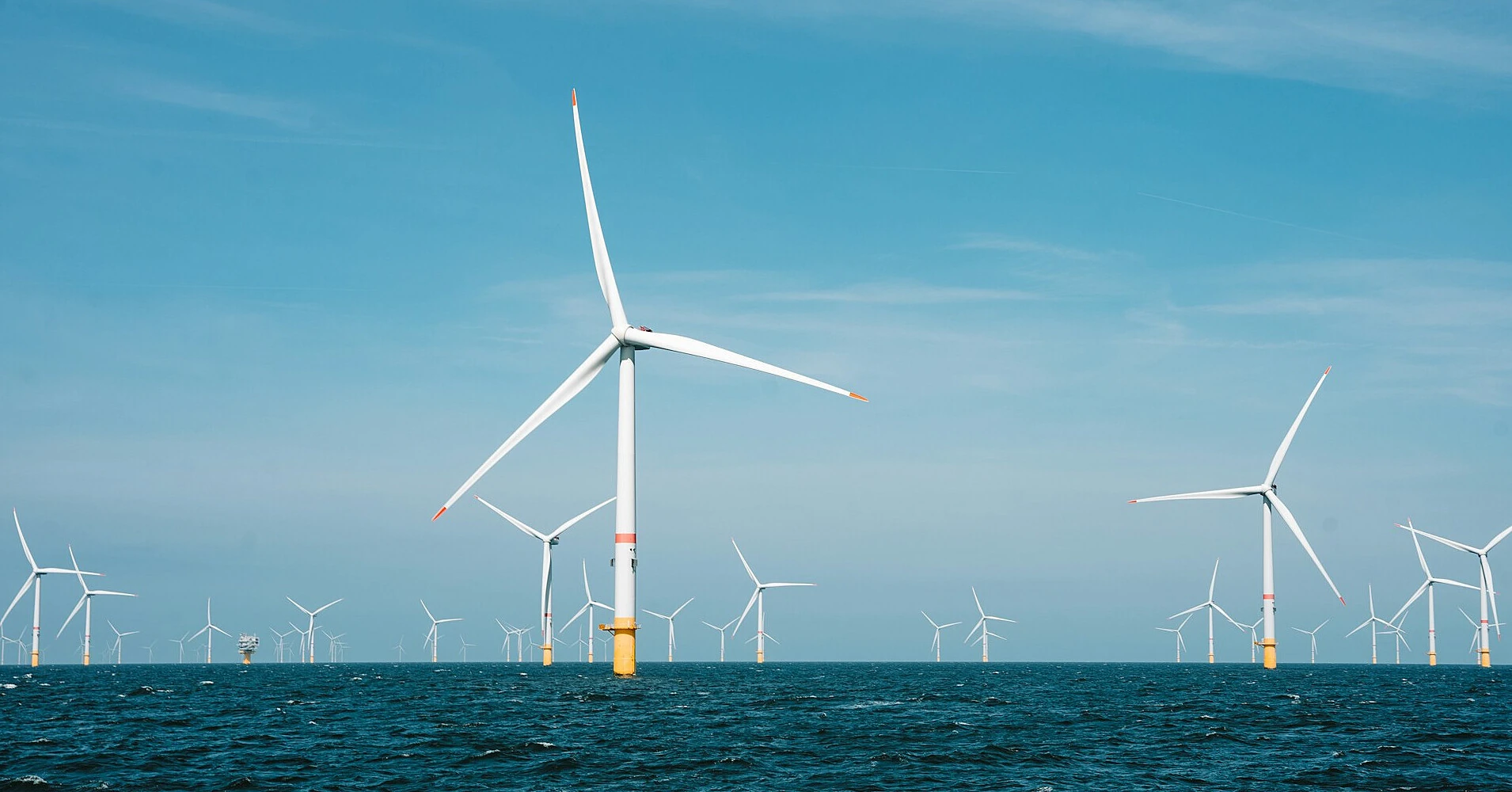
Work on two large offshore wind farms, Oceanbeat East and Oceanbeat West, in the German part of the North Sea has effectively been at a standstill for several months. The projects' combined planned capacity is around 4 GW, and BP once offered almost €6.8bn for the right to develop them.
This is according to a joint investigation by NDR, WDR and Süddeutsche Zeitung. Formally, the operator JERA Nex bp has not yet given up on construction and says no final decision has been made. However, journalists have found several signs that project implementation has actually halted.
BP secured the rights to two sites in the North Sea following a 2023 auction, bidding a total of around €6.8bn. The company's offshore business subsequently moved to the joint venture JERA Nex bp. According to JERA, the capacity of Oceanbeat East and Oceanbeat West is 2.1 GW each.
Officially, both projects are still in the development phase. At the same time, former employees told journalists that the operational staff working on Oceanbeat in Hamburg were laid off or left the company under termination agreements at the end of July.
>
Furthermore, foundations and wind turbines for the projects have not yet been ordered, installation vessels have not been reserved, and there are no contracts for the future electricity. Industry experts believe these processes should already be underway if the wind farms are to be commissioned according to the current schedule.
According to the investigation, JERA Nex bp representatives have also discussed with German politicians the possibility of returning the sites obtained at auction to the state. Current legislation does not provide for a voluntary return mechanism.
The company cites delays in grid infrastructure construction and rising costs as reasons for the difficulties. JERA Nex bp told journalists that it is considering various options and is trying, together with all parties, to find a "sensible solution" for Oceanbeat. The company separately emphasizes that no decision not to build the wind farms has been made at this time.
The scale of the projects is significant for the German energy system. At the end of the first half of 2026, the total capacity of Germany's offshore wind farms was around 10.8 GW. The two Oceanbeat projects would have added about 4 GW more.
The delay also creates a problem for the electricity grid. Operator TenneT is already building infrastructure to connect the future wind farms. According to the estimate cited by NDR, WDR and SZ, the corresponding grid projects could cost €20-30bn, and the work is already at a stage where it cannot simply be stopped.
According to industry sources cited by journalists, a shortfall of every gigawatt of planned offshore generation could increase electricity costs in Germany by €500-600m per year. If both Oceanbeat projects are not implemented or their commissioning is significantly delayed, the potential additional costs are estimated at around €2.2bn per year.
JERA Nex bp continues to list Oceanbeat East and Oceanbeat West among its German projects on its website, with a combined potential capacity of around 4 GW.
Sources: Tagesschau / NDR / WDR, Süddeutsche Zeitung, JERA, JERA Nex bp
