American billionaire and investor Todd Boehly has formed a consortium with the participation of the U.S. government's financial corporation and major investors from the Persian Gulf to acquire the international business of Russian oil company Lukoil.
Negotiations are at an advanced stage, but a final agreement with the Russian company has not yet been reached, the Financial Times reports, citing people familiar with the process.
The consortium includes the U.S. International Development Finance Corporation (DFC), a federal development corporation. According to the FT, it could get a stake of more than 10% in a new company that will control the acquired assets.
Structures of Sheikh Tahnoon bin Zayed Al Nahyan, brother of the President of the United Arab Emirates, and the Qatari Al-Hayat family also joined the group.
Expectations are that Sheikh Tahnoon's International Holding Company, together with Allied Investment Partners from the UAE, will become one of the main participants of the consortium. Boehly and the DFC, according to the FT, could control most seats on the board of directors of the future company.
The emergence of this group creates competition for U.S. firm Carlyle, with which Lukoil signed an agreement in January for the sale of LUKOIL International GmbH, a structure that holds most of the Russian group's international assets.
However, the agreement with Carlyle is still not finalized. Lukoil stressed from the beginning that it is not exclusive and the company may negotiate with other buyers.
The scale of the assets makes the deal one of the largest potential transactions in the global oil industry. In March, Lukoil wrote down the value of its overseas business to approximately $20 billion.
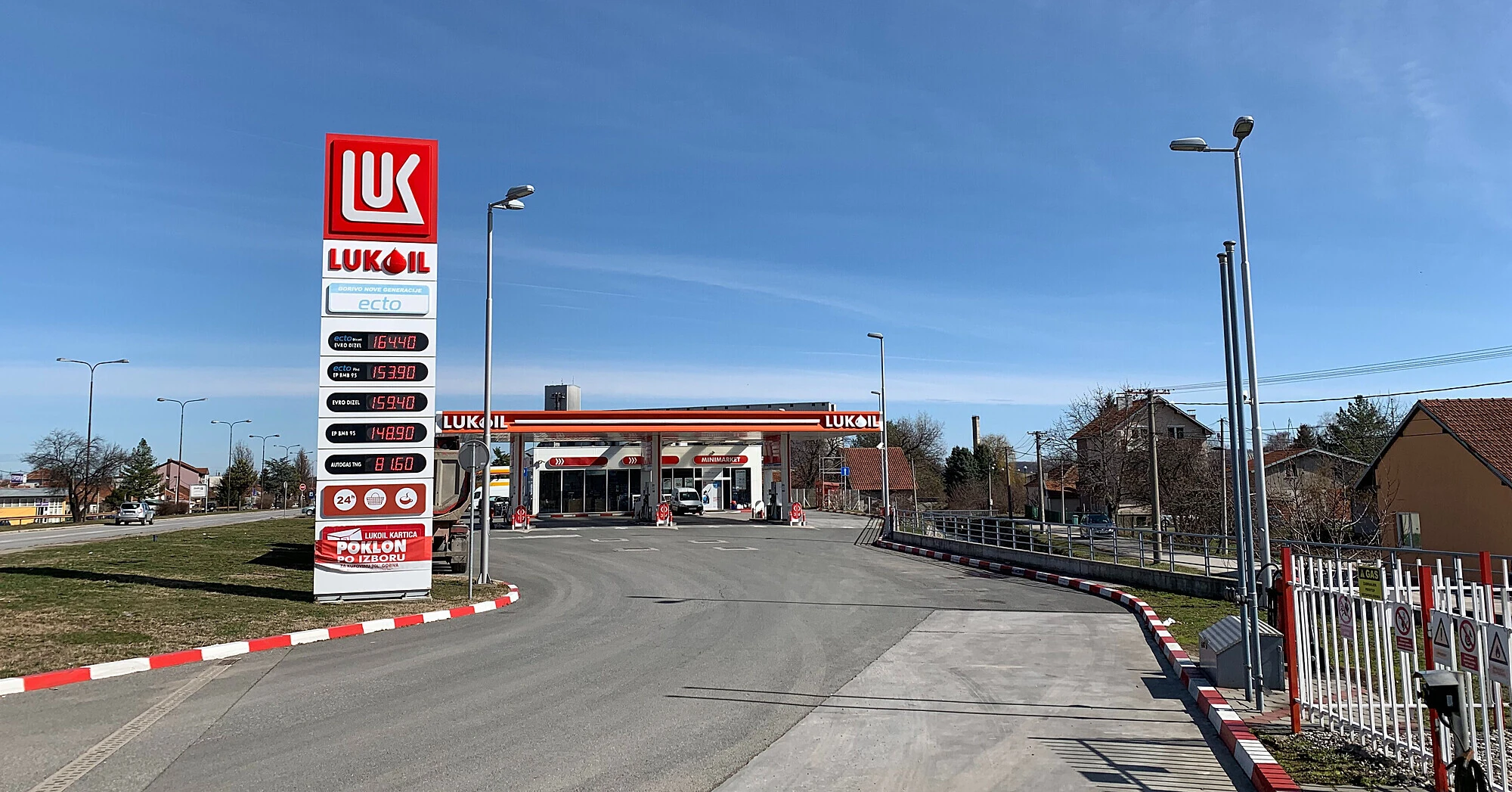
The portfolio includes oil and gas fields in various countries, thousands of gas stations, and major refining assets in Europe. Among them are refineries in Bulgaria and Romania. The total proven and probable reserves of the assets up for sale exceed 3 billion barrels of oil equivalent.
Lukoil began selling its international business after U.S. sanctions were introduced in October 2025. The U.S. Treasury Department then added Lukoil and Rosneft to the sanctions list, explaining the decision by the need to increase pressure on Russia's energy sector and reduce revenues that Moscow can use for the war against Ukraine.
The sale of foreign assets is controlled by the U.S. Office of Foreign Assets Control (OFAC). The current general license allows potential buyers to negotiate, conduct audits, and enter into conditional agreements, but does not permit completing the transfer of assets.
A separate OFAC permit is required for the actual deal. The regulator also requires that after the sale the assets fully sever ties with Lukoil, and that the Russian company does not receive immediate financial gain from the transaction. The current authorization for negotiations is valid until October 22, 2026.
The DFC's participation creates an unusual situation: a U.S. government body could potentially become an investor in the buyer, while another part of the U.S. administration must approve the sale itself.
The DFC has recently been using direct investments more actively for projects that Washington considers important for U.S. economic and national security. In September alone, the corporation's board of directors approved more than $8 billion in new investments in strategic projects.
The Financial Times notes that the White House, structures of the Al-Hayat family, and Boehly declined to comment on the potential deal. Lukoil and International Holding Company did not respond to the publication's requests.
Based on materials from: Financial Times, Lukoil, OFAC