
Drying Up of the Rhine Forces German Factories to Cut Production
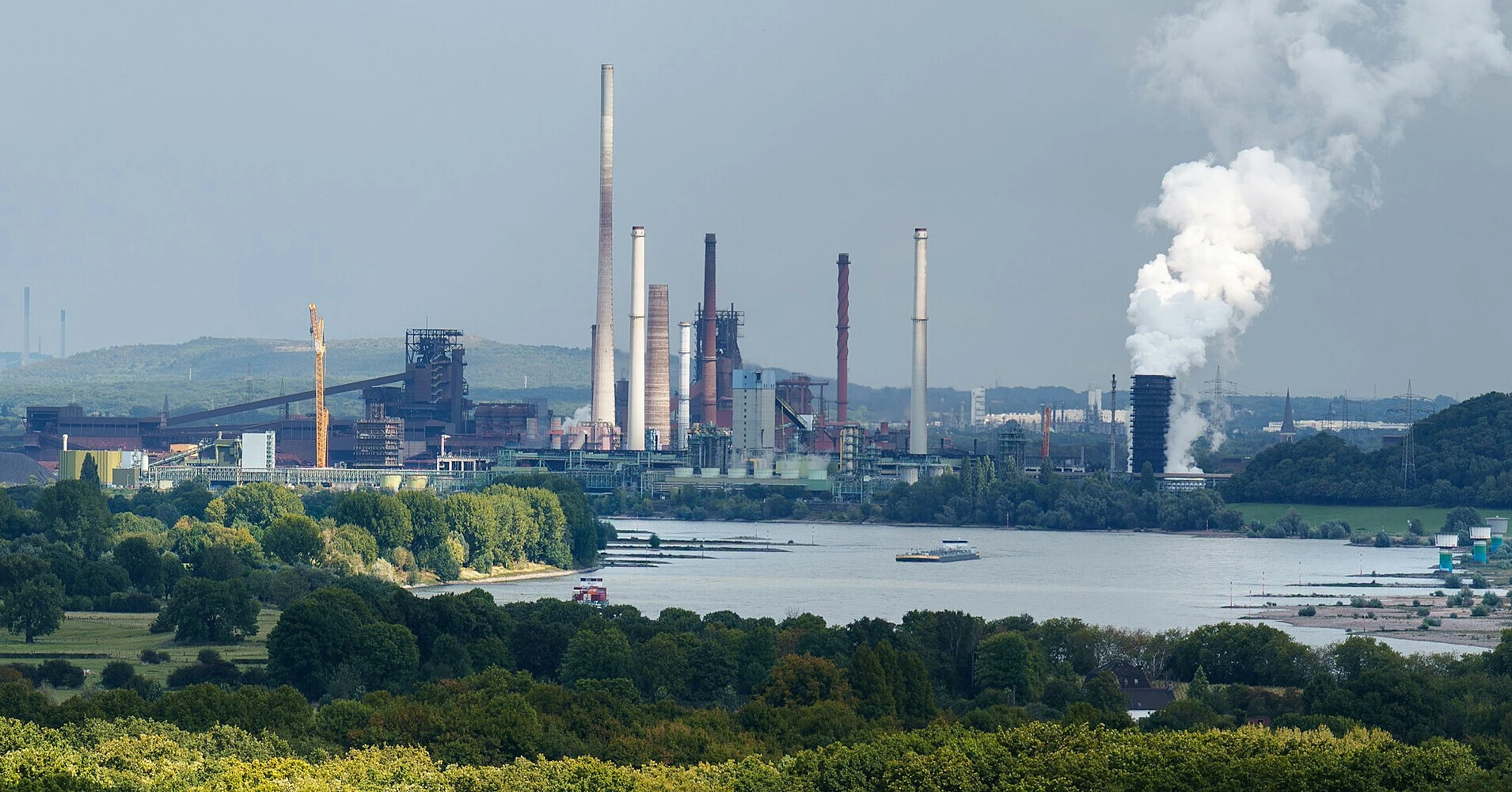
The water level in the Rhine has approached the minimum in the last eight years. Due to the shallowing, cargo ships are transporting less produce, and German industrial enterprises have begun to cut production.
At the bottleneck of Germany's most important inland trade route, the water level in recent days has approached 25 centimeters. That nearly matches the record low recorded in 2018.
Due to the shallow depth, ships cannot be fully loaded. To transport the same amount of raw materials and goods, companies need to engage more ships, make additional trips, and spend more fuel.
Shifting such volumes of cargo to road or rail transport will be difficult. Parts of important rail and road routes are currently undergoing repairs, noted Deutsche Bank economist Marc Schattenberg.
Steelmaker Thyssenkrupp has already had to limit pig iron smelting in Duisburg due to disruptions in the supply of raw materials. However, the company said that deliveries of products to clients are not yet under threat.
Thyssenkrupp has decommissioned its own barges and chartered vessels with shallower draft that can navigate the shallow sections of the Rhine.
Particularly vulnerable are the chemical enterprises BASF, Covestro, and Evonik, whose production sites are situated along the river. BASF warned of possible disruptions in the supply of raw materials and a shortage of certain products if the water level continues to fall.
During the drought of 2018, problems with shipping forced BASF to curtail production and reduced its operating profit by €250 million. This time, the company has prepared special vessels and alternative transport routes.
Covestro has increased its stockpiles of raw materials in advance and switched to vessels with shallower draft. However, each such vessel carries less cargo, so the company spends more on additional trips and fuel.
Economists warn that a prolonged restriction of shipping may reduce the growth rate of the German economy by approximately 0.2 percentage points. At the same time, the German government expects less damage than in previous drought years, as enterprises have created additional stockpiles and expanded the list of transport routes.
Earlier, KURS Ukraine reported that the low water level has heavily complicated shipping on German rivers. The biggest problems at that time were observed on the Elbe, where certain freight shipments could remain impossible until September.
Drought-related problems also emerged on the Danube. The river level has fallen to record lows in Hungary and Romania. The Hungarian Paks Nuclear Power Plant, which provides nearly half of the country's electricity, began limiting capacity due to a shortage of cooling water.
Romania also was forced to shut down one of the two reactors at the Cernavodă Nuclear Power Plant, which uses water from the Danube.
Based on materials: Financial Times
