
Chinese passenger jet C919 readying for first international flight
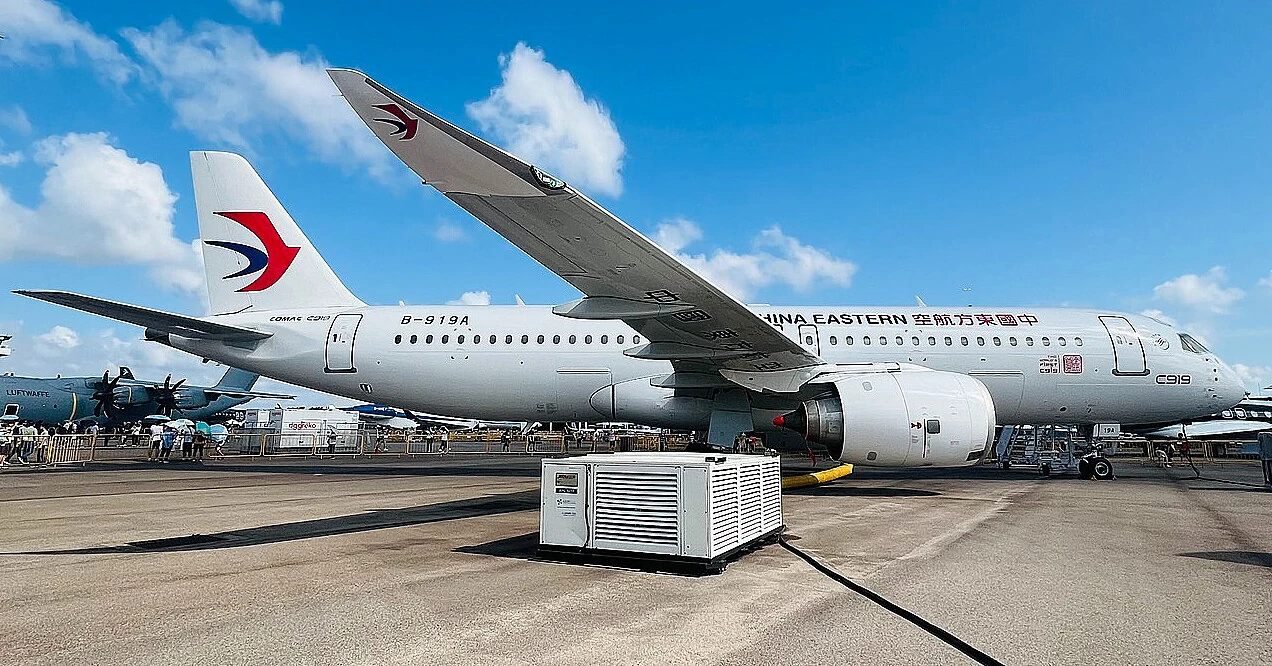
Chinese passenger jet Comac C919 is preparing to operate its first regular international flight. The Air China plane is set to fly from Beijing to Mongolia's capital Ulaanbaatar.
Departure from Beijing's international airport is scheduled for 3:00 PM on August 12. The flight is expected to last just over two hours.
C919 has been flying domestic routes for Chinese airlines since 2023, but it has not been used on regular commercial routes outside China before. The first international flight will be an important milestone in Beijing's efforts to promote its own aircraft on the global aviation market.
The narrow-body C919 is produced by China's state-owned Commercial Aircraft Corporation of China, or Comac. In size, the plane is comparable to the Boeing 737. In China, it is positioned as a future alternative to Boeing and Airbus aircraft, which dominate the civil aviation market.
At the same time, experts believe it will take Comac a long time to become a full-fledged competitor to Western manufacturers. C919 still relies heavily on foreign components and technologies. An analysis conducted in 2020 showed that more than half of the suppliers of parts for the aircraft were American companies.
The production rate of C919 also remains below planned levels. According to The Guardian, in 2025 Comac delivered only 15 aircraft to customers instead of the planned 75.
In addition, C919 has not yet received certification from American and European aviation regulators. Because of this, the company is mainly focusing on Chinese carriers and markets of countries that may recognize Chinese certificates.
In 2023, Brunei's GallopAir signed a $2 billion deal to acquire 30 Comac aircraft, including 15 C919 models. However, the carrier has not yet started commercial operations.
Meanwhile, C919 is undergoing the process of European certification. During test flights in China, pilots from the European Aviation Safety Agency found no significant hardware risks. Flight testing is the third stage of a four-stage procedure, after which experts will analyze data and documentation. However, no official timeline for obtaining permission to operate the aircraft in Europe has been provided yet.
Based on materials: The Guardian
