
Russia begins second wave of gasoline shortages at gas stations
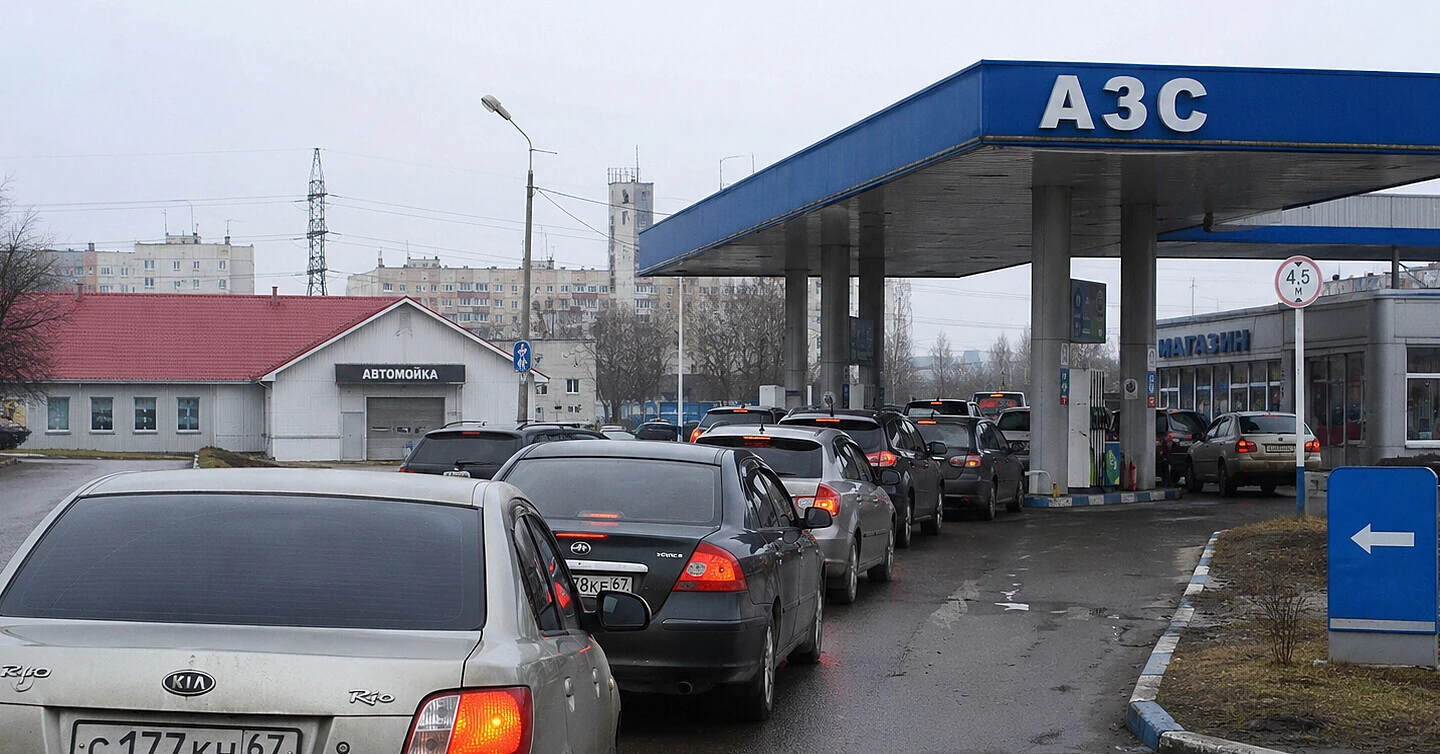
Russia's gasoline situation has worsened again after authorities managed to partially reduce queues and increase the number of operating gas stations by the end of July. According to Reuters, authorities in at least ten regions are again tightening fuel sales restrictions amid a new series of attacks on Russian oil refineries.
Reuters calls the current deterioration a second wave of fuel crisis. The first wave occurred mainly in June and early July: disruptions spread across Russia, long queues appeared in several regions, restrictions on the amount of gasoline per customer and bans on filling canisters. In some regions, fuel began to be sold to cars on even and odd days depending on the first digit of the license plate.
By mid-July, the situation in some regions began to improve. The Russian Energy Ministry reported on July 24 an increase in the number of operating gas stations and a reduction in queues in Zabaykalsky Krai, Kaliningrad and Irkutsk Oblasts, Krasnodar Krai and Tatarstan. The ministry also announced normalization of the market in Arkhangelsk and Saratov Oblasts.
To stabilize the market, authorities redistributed fuel between regions, increased imports, and restricted exports of petroleum products. Reuters reported that supplies from Siberia were diverted to the Moscow region, and imports from Belarus were increased to prevent a serious shortage in the country's largest agglomeration.
However, by this point the resilience of the Russian market had already significantly declined. According to Reuters calculations and sources, in early July gasoline production in Russia was only about 65% of average seasonal consumption. The deficit was estimated at 40–45 thousand tons per day, with summer demand around 115–120 thousand tons.
One of the reasons is the shutdown or reduction of production at major oil refineries after drone attacks. For example, Russia's largest Omsk refinery stopped oil processing after a strike in early July. The enterprise is the country's largest gasoline producer: according to Reuters sources, in 2024 the plant refined about 22 million tons of oil and produced approximately 5 million tons of gasoline and 8 million tons of diesel fuel.
Serious problems also emerged at the Moscow refinery, the largest fuel supplier for Moscow and the region. After two attacks in June, the plant shut down, and Reuters sources estimated recovery time at least six months. For the capital, the consequences had to be offset by diverting fuel from other parts of the country and imports.
Russian authorities have already acknowledged the problem. On June 28, Vladimir Putin said difficulties remain for both motorists and businesses, with queues at gas stations and not always possible to purchase the required fuel grade. He also demanded priority supply for agriculture during the seasonal peak consumption period.
On July 8, the Russian government additionally banned exports of diesel fuel. Deputy Prime Minister Alexander Novak said then that the situation at gas stations remains difficult, and the export restriction should increase domestic supply. Authorities also began preparing fuel imports.
From August 1, restrictions were further extended: the Russian government banned exports of gasoline, diesel and a number of other fuels until January 31, 2027, with only minor exceptions. These measures show that the problems have gone beyond short-term local disruptions and require fuel redistribution at the federal level.
In the first half of summer, restrictions varied by region. For example, in Lipetsk Oblast, AI-92, AI-95 and AI-100 gasoline was sold on even and odd days, maintaining a limit of no more than 30 liters per car. In a number of other regions limits on the volume per fill-up, restrictions for canisters, or priority service for emergency services, public transport and agricultural machinery were introduced.
The disruptions also affected prices. According to Rosstat, by July 20 the average retail price of gasoline in Russia reached 77.31 rubles per liter, up from 75.84 rubles the previous week. Since the beginning of 2026, gasoline has risen in price by 18.3%, AI-92 by 19%, AI-95 by 18%. Diesel fuel rose even more, by 20.2% since the start of the year.
Thus, the current wave begins after a brief improvement achieved through export restrictions, imports and fuel redistribution between regions. New disruptions at oil refineries again increase pressure on a system that has been operating for several months under reduced production and high summer demand.
Sources: Reuters, Russian Energy Ministry, Rosstat
