
Gold Sales Bring Russia's Reserves to Their Lowest Since 2020
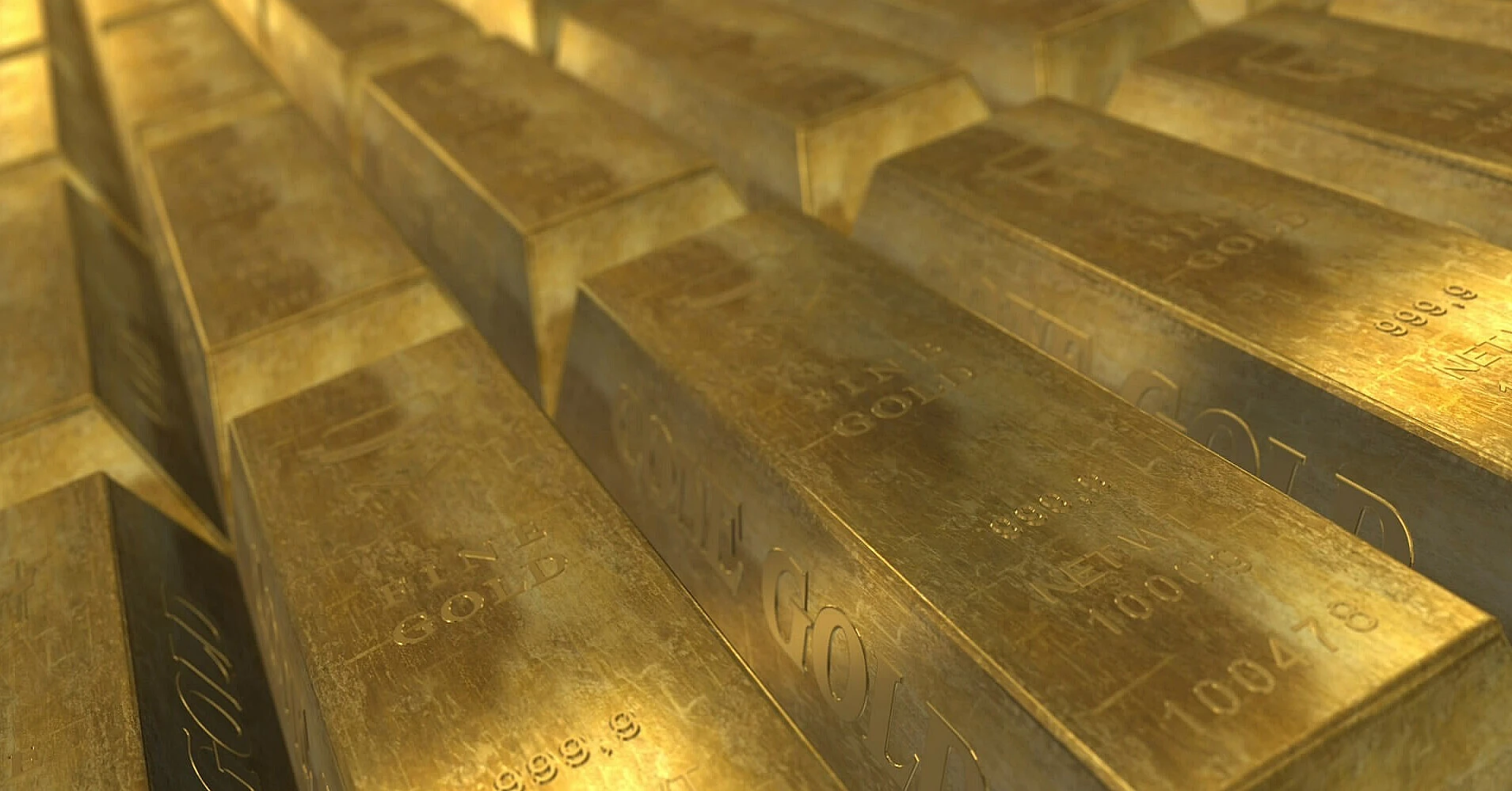
Russia continues to reduce the gold portion of its international reserves: as of August 1, the physical volume of monetary gold fell to 73.2 million troy ounces, or approximately 2.28 thousand tons. This is the lowest figure since January 2020. Since the start of 2026, reserves have decreased by 1.6 million ounces — almost 50 tons.
This was reported by Bloomberg, citing data from the Russian Central Bank. The decline continued in July: on July 1, reserves held about 73.4 million ounces of gold, meaning about another 200 thousand ounces, or over 6 tons, left them during the month.
In the first half of the year, the decrease was significantly larger — about 43.5 tons. According to Kitco News, which compared Russian regulator statistics with World Gold Council data, this was Russia's largest six-month decline in gold reserves in at least a quarter century.
Physical reserves are shrinking, but their value depends on the gold price
Official Bank of Russia statistics show significant fluctuations in the dollar value of the gold portion of reserves. On August 1, it stood at $292.85 billion, compared to $298.99 billion a month earlier and $326.54 billion at the start of 2026.
However, the decrease in the value of gold reserves cannot be equated to the amount Russia received from its sale. The dollar valuation depends not only on the physical volume of metal but also on market prices. At the beginning of the year, gold was rising sharply: on February 1, the value of the Russian stock, despite initial sales, reached $402.7 billion.
Russia's total international reserves on August 1 were $720.35 billion. Of these, $427.49 billion were foreign exchange reserves, and $292.85 billion were monetary gold.
Thus, the current trend differs from ordinary fluctuations in reserve values: it is the quantity of gold on the regulator's balance sheet that is decreasing. At the beginning of the year, Russia had about 74.8 million ounces, and seven months later — 73.2 million.
Russia accumulated gold for many years
The reduction in reserves marks a noticeable change in the Russian Central Bank's long-standing policy. For most of the period since the early 2000s, Russia was a major buyer of gold and increased its share in reserves, especially after sanctions imposed in 2014.
Kitco estimates that from 2002 to 2025, Russia purchased more than 1.9 thousand tons of gold. Reserves grew especially actively in 2014–2019, when about 1.2 thousand tons were bought. After 2020, the pace of accumulation slowed sharply, and at the end of 2025 the physical volume of reserves began to decline.
After Russia's full-scale invasion of Ukraine, the importance of gold for Moscow grew further. In 2022, Western countries froze a significant portion of Russian currency assets held abroad. Gold stored inside Russia is not subject to such restrictions and remains one of the reserve assets that Russian authorities can actually use.
Sales come amid a growing budget deficit
The reduction in gold reserves coincided with a sharp deterioration in the state of Russia's federal budget. According to a preliminary estimate by the Russian Ministry of Finance, in January–July the deficit reached 6.455 trillion rubles, or 2.8% of GDP.
For comparison, the current budget for the whole of 2026 provides for a deficit of 3.786 trillion rubles, or 1.6% of GDP. Thus, in just seven months, the actual gap between revenues and expenditures turned out to be about 1.7 times larger than planned for the entire year.
A year earlier, the deficit for January–July was 4.622 trillion rubles. The Russian Finance Ministry attributes the significant gap, among other things, to accelerated spending financing and advance payments on government contracts.
Russia's budget revenues for the seven months of 2026 increased by 8.8%, to 22.112 trillion rubles, but expenditures grew faster — by 14.5%, to 28.567 trillion rubles.
Particularly notable was the decline in oil and gas revenues, which remain an important source of Russian government income. They amounted to 4.595 trillion rubles — 16.8% less than a year earlier. At the same time, non-oil and gas revenues grew by 18.3%, to 17.518 trillion rubles, including VAT receipts of almost 25%.
Government procurement grew even faster: in January–July it accounted for 8.44 trillion rubles, which exceeds the result of the same period last year by 39.2%.
How sales relate to the National Wealth Fund
Analysts link the reduction in gold reserves primarily to Russian Finance Ministry operations with National Wealth Fund (NWF) funds and their subsequent reflection in Central Bank operations.
The Bank of Russia conducts so-called mirror operations on the domestic market related to the replenishment and use of NWF funds. Their volume depends, among other things, on Finance Ministry operations under the budget rule and the fund's investments in Russian assets.
Therefore, the formulation that every ton of gold sold by the Central Bank directly goes to pay for specific federal budget expenditures would be an oversimplification. However, the mechanism allows converting part of liquid reserve assets into ruble liquidity against the backdrop of NWF spending and deviation of oil and gas revenues from the planned level.
As of August 1, the entire National Wealth Fund was estimated at 12.72 trillion rubles, or $159.3 billion. In July, its volume decreased by approximately 383 billion rubles.
At the same time, the liquid part of the NWF is significantly smaller than the total amount — about 3.69 trillion rubles, or $46.2 billion. In the fund's accounts at the Bank of Russia at the beginning of August there were 189.7 billion Chinese yuan and about 141.2 tons of gold in unallocated form.
In August, the direction of operations may change
The decline in gold reserves in January–July does not mean that Russia will continue to sell metal at the same pace. In August, the Russian Finance Ministry, on the contrary, announced plans to allocate funds for the purchase of foreign currency and gold under the budget rule.
Due to expected additional oil and gas revenues and the deviation of actual receipts from the previous forecast, the ministry determined the total volume of such operations from August 7 to September 4 at 136.17 billion rubles — 6.5 billion rubles per day.
Therefore, the future dynamics of the physical gold stock will depend not only on the size of the budget deficit but also on oil and gas revenues, NWF operations, new government spending, and the Bank of Russia's reserve management decisions. However, data for the first seven months of 2026 already show a noticeable reversal: after years of accumulation, Russia has begun consistently reducing one of its most accessible reserve assets.
