
Freight for oil supertankers soared to $647k per day: how the war with Iran is changing oil logistics
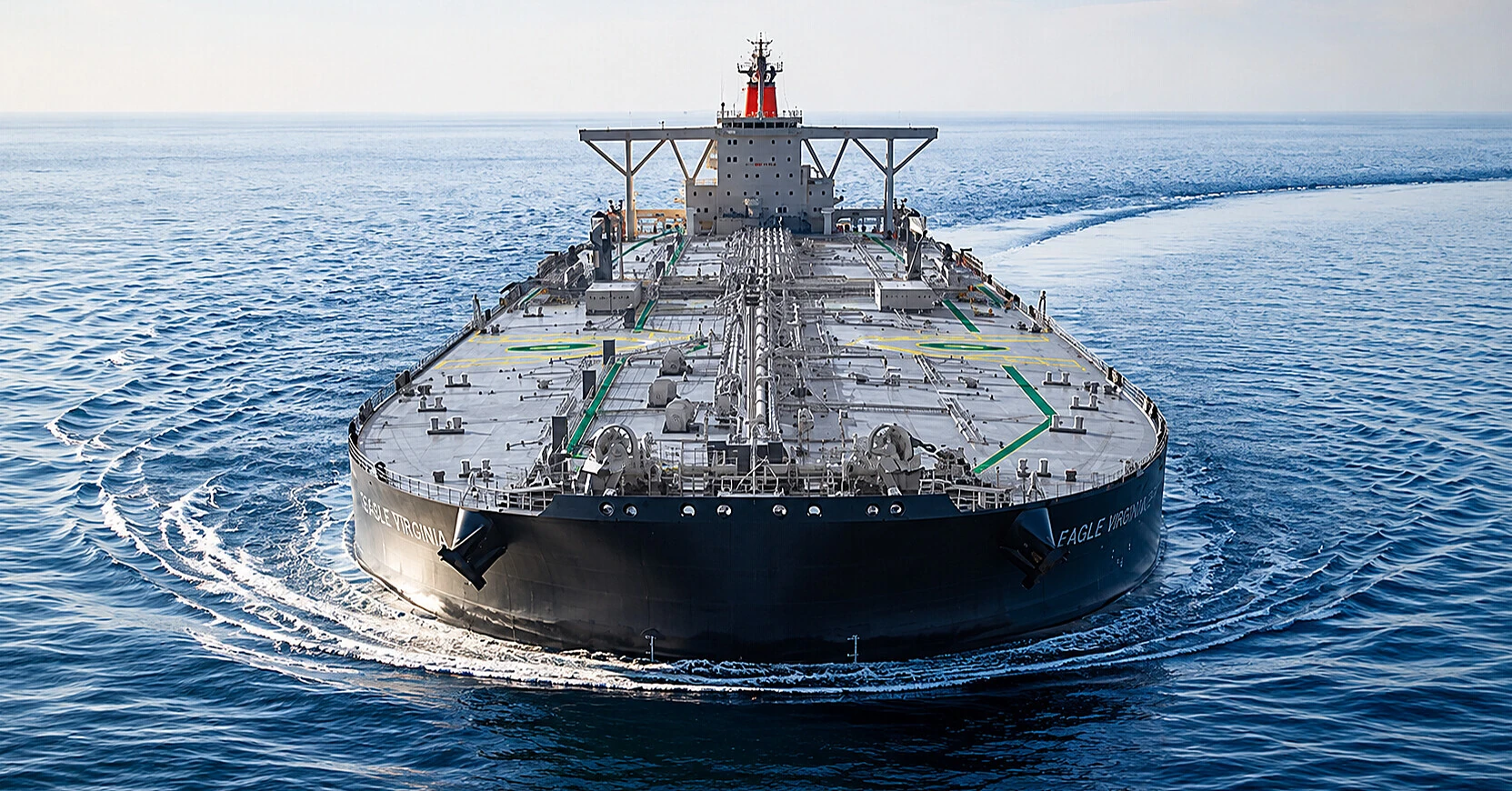
Earnings for oil supertankers on the key route from the Persian Gulf to China reached a record $647k per day. This is more than ten times higher than a year ago.
The reason is not only increased shipments. The US and Israel's war with Iran has turned the Strait of Hormuz into a high-risk route: oil from Persian Gulf countries is becoming more plentiful again, but the number of shipowners willing to enter the strait to load it is significantly lower.
What exactly rose to $647k per day
This refers to the Baltic Exchange TD3C route — carrying about 270,000 tonnes of oil from the Persian Gulf to China on a very large crude carrier (VLCC).
According to Baltic Exchange, by August 28 the rate on this route rose to WS623, and the equivalent daily earnings of the vessel — the so-called time charter equivalent, or TCE — exceeded $647k per day.
Therefore, the figure of $647k is better understood not as a simple 'daily tanker rental price', but as the calculated daily earnings of a vessel on a specific route, taking into account the freight rate and voyage expenses.
For comparison, on the route from the Gulf of Oman to China, where the vessel does not need to enter the most dangerous part of the Persian Gulf, the analogous figure is currently about $219k per day.
Why tankers became so expensive
Two factors came together in the market simultaneously.
On one hand, oil export volumes from the Persian Gulf began to recover. The more oil cargoes appear on the market, the more vessels are needed to carry them out.
On the other hand, passage through Hormuz remains dangerous. After the start of the war, vessel traffic dropped sharply, and attacks, blockades, mine threats and military actions caused many major shipowners to refuse voyages through the strait.
As a result, oil exporters compete for a limited number of available supertankers, and vessel owners demand a huge risk premium.
One oil cargo can now be carried by two different tankers
The war has also changed the supply chain itself.
Before the conflict, a supertanker could enter the Persian Gulf, load about 2 million barrels of oil and sail directly to a buyer in Asia.
Now a more complex chain is increasingly used. One tanker passes through Hormuz and carries oil out of the port, and outside the danger zone the crude is transferred ship-to-ship. A second tanker delivers the cargo further — for example, to China.
Such transfers are actively conducted near Fujairah in the UAE and off the coast of Oman.
According to Kpler, as previously cited by Reuters, in June and July the volume of such transshipments reached more than 600k barrels per day, while in April and May they were practically unused.
Major Chinese carriers avoid entering Hormuz
The behavior of Chinese state-owned shipping companies is particularly telling.
COSCO Shipping Energy Transportation and China Merchants Energy Shipping, which together control more than 100 VLCC supertankers, have avoided sending their oil tankers through the Strait of Hormuz and Bab el-Mandeb since late July.
Instead, part of the oil for China is loaded outside the Persian Gulf via transshipment from other vessels.
Before the war, these two companies carried about half of China's imports of Middle Eastern oil, excluding sanctioned supplies from Iran. Their departure from the dangerous route further reduces the number of available vessels.
Rates are rising even faster than oil prices
The paradox of the current oil market is that shipping is experiencing a much sharper price spike than oil itself.
Supplies through the Persian Gulf are gradually recovering, and this helps keep global oil prices from a new sharp jump. Kurs Ukrainy reported that total flow through Hormuz rose to about 7–8 million barrels per day versus around 4 million in mid-July.
But for shipping, the growth in exports creates the opposite effect: cargoes are becoming more plentiful just when the number of tankers available for dangerous voyages is scarce.
Therefore, every additional barrel that must be picked up inside the Persian Gulf intensifies competition for vessels.
The rate set by the largest supertanker owner also affects the market
An additional factor was South Korea's Sinokor Group — the largest player in the supertanker market.
Even before the war, the company actively bought oil tankers and ultimately amassed a large VLCC fleet just as access to the Persian Gulf became a scarce resource.
According to Bloomberg, a new wave of rate increases accelerated after Sinokor began chartering out vessels at significantly higher prices.
For readers of Kurs Ukrainy, this story is already familiar: in July we wrote about how the South Korean shipowner profits from risky voyages through Hormuz. Now the market has reached a new level — the calculated earnings of the benchmark route have approached $650k per day.
What this means for the global oil market
High freight does not necessarily immediately cause a similarly sharp rise in Brent or WTI quotes. But it increases the delivery cost of every barrel and creates additional pressure on refiners and importers, especially in Asia.
Besides freight itself, insurance, security, ship-to-ship transfer and logistics of alternative routes are becoming more expensive.
The longer instability in the Strait of Hormuz persists, the more temporary schemes turn into new infrastructure for global oil trade.
That is why today's $647k per day is not just a record for shipowners. This figure shows how much the market is willing to pay for the ability to ship oil out of one of the world's most important and at the same time most dangerous energy corridors.
