
Britain prepares to decide the fate of Jackdaw and Rosebank: £10.8bn of North Sea investments at stake
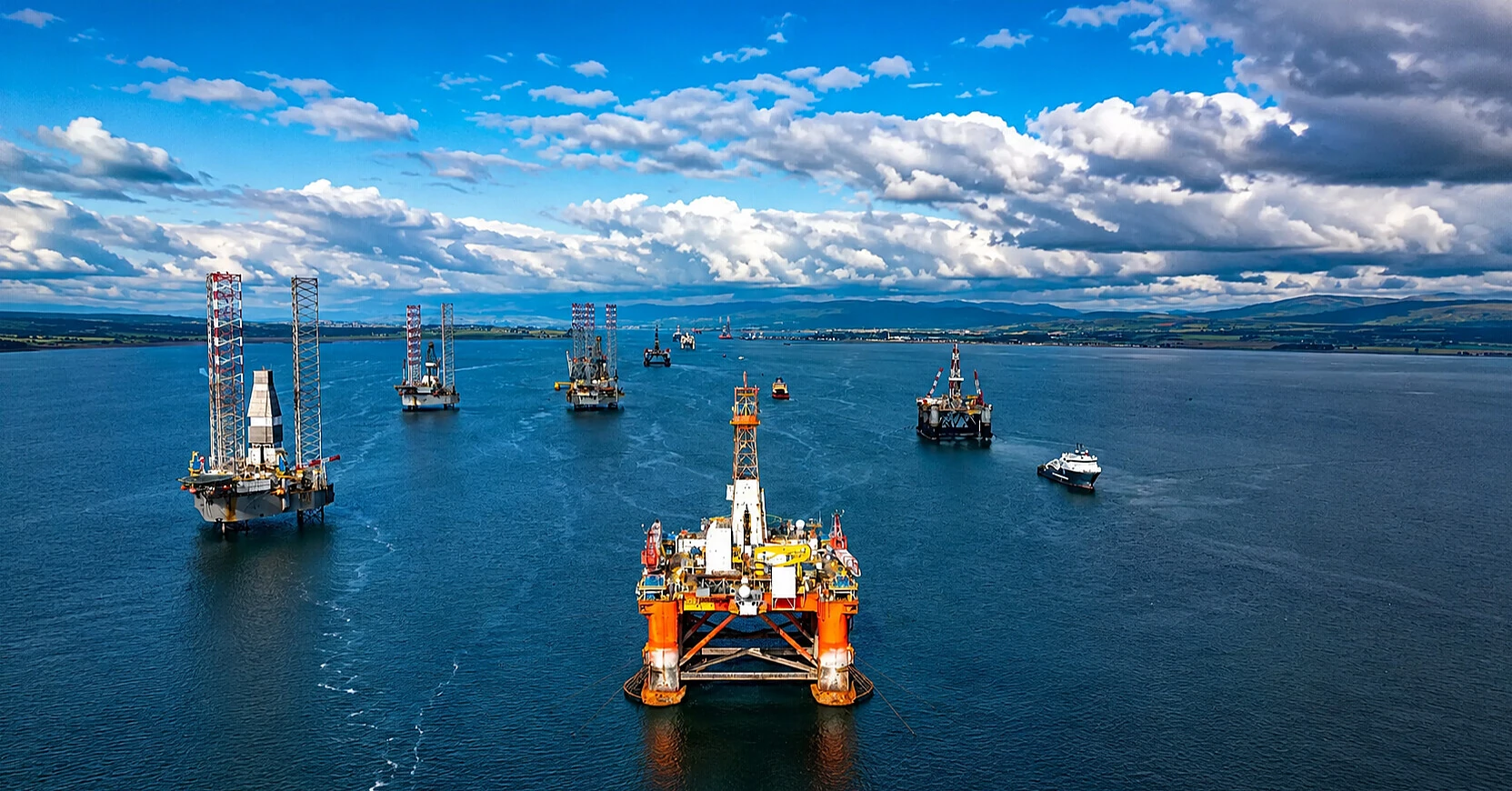
The United Kingdom is approaching one of the most contentious energy decisions in recent years. The government could approve further development of the Jackdaw gas field in the North Sea as early as September, and later must decide on the much larger Rosebank oil and gas project.
For business, the stakes are enormous. Adura estimates total investments in the two projects at around £10.8 billion, with more than three-quarters of that sum planned to be spent in the United Kingdom.
But the decision is not just about money. Jackdaw and Rosebank are at the centre of a dispute between energy security, jobs, and the country's climate commitments.
Jackdaw could get approval as early as September
According to British media reports citing government sources, Energy Minister Miatta Fahnbulleh may recommend approving Jackdaw in the coming weeks.
The public consultation on the project ended on 10 August. The regulator is now analysing the comments received, after which a ministerial decision is required.
Jackdaw is located about 250 km east of Aberdeen, near the UK-Norway maritime border. The field's main product will be natural gas.
If approval is granted quickly enough, the developer expects to begin production within the next few months.
Why Britain is suddenly interested in its own gas again
The situation on the European energy market has changed noticeably.
European gas storage levels by the end of August were at their lowest for this time of year in 13 years, and the war around Iran has increased uncertainty about supplies from the Middle East.
For the United Kingdom, the problem is particularly sensitive: its own gas storage capacity is limited, and North Sea production has been gradually declining.
In 2025, natural gas still accounted for about 35% of the country's energy demand.
According to the developer's estimates, once at full capacity, Jackdaw could provide a volume equivalent to roughly 6.5% of current gas production on the UK continental shelf.
Supporters of the project therefore argue that domestic gas would reduce the UK's dependence on imports, including more expensive liquefied natural gas.
Rosebank is much bigger — and much more controversial
The next decision will be the fate of Rosebank — a field west of the Shetland Islands.
This is one of the largest undeveloped oil and gas projects in the UK sector of the North Sea. Its resources are estimated at around 500 million barrels of oil equivalent.
Adura estimates the investment needed for Rosebank alone at £8.7 billion.
The public consultation on the project closed on 17 August. However, according to The Guardian, the government does not intend to make a decision at the same time as Jackdaw, and plans to consider Rosebank later this year.
Why old permits had to be obtained again
Both projects already had development licences issued under the previous Conservative government.
But the environmental permits were thrown into doubt after a major UK Supreme Court ruling.
The court ruled that when assessing the climate impact of oil and gas projects, it is necessary to consider not only emissions directly from production, but also so-called Scope 3 emissions — the carbon dioxide that will be released later when the extracted oil and gas are burned.
Subsequently, the court revoked the previous environmental permits for Jackdaw and Rosebank, because such emissions had not been fully accounted for in the original assessments.
The developers have prepared updated environmental materials, and the authorities then launched new consultations.
This is not a breach of the promise not to issue new licences
Labour came to power with a promise not to issue new exploration licences for oil and gas fields in the North Sea.
However, Jackdaw and Rosebank formally fall into a different category.
Licences for these areas were issued long before the policy change. The government is now deciding whether to grant the necessary permits for the development of already licenced fields.
It is this legal nuance that allows the authorities to consider approving the projects without formally lifting the moratorium on new licences.
How much investment and jobs the industry promises
The current operator of both projects is Adura, a joint venture between Shell and Norway's Equinor.
The company claims that Jackdaw and Rosebank together could deliver:
- about £10.8 billion in investment;
- over £3 billion already committed;
- up to 3,500 jobs at peak construction;
- around 880 jobs during the production phase;
- 125 apprentice and graduate positions;
- about £1.4 billion in tax revenue before the end of the current parliamentary term.
These are the developer's own estimates, so they should not be taken as a guaranteed economic outcome.
For example, environmental groups point out that directly at Jackdaw only about 27 new direct permanent jobs would be created. The larger figures include existing platform workers and employment in the supply chain.
Will developing new fields affect energy bills
This is one of the most hotly debated arguments.
Oil and gas from the North Sea are sold at market prices. So an increase in UK production does not by itself mean that field owners will sell fuel to British consumers below the world market price.
Critics of the projects argue that neither Jackdaw nor Rosebank could significantly lower household bills.
Supporters respond that the issue is not just about price. Domestic production reduces dependence on foreign suppliers, sustains British oil and gas infrastructure, and keeps some tax revenue and production spending within the country.
This argument has grown stronger following the latest spike in global energy prices and the decline in European gas reserves.
Why Rosebank triggers far more climate controversy
Jackdaw is predominantly a gas project, whereas Rosebank contains considerably more oil.
That is why environmental organisations view the second field as much harder to reconcile with the UK's climate commitments.
Opponents of the project estimate that burning the fuel extracted from Rosebank could lead to emissions of more than 250 million tonnes of CO₂ over the field's lifetime.
For its part, Adura stresses that direct production emissions at the new facilities will be lower than the UK continental shelf average, because the projects use more modern infrastructure.
These two statements do not contradict each other: one refers mainly to emissions from the production process itself, the other to emissions from the subsequent use of the oil and gas.
The government may split the two decisions
It is precisely the difference between the gas-focused Jackdaw and the predominantly oil-focused Rosebank that may define London's next steps.
In British political and expert circles, an option is increasingly floated: approve Jackdaw as a source of domestic gas for the transition period, but take a much stricter look at the need for Rosebank.
The government is also considering linking future revenues from oil and gas projects to investment in clean energy.
No final scheme exists yet.
What changes after the decision
If Jackdaw is approved in September, it will be the first major signal of the government's new energy policy: London will show how far it is prepared to go in using its own oil and gas resources amid high prices and supply instability.
But Rosebank will be a much more serious test.
In the end, Britain is deciding not just the fate of two fields. At stake is the transition model for the country's entire energy sector: how long the North Sea should continue to supply oil, gas, investment and jobs, while the economy simultaneously tries to shift to renewable sources.
