
Calls to Slow Down AI Development Crashed Chipmaker Stocks
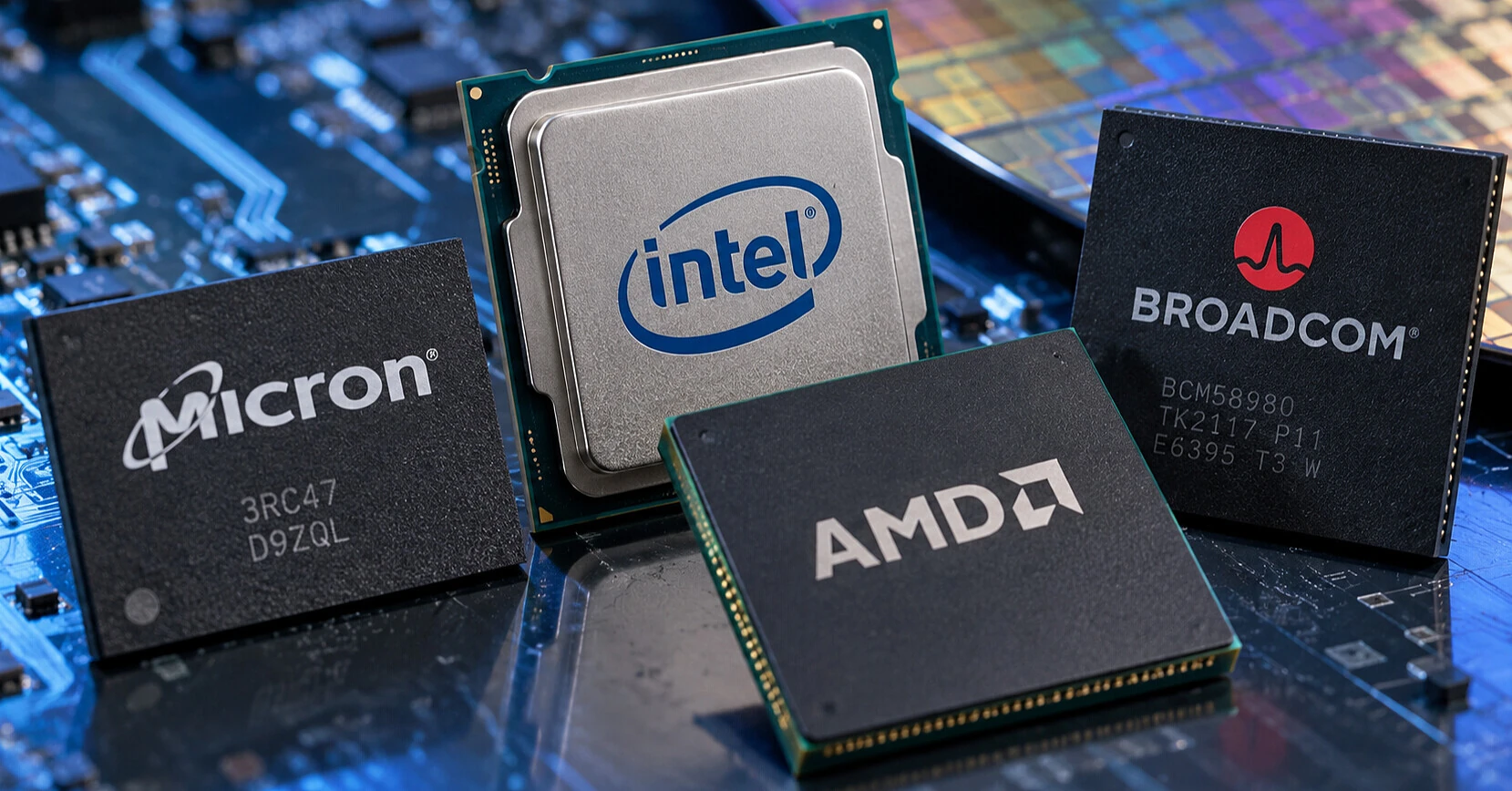
Shares of the largest semiconductor manufacturers plunged sharply on September 14 after leaders of major AI companies supported the idea of slowing the development of the most powerful models due to the growing risks of the technology. The semiconductor company index lost about 5%, with individual stocks down 6-8%.
The strongest pressure fell on companies that in recent years have been the main beneficiaries of the investment boom in artificial intelligence.
Micron and Intel shares fell about 6%, AMD about 5%, Broadcom approximately 4%. Nvidia, the largest supplier of accelerators for AI training, lost about 2-3%.
Marvell Technology was down about 8% during trading. Lam Research, a maker of semiconductor manufacturing equipment, also lost about 8%.
As a result, the iShares Semiconductor ETF, which includes shares of the industry's largest players, fell about 5%. In premarket trading, the decline reached 5.4%, with all 30 companies in the fund in the red. It threatened to become its worst trading session in more than two months.
The Philadelphia Semiconductor Index, one of the key indicators of the US semiconductor industry, fell about 5-6% during the day.
The sell-off began earlier in Asia. Shares of South Korea's SK Hynix, one of the key memory makers for AI accelerators, dropped about 6%, Samsung Electronics about 5%. Pressure spread to other technology markets as well.
Investors Frightened by Prospect of Slowing AI Race
The immediate trigger for the reassessment of the AI sector was statements by leaders of the largest artificial intelligence laboratories about the need to ramp up capabilities of new models more carefully.
Anthropic CEO Dario Amodei proposed to "reduce the pace at the frontier" of AI development. He advocates for stricter independent evaluation of new models and coordination of safety rules so that the commercial race among developers does not cause companies to ignore potentially dangerous capabilities of systems.
The position on the need to move forward more cautiously was supported by other industry representatives, including OpenAI CEO Sam Altman and Elon Musk.
For investors, this shift proved sensitive because current valuations of chipmakers are largely based on expectations of continued massive spending by technology companies on computing infrastructure.
If developers really slow training of the next generation of models, demand for new GPUs, memory, networking equipment, and semiconductor manufacturing equipment could potentially grow slower than the market assumed.
That is why investors sold hardest stocks of companies directly associated with building AI data centers and training large models.
Analysts Do Not Expect Investment to Stop
Meanwhile, on Wall Street, they do not yet believe that AI safety statements will necessarily lead to an actual reduction in capital expenditures.
Companies continue to compete for technological leadership, and the United States views artificial intelligence as a strategically important industry in rivalry with China. Therefore, even a more cautious approach to developing models does not mean a complete halt to data center construction or accelerator purchases.
An additional factor is the shift from training models to their mass deployment. Running already existing systems also requires significant compute, although the structure of equipment demand may differ.
Monday's tech sell-off was driven not only by AI concerns. The market was simultaneously pressured by rising oil prices, higher US government bond yields, and expectations of Federal Reserve policy tightening.
The Nasdaq 100 was down more than 1% at the start of the US session, while the S&P 500 lost about 0.5%.
Against this backdrop, investors began rotating funds within the technology sector. While chipmakers fell, shares of cybersecurity companies rose: investors expect that the spread of more powerful AI will simultaneously boost demand for protection against automated cyberattacks.
Based on: MarketWatch, Business Insider, OpenAI
