
Gold and silver rose despite Fed policy tightening
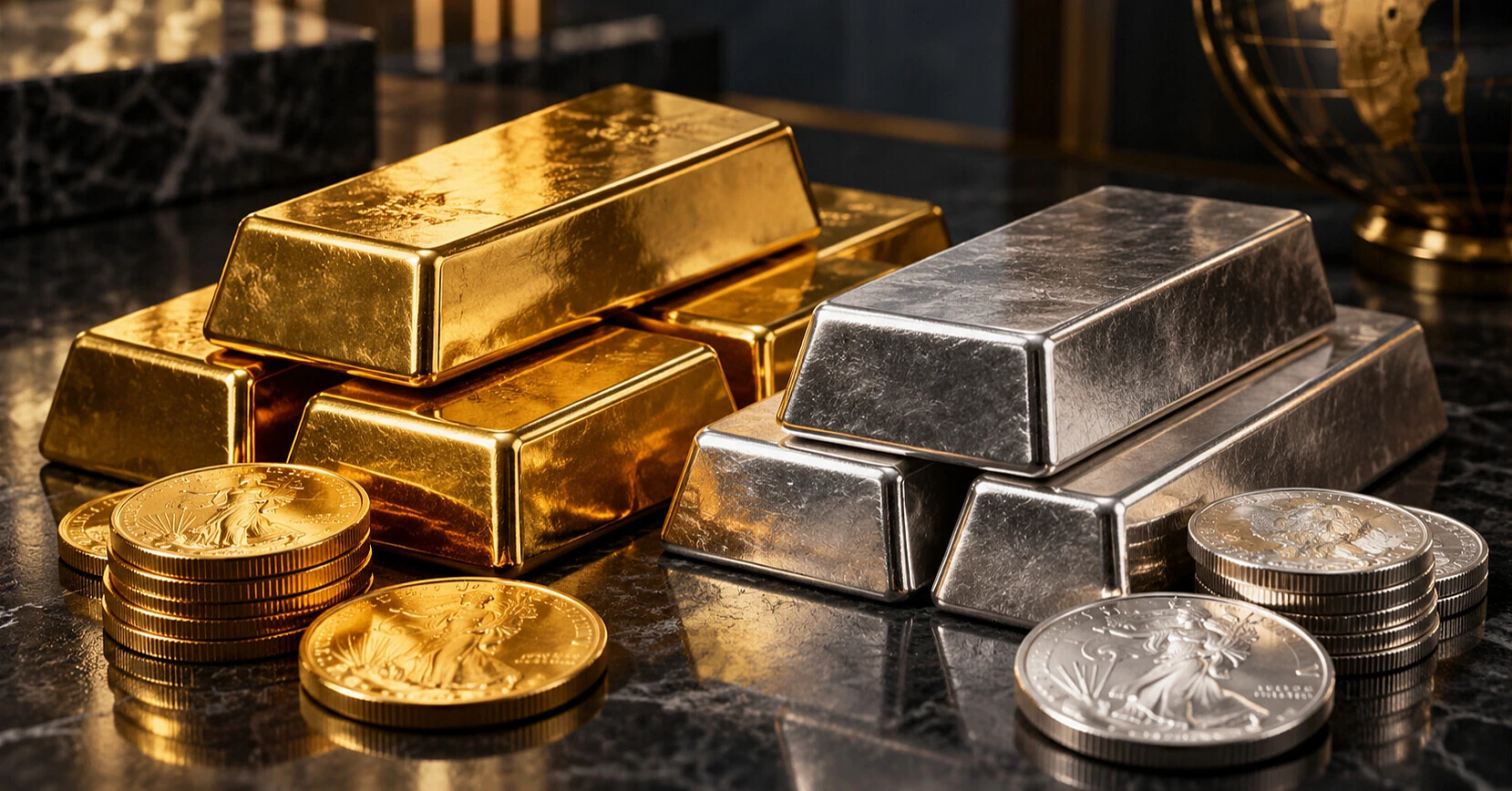
The decision of the U.S. Federal Reserve to raise the interest rate by 25 basis points to 3.75–4.00% was one of the main events for global financial markets. For the precious metals market, a rate hike is traditionally considered a negative factor: gold and silver do not yield interest income, so when bond yields rise, their relative attractiveness decreases.
However, the market's reaction on September 16 turned out to be mixed. Even before the Fed's decision, gold was rising: at the beginning of the day, the spot price rose to about 4,350 dollars per troy ounce, silver to 64.50 dollars. Platinum and palladium also became more expensive.
Why the rate hike did not crash gold
The main reason is that the rate hike was almost fully expected by the market. Therefore, investors had already priced it in.
Moreover, immediately before the Fed meeting, U.S. bond yields were declining, and the dollar was under pressure. This created support for gold, since lower yields reduce the opportunity cost of holding a metal that pays no interest.
After the Fed's decision, the situation became more complex. Gold initially continued to show resilience, but then some of the initial gains were given back. By the close of trading, gold futures closed near 4,346 dollars per ounce, up 1.27%, while silver ended the day around 64.29 dollars, adding 1.66%.
This shows that for precious metals, not only the rate change itself matters, but also what the Fed's subsequent actions will be, bond yields, and the dollar exchange rate.
What the Fed's hawkish stance means for gold
In the short term, a rate hike remains a potentially negative factor for gold.
Higher interest rates increase the yields on dollar-denominated bonds. An investor gets the opportunity to earn interest income almost without the need to hold an asset that itself pays no interest.
In addition, the Fed's tight policy can strengthen the dollar. Since gold is traded in dollars, a strong American currency usually creates additional pressure on its price.
But gold also has opposite factors. Persistent inflation increases interest in the precious metal as a store of value. Geopolitical uncertainty also supports demand for gold as a safe-haven asset. Finally, demand from central banks plays an important role.
Therefore, even a fairly strict Fed policy does not necessarily lead to a prolonged decline in gold.
Silver reacts even more complexly
The situation with silver is somewhat different. On one hand, it also does not yield interest income and therefore is sensitive to U.S. bond yields and the dollar's dynamics.
On the other hand, silver has extensive industrial use. It is used in electronics, solar energy, and other technological sectors.
Therefore, silver depends not only on Fed policy and investment demand, but also on the state of the global economy. If high American interest rates begin to significantly slow economic growth, this could negatively affect industrial demand for silver. But if the global economy maintains its growth pace, the industrial factor can offset some of the pressure from high rates.
That is why silver usually exhibits higher volatility than gold.
Platinum and palladium
Platinum and palladium also react to American monetary policy, but their link to the Fed is less direct. For these metals, industrial demand is of great importance, primarily the automotive industry, as well as the state of the global economy.
Before the Fed meeting, platinum was trading around 1,784 dollars per ounce, and palladium around 1,306 dollars. Both metals showed gains during the day.
Therefore, for platinum and palladium, the further direction of prices will depend not only on the dollar and interest rates, but also on industrial production, the automobile market, demand for catalysts, and the supply situation.
What will happen to gold and silver after the Fed's decision
The main question for the market now is how long American interest rates will remain high.
The Fed raised the rate to 3.75–4.00%, but at the same time signaled that further tightening may be limited. According to the median forecast, American regulators expect one more hike in 2026, after which the rate may reach the range of 4.00–4.25%.
If this scenario is realized, pressure on gold and silver may gradually ease as the market approaches the end of the rate hiking cycle.
However, if inflation proves persistent and the Fed is forced to raise rates more than currently expected, precious metals may face more significant pressure through rising bond yields and a stronger dollar.
There is also the opposite scenario. If the rate hike turns out to be the last, and then the U.S. economy begins to noticeably slow down, expectations of future rate cuts may again strengthen investor interest in gold and silver.
