

The Nation: Mobilization in Ukraine increasingly divides the poor and the wealthy
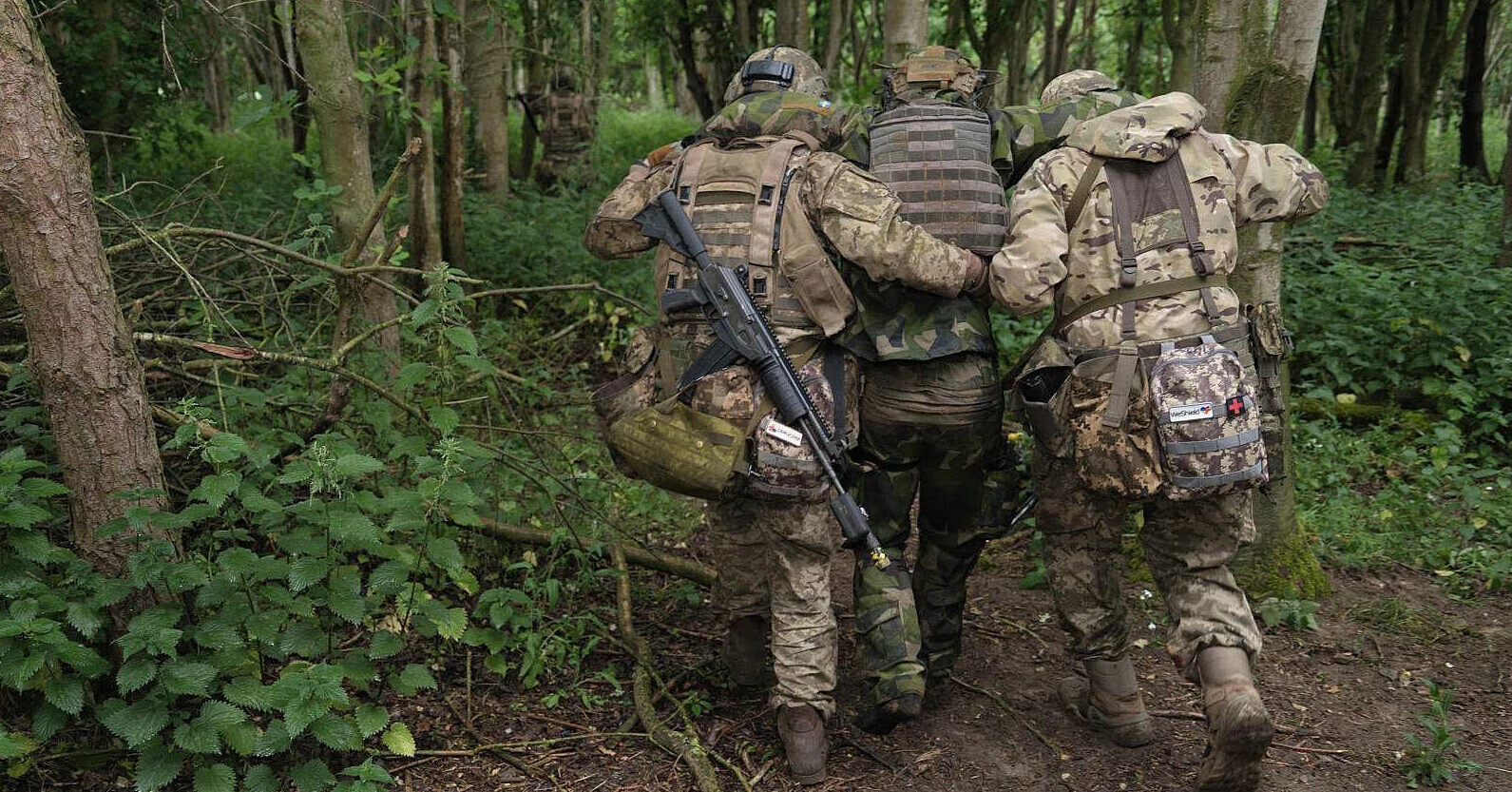
The American magazine The Nation published a long report about Ukrainian men trying to avoid mobilization, conflicts around territorial recruitment centers (TCR), and social inequality in the conscription system. One of the main conclusions of the material is that the ability to avoid mobilization significantly depends on income, connections, and social status.
The author of the material spoke with men who had been hiding from TCC for a long time in Odesa and Kyiv, as well as with sociologists and activists. The Nation emphasizes that the exact number of men evading mobilization is unknown, and existing estimates vary widely.
One of the heroes of the report is 29-year-old IT specialist Taras, whose name has been changed. He recounted that in autumn 2025, he twice fled from TCC representatives, but was eventually detained and taken for a medical examination.
According to Taras, when he refused to be photographed, two men in civilian clothes forcibly took a photo and beat him on the head. Later he was sent to a training center. There he fell ill, was hospitalized, from where he escaped with the help of friends. At the time of the conversation with the journalist, he was again hiding in a rented apartment in Odesa and hardly went outside.
Another interviewee was 27-year-old Boris, also an IT specialist. After the first detention, he escaped from a car on the way to the military medical commission and lived for several months in an affluent district of Kyiv.
"The TCR doesn't come here. This is a wealthy district", he explained to the journalist.
Later Boris decided to save on rent and moved to a cheaper district, where he was detained again. This time he failed to escape and eventually ended up in military service.
The Nation uses this episode to transition to the social dimension of mobilization. Ukrainian sociologist Volodymyr Ishchenko, who studies the class structure of Ukrainian society, argues that among those forcibly mobilized there is a disproportionate number of people with lower incomes—workers and rural residents.
According to his explanation, wealthy men have more opportunities to protect their interests: they can afford a lawyer, use connections, or, in illegal cases, pay for corruption schemes. For a person with low income, such opportunities are significantly limited.
Ishchenko also draws attention to the political aspect of this gap. The most visible part of Ukrainian civil society in media and public life, according to his assessment, consists mainly of relatively privileged urban strata capable of quickly self-organizing and staging public protests.
Meanwhile, less well-off groups, which according to him are more affected by the so-called "busification," are much more numerous but remain fragmented and have much weaker political representation.
Therefore, resistance to mobilization, as The Nation describes it, more often takes the form not of an organized nationwide protest, but of individual actions: men hide, try to leave the country, monitor the movements of TCC representatives through specialized Telegram channels, or engage in spontaneous conflicts with them.
The publication cites examples of such Telegram communities, where users report in real time about the appearance of TCC patrols in specific city districts. Separately, an entire online ecosystem has formed around illegal border crossing—from video blogs to materials about routes through rivers and forests.
Another problem the report focuses on is low trust in territorial recruitment centers. The Nation refers to a survey according to which 68% of respondents expressed distrust of TCR. Low trust in the mobilization system has also been recorded by Ukrainian sociologists.
At the same time, the author does not question the need to replenish the Ukrainian army in the face of the Russian invasion. One of the heroes, Boris, after mobilization admitted that it is impossible to fight the current war without mobilization.
"I understand that this war cannot be fought without mobilization," he told the journalist, calling Ukraine's position a zugzwang—a situation where any available move worsens the position.
Thus, the central question of The Nation's report is not whether Ukraine needs mobilization, but how evenly its risks are distributed among different social groups. Ishchenko formulates this contradiction as follows: Ukrainians can love Ukraine, but at the same time distrust their own state.
Based on materials from: The Nation