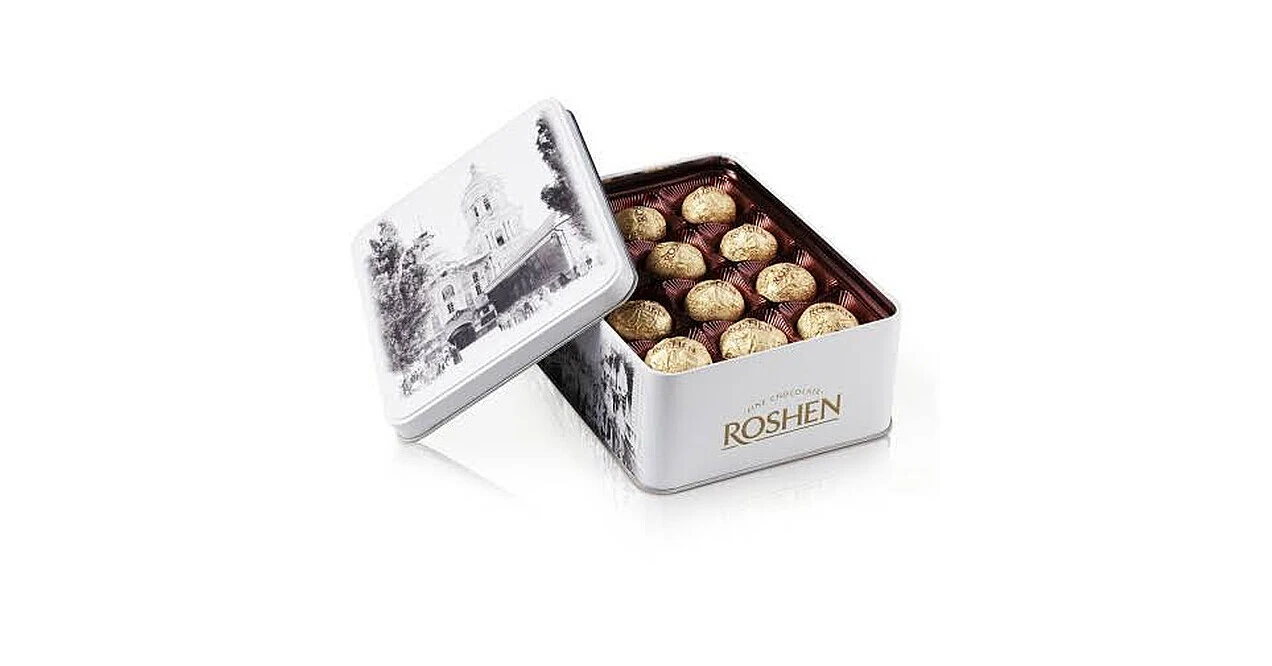
Ukrainian confectionery corporation Roshen expanded sales in Saudi Arabia and officially began working with Amazon. The brand's products are now available to customers through Amazon's local platform in the kingdom.
For the company, this is not entering a completely new market, but the next stage of expansion: Roshen is already sold in Saudi Arabia through major retail chains and other e-commerce services. Now one of the world's largest marketplaces has been added to them.
The step is especially notable against the backdrop of the growing role of exports in Roshen's business. In 2025, the company's foreign sales grew by 27%, and their share reached 45% of total revenue.
What exactly changed
On August 28, Roshen announced that Amazon joined its e-commerce partners in Saudi Arabia.
Various brand products, including Roshen chocolate, are already listed on Amazon.sa.
However, the phrasing "Roshen appeared on Amazon for the first time" should be used with caution. Individual brand items could have been sold on the marketplace earlier through third-party sellers. The new development is that the company itself announced Amazon as part of its official e-commerce system in Saudi Arabia.
Roshen is already building a full-fledged sales system in Saudi Arabia
Amazon is far from the only channel of the Ukrainian manufacturer in the country.
Roshen products can already be found in major chains and services, including:
- Othaim Markets;
- Panda Markets;
- Carrefour Saudi Arabia;
- Lulu Hypermarket;
- Nesto Hypermarket;
- Noon;
- Ninja;
- Keeta;
- HungerStation.
Thus, the company is gradually connecting traditional retail with fast delivery and major marketplaces.
For a consumer brand, this is an important model: the product becomes available not only on the supermarket shelf, but also where the customer is already accustomed to ordering groceries and everyday goods online.
Saudi Arabia has already become a notable market for Roshen
The new sales channel did not appear by chance. The company is gradually strengthening its presence in the Middle East, and Saudi Arabia already shows significant demand for certain product categories.
For example, Roshen recently named Saudi Arabia one of the top three markets for Bonny Fruit jelly candies along with Romania and Czechia.
The company produces more than 15 million packages of Bonny Fruit per year.
This shows that for Roshen the Saudi market has already gone beyond experimental shipments: for certain products it has become one of the key foreign destinations.
Why Amazon is important specifically for a Ukrainian manufacturer
Entering a major marketplace solves several tasks at once.
First, the coverage increases. The buyer no longer needs to look for a specific store chain where Roshen is carried.
Second, the marketplace allows faster testing of demand for different items. The company can see which products sell better online and adjust the assortment without having to open its own stores.
Third, a large e-commerce platform helps strengthen brand recognition among buyers who previously might not have encountered Ukrainian products in traditional retail.
For an exporter, this is especially important: it is one thing to supply products to a foreign distributor, and quite another to achieve constant brand presence simultaneously in physical stores and digital channels.
Exports already provide nearly half of Roshen's revenue
The foreign direction is becoming increasingly significant for the company.
By the end of 2025, Roshen's export volume grew by 27% compared to the previous year. Foreign markets already accounted for about 45% of the corporation's total revenue.
The company's largest foreign markets remain Romania and Poland.
In total, Roshen states its products are present in about 55 countries. The corporation's production facilities are located in Ukraine, Lithuania, and Hungary.
The company is pursuing two paths: stores in Europe and partners in the Middle East
Interestingly, Roshen uses different models of international expansion in different markets.
In Romania, the company went far beyond ordinary export and began building its own retail network.
The first branded Roshen store in Bucharest opened in autumn 2025. In spring 2026, the company launched a second location in the Romanian capital, and plans further expansion by the end of the year.
Roshen is also exploring opportunities for developing its own retail in Bulgaria, Hungary, and Poland.
In Saudi Arabia, the strategy so far looks different: instead of the costly opening of a large number of own stores, the company is expanding presence through local distributors, supermarkets, and e-commerce.
Amazon fits perfectly into this model.
Roshen develops exports even after strikes on logistics in Ukraine
News about Amazon appeared almost simultaneously with serious problems inside Ukraine.
On August 27, as a result of a Russian strike, Roshen's finished goods warehouse in Chubynske, Kyiv region, was destroyed. The company warned that temporary interruptions with some shipments are possible due to the loss of goods.
This is the second destroyed Roshen warehouse since the start of the full-scale war: in February 2026, a facility in Yahotyn was almost completely destroyed.
The company is redistributing stocks and utilizing alternative warehouse capacities.
Against this background, the expansion of foreign distribution takes on additional economic significance. The more markets and sales channels a manufacturer has, the less its business depends on a single region or a single product sales model.
What Amazon entry means for Roshen
The listing on Amazon by itself does not guarantee a sharp sales increase. On the marketplace, the Ukrainian brand has to compete with international chocolate and sweets manufacturers long familiar to buyers in the Persian Gulf countries.
But Roshen already has an important advantage: the brand is not starting its acquaintance with Saudi Arabia from scratch. Products are present in local retail and online services, and some categories already show high demand.
Therefore, the appearance on Amazon looks not as a standalone PR action, but as another element of a broader international sales system.
For Roshen, export is gradually changing from simply shipping sweets abroad to a model in which the Ukrainian brand strives to be present at all major purchase points — from a supermarket and own store to a fast-delivery app and a global marketplace.