
Rockstar company suspected of maintaining a 'blacklist' of employees ahead of GTA VI release: what the tribunal is examining
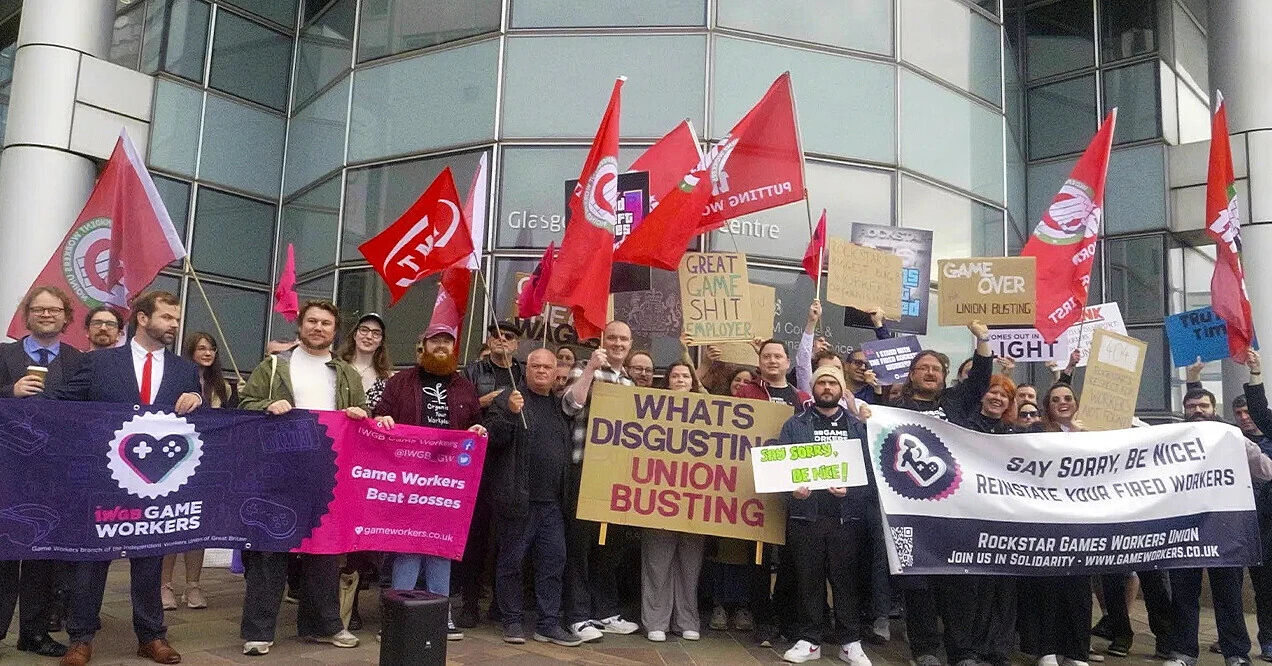
Two months before the release of Grand Theft Auto VI, a labor dispute is unfolding around Rockstar Games that involves not only the dismissal of developers but also a much more serious question — could the company have been monitoring employees because of their union activity.
On September 11, former Rockstar employee Dane Oram told an employment tribunal in Glasgow that, in his view, management may have begun to scrutinize a group of workers more closely after they signed a petition about remote work.
Rockstar denies this. The company claims that the dismissals were not related to the union, but to the disclosure of confidential information in an internal Discord community for employees.
How the dispute started
In October 2025, Rockstar dismissed a total of 34 employees.
31 of them worked in the United Kingdom, and three more in Canada.
Some of those dismissed had been involved in the activities of the Independent Workers' Union of Great Britain — the independent union IWGB.
The union said that the dismissals may have been connected precisely to worker organization and attempts to achieve collective representation.
Rockstar rejected this version and stated that employees had committed a serious breach of rules by disseminating confidential information about the company.
Why a 'watch list' is now being discussed
A new twist emerged during Dane Oram's testimony on September 11.
He told the tribunal about a petition that employees had sent to management back in 2023. It concerned remote work policies.
According to Oram, after that he got the impression that the company began to monitor some participants of the initiative more closely.
He also suggested that there could be a link between the list of signatories and the subsequent dismissals.
But for now this is only a witness's assertion, not a fact established by the court.
Rockstar has a strong counter-argument
A Rockstar representative at the tribunal pointed out an important figure.
The remote work petition was signed by 154 people, but 141 of them were not subsequently dismissed.
In this way the company challenges the assumption that the mere fact of participating in the petition could lead to dismissal.
It is precisely these circumstances that the tribunal must weigh against the other evidence in the case.
A Discord server for 300 employees became central to the case
Much of the dispute is related to a private Discord community used by approximately 300 Rockstar employees.
Oram was involved in creating this channel and helped moderate it.
Employees discussed work issues, working conditions and company activities there.
Rockstar claims that confidential information that employees had no right to disclose was being shared in the community.
According to the company, this was the reason for the dismissals.
The former employee himself admitted moderation problems
During the hearings, Oram acknowledged that some discussions in Discord may have gone beyond professional discourse.
He also said that today he would probably approach some moderation decisions differently.
However, he explained that moderators did not want to excessively control employees' conversations.
A Rockstar representative, in turn, cited examples of sharp and offensive remarks about company management and questioned whether the community's own rules of professional communication had been observed.
The union is now speaking about more than just dismissals
IWGB is making broader allegations.
The union claims that Rockstar may have compiled and used lists of employees associated with union activity in order to treat them less favorably.
In UK employment law, this practice is usually called blacklisting — putting workers on 'blacklists' because of union activity.
IWGB also states that some employees were dismissed immediately, without a full disciplinary procedure and without the possibility to appeal the decision.
Rockstar disputes these allegations.
The tribunal has already allowed blacklisting allegations to be considered
Before the start of the main hearings, Rockstar tried to have some of the allegations concerning alleged 'blacklists' excluded.
However, in June the employment tribunal rejected this attempt.
This does not mean that the union's allegations were deemed proven.
The decision only meant that the question of possible blacklisting was sufficiently grounded procedurally to be examined as part of the main case.
Why the dispute is especially sensitive right now
The proceedings are taking place at one of the most important moments in Rockstar's history.
Grand Theft Auto VI is due to be released on November 19, 2026 on PlayStation 5 and Xbox Series X|S.
This is the first mainline release in the series since GTA V and one of the most anticipated releases in the gaming industry.
Rockstar has already opened pre-orders, and the standard version of the game costs $79.99 in the United States.
Therefore, any discussion of the company's internal culture, working conditions and relations with developers receives far more attention than a similar dispute would at a less well-known studio.
The dismissed employees were directly working on GTA VI
At the time of dismissal, the employees were involved in developing GTA VI.
The main development of the game is taking place at Rockstar North in Edinburgh, so the conflict directly affected the team behind one of the biggest game projects in recent years.
However, there is currently no reason to state that the labor dispute could delay or postpone the game's release.
Rockstar continues to officially list November 19 as the GTA VI release date.
Employees are simultaneously seeking union recognition
The legal case is developing alongside another important process inside Rockstar.
Current employees together with IWGB are seeking official recognition of the union.
Such status gives workers a formal mechanism for collective bargaining with the employer on pay and working conditions.
Among the union's priorities are pay transparency, protection from dismissal after major projects end, more flexible work organization, and fighting the so-called crunch — long periods of intensive overtime before releases.
Employees hope to achieve official recognition of the union before GTA VI comes out.
Why the remote work issue proved so important
The dispute around Rockstar reflects a broader problem in the game and tech industries after the pandemic.
Companies gradually brought employees back to offices, while some workers wanted to keep a hybrid or remote format.
For video game developers, the situation is particularly difficult: large projects require high levels of secrecy, and leaks of materials before release can have huge commercial consequences.
Workers, in turn, are trying to gain more influence over schedules, working conditions and employers' office-attendance requirements.
Therefore, the Rockstar dispute has found itself at the intersection of three issues — corporate confidentiality, remote work, and employees' right to union organization.
What exactly the tribunal must decide
The court's main task is to establish the real reason for the dismissals.
If Rockstar proves that the employees were dismissed for serious confidentiality breaches unrelated to union activity, the company's position will be upheld.
If, however, the former employees can prove that union activity played a substantial role in the dismissals or that the company illegally compiled lists of activists, the consequences could be much more serious.
The dismissed employees are seeking reinstatement or compensation, as well as a finding that the dismissals were unlawful.
The hearings will end almost right before the GTA VI release
The main hearings began in Glasgow on September 10 and are expected to last several weeks.
Witnesses for Rockstar are expected to start testifying in October.
Thus the labor conflict will remain public almost until the release of GTA VI on November 19.
It is currently important to distinguish between the parties' allegations and what has already been proven.
The union and former employees claim that workers may have been monitored and dismissed because of union activity. Rockstar insists that the reason was disclosure of confidential information. Which of these scenarios is supported by evidence is for the employment tribunal to determine.
