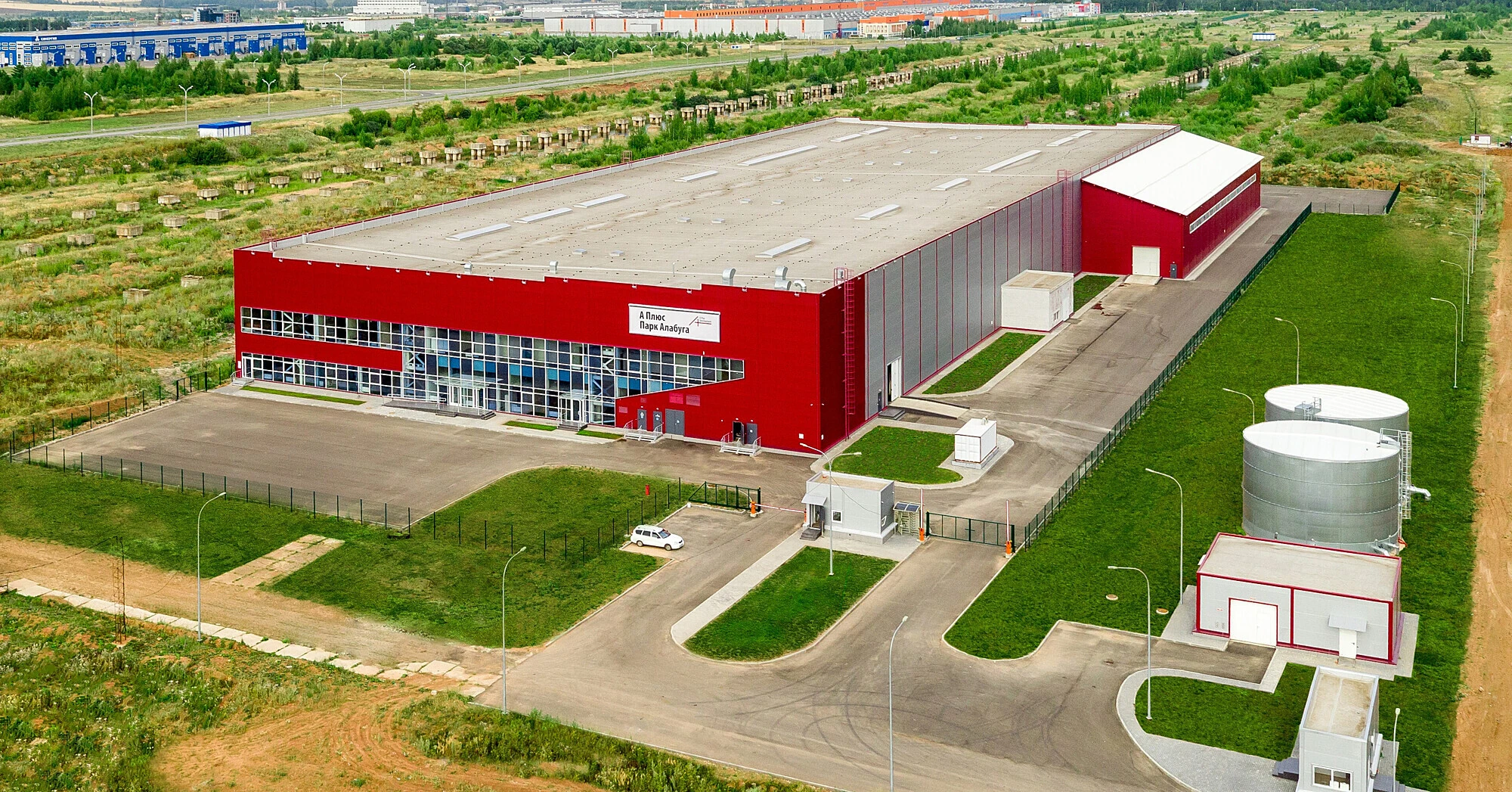
Russia is expanding production of carbon fiber needed for the bodies of long-range strike drones like the "Geran," based on the Iranian Shahed-136. New capacity at the Alabuga-Volokno plant in Tatarstan could potentially supply material for tens of thousands of additional drones per year.
According to internal Rosatom documents reviewed by Politico, the plant is planned to be expanded so that by 2029 it could produce an additional 500 tons of aerospace-grade carbon fiber annually. Russian authorities approved the construction of a new production line back in May 2026.
David Albright, president of the American Institute for Science and International Security, estimates that this amount of raw material could theoretically allow production of bodies for about 28,000 Shahed-136 drones per year. This is an assessment of the production line's potential, not a confirmed plan to produce exactly that many finished drones.
Construction has already reached a practical stage. Satellite images from the summer showed site preparation adjacent to the existing plant, and independently obtained images from August indicated work on the foundation of new production facilities.
The expansion of Alabuga-Volokno is part of a much broader Russian program to create its own production base for drones. According to the Center for Strategic and International Studies (CSIS), Moscow wants to increase production of large unmanned systems to about 130,000 units per year by 2030, and up to 350,000 by 2035. One of the key goals of the Russian program is localization of production of bodies, engines, electronics, navigation systems, and other components.
Rosatom itself openly reports that the current capacity of Alabuga-Volokno exceeds 1.4 thousand tons of carbon fiber per year. The material is made from PAN-based precursor and is used in products requiring a combination of low weight and high strength. These characteristics are critically important for the construction of long-range drones.
At the same time, the Alabuga industrial zone itself, where production of Russian strike UAVs is located, is expanding. The Critical Threats Project at the Institute for the Study of War reported in early September that satellite images show at least ten new production buildings and large-scale construction work. Russia is also strengthening physical protection of the complex from strikes.
Current production rates of strike drones already significantly exceed the level of the first years of Russian-Iranian cooperation. In early September, Ukrainian presidential advisor on defense technologies Serhiy Beskrestnov estimated Russian capabilities at 36-40 thousand strike UAVs per year, or more than 3 thousand per month. Russia is gradually shifting part of production to new modifications, including jet-powered ones.
Washington had earlier imposed sanctions on a network of enterprises associated with drone production in Alabuga. The U.S. Treasury Department indicated that this infrastructure was used to localize production of strike drones of Iranian design in Russia, which are used against Ukraine.
Sources: Politico, CSIS, Critical Threats Project