
271 million miles without a driver: Waymo says its robotaxis get into serious crashes 95% less often than human-driven cars
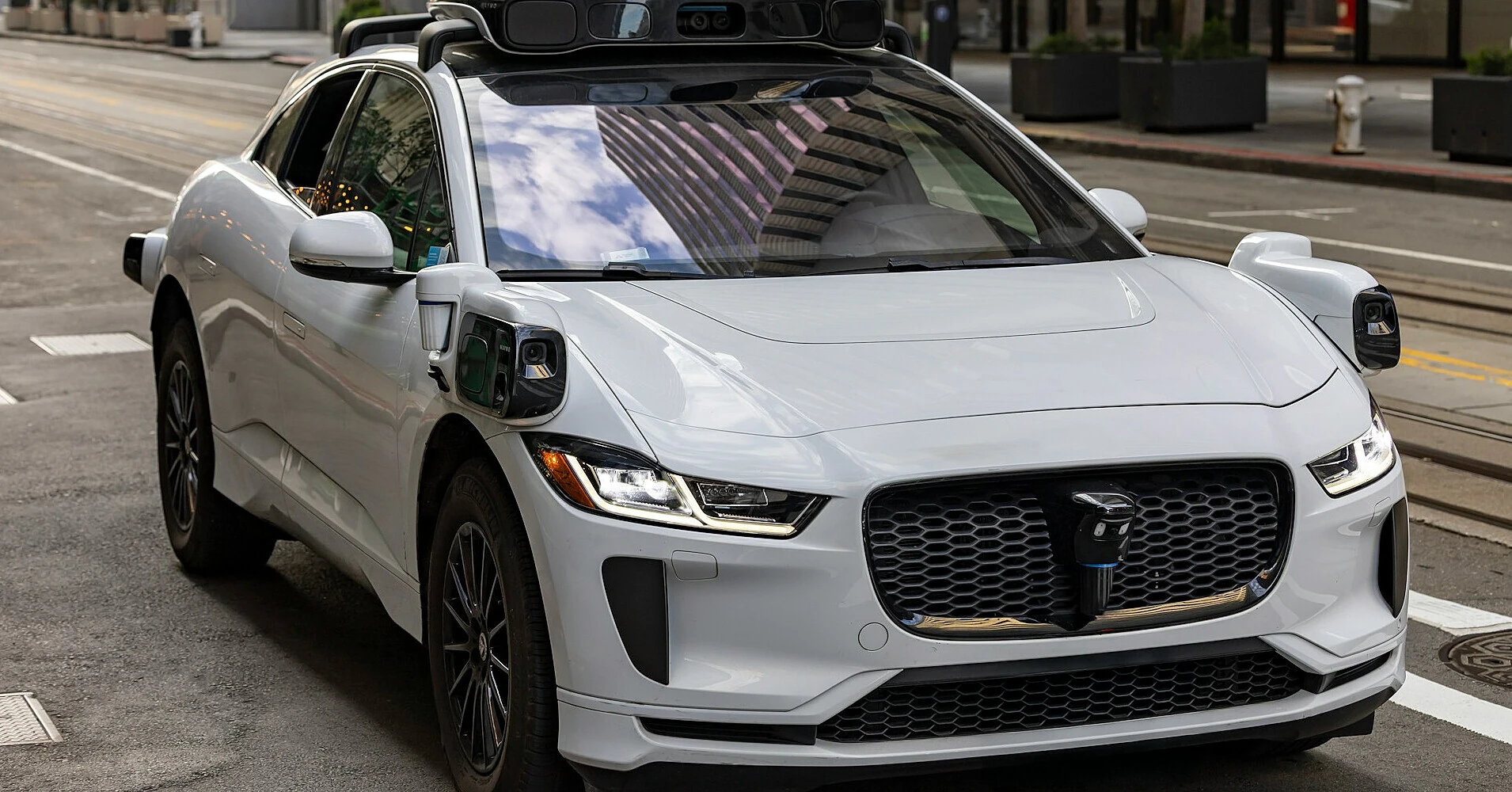
Waymo robotaxis have driven 271.3 million miles in fully autonomous mode without a human behind the wheel. According to new company data, over a comparable distance its vehicles were involved in crashes with injuries 82% less often, and in crashes with serious injuries or more severe consequences — 95% less often than cars controlled by humans.
The statistics cover trips through the end of June 2026 in five major areas where Waymo operates: Phoenix, the San Francisco Bay Area, Los Angeles, Austin, and Atlanta.
The main caveat: this data comes from Waymo itself, which is owned by Alphabet. The company compares its robotaxis not to the average accident rate across the entire United States, but to a specially calculated human baseline for the specific areas and roads where its service actually operates.
What 271.3 million autonomous miles showed
Waymo reports that with the same mileage, its fully autonomous vehicles were involved in significantly fewer serious incidents than would be expected with human driving.
- crashes with reported injuries were 82% fewer;
- crashes with serious injuries or more severe consequences — 95% fewer;
- collisions in which at least one vehicle's airbag deployed — 82% fewer.
In absolute numbers, Waymo estimates the difference as 841 crashes with injuries, 55 of the most serious collisions, and 358 crashes involving airbag deployment.
This does not mean the company can point to 841 specific individuals whom the robotaxis "saved." It refers to the statistical difference between the actual number of Waymo incidents and the number that would have been expected with human driving over the same distance.
Serious crashes occurred approximately 20 times less frequently
The most notable result concerns the most dangerous collisions.
Waymo reports a 95% reduction in crashes with serious injuries or more severe consequences. The company also describes this result as an approximately 20-fold difference relative to the calculated human baseline.
Moreover, Waymo's statistics include crashes regardless of who was considered at fault. If, for example, another vehicle crashed into a robotaxi, that incident is also counted.
This is important because the metric reflects not only the errors of the autonomous system itself, but also its ability to avoid collisions caused by the actions of other road users.
Pedestrians and cyclists were also included in the comparison
Waymo separately analyzed incidents with the most vulnerable road users.
According to the company, compared to the human baseline, its vehicles were involved:
- 93% less often in crashes with pedestrian injuries;
- 86% less often — with cyclist injuries;
- 82% less often — with motorcyclist injuries.
The estimated difference amounts to 86, 56, and 36 such incidents, respectively.
For autonomous vehicles this metric is especially important: the system must not only monitor other cars, but also recognize pedestrians, cyclists, and motorcyclists, whose actions can be significantly less predictable.
Why you can't simply compare robotaxis to all of America
Comparing accident rates between autonomous and conventional cars is more complicated than it might seem.
First, Waymo operates only in specific cities and designated operational areas. Mileage driven through the dense streets of San Francisco cannot be directly compared, for example, with the same distance on calm rural highways.
Therefore, the company adjusts the human baseline to account for exactly where its vehicles drive.
Second, incident reporting rules differ. Operators of automated systems are required to report a wide range of collisions to the U.S. regulator NHTSA, while some crashes involving conventional drivers never make it into police statistics.
Waymo attempts to account for this effect in its methodology and also publishes its data and description of calculations for third-party analysis.
But the numbers do not prove that a robot is safer than a human in every situation
The results apply specifically to the Waymo Driver and to the cities and routes where the company has already allowed the system to operate without a driver.
They do not show how the vehicle would perform on any road in the U.S., in an unknown city, under extreme weather conditions, or in situations outside its current operational area.
Furthermore, this is retrospective data. It describes accident rates through the end of June 2026 but does not guarantee that serious crashes will not occur in the future.
And another important caveat: the published Safety Impact Hub belongs to Waymo itself. The company discloses its methodology and source data sets, but the claimed percentages of accident reduction are its own analysis.
Why 271 million miles change the conversation about robotaxis
In the early years of self-driving development, the industry was primarily trying to prove that a car was even capable of navigating a city autonomously.
Now the question is gradually shifting: can an autonomous system, over a huge real-world mileage, be statistically safer than a human.
And here the sample size matters greatly.
Rare severe crashes cannot be reliably assessed from a few thousand test rides. But Waymo has already accumulated hundreds of millions of miles of fully autonomous operation with real passengers.
By the end of June, the largest mileage was in Phoenix — 92.1 million miles. In the Bay Area, Waymo vehicles drove 82.4 million, in Los Angeles — 67.1 million, in Austin — 21.1 million, and in Atlanta — 8.6 million miles without a human behind the wheel.
Safety becomes the key argument for the robotaxi business
For Waymo, these numbers matter not only from a technological perspective.
The widespread adoption of robotaxis depends on whether companies can convince regulators, insurers, cities, and passengers themselves that removing the driver from the vehicle does not increase road risk.
A single unusual crash involving an autonomous vehicle can receive enormous publicity. But for safety assessment, a more important metric is how many serious incidents occur per million comparable miles.
Therefore, Waymo's new dataset becomes one of the most interesting real-world tests of autonomous transport.
If the advantage persists as the company expands into new cities, grows its fleet, and accumulates hundreds of millions more miles, the debate around robotaxis may gradually shift from the question "can we trust a car to drive without a human?" to "how much safer or more dangerous is it than a human on the same route?".
For now, Waymo's answer appears clearly in favor of the autonomous system. But the ultimate validation of this advantage will occur precisely as the system scales — on new roads, in new cities, and under increasingly varied driving conditions.
Based on materials from: Waymo Safety Impact, Waymo — safety data update from September 24, 2026.
