
Fed prepares revamp of supervision for large banks: key threshold may rise to $1 trillion
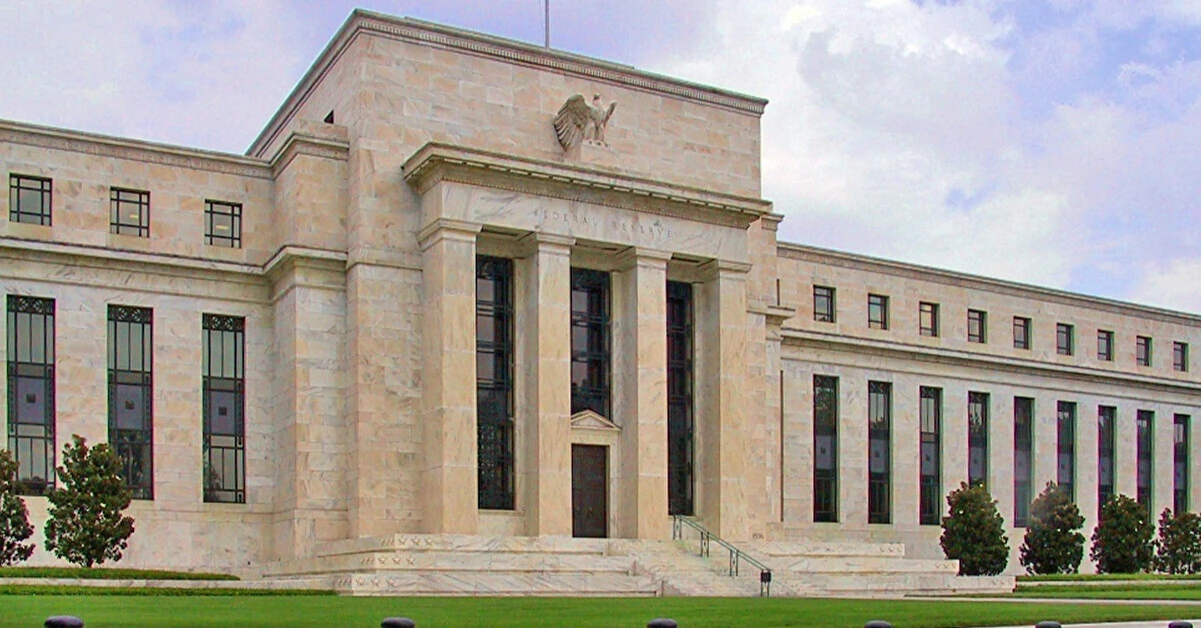
The U.S. Federal Reserve is preparing a revision of the rules that determine how strict supervision applies to large banks. According to Reuters, the regulator is considering raising several asset thresholds after which financial institutions face additional requirements for capital, liquidity, risk management, and reporting.
One of the most notable possible changes is raising the threshold from about $700 billion to $960 billion–$1 trillion for one of the categories of large banks. For some other requirements, the lower limit may be raised from $100 billion to about $150 billion.
This is not yet a decision, but a plan being developed. The proposal may be presented later in 2026, after which its parameters could still change.
Why does bank size affect rules at all
The U.S. banking supervision system is designed so that requirements become stricter as a financial institution grows and becomes more complex.
After a certain size, banks must undergo more intensive supervision, maintain additional capital and liquid asset reserves, conduct stress testing, prepare more complex reporting, and comply with additional risk management requirements.
The logic is simple: a bank with hundreds of billions of dollars in assets can create significantly more serious consequences for the financial system in case of problems than a small regional institution.
But the current thresholds were set several years ago, and banking industry representatives have long argued that some thresholds no longer correspond to the size of the modern market.
From $700 billion to almost $1 trillion
Currently, one of the key levels in the Fed's system is at $700 billion in assets.
A bank reaching this size, under certain conditions, moves into a stricter regulatory category. Reuters reports that the Fed is considering raising this threshold to about $960 billion or $1 trillion.
This is a substantial difference. A bank could grow by hundreds of billions of dollars more before its size alone leads to a move into a stricter supervision category.
However, size is not the only criterion. The Fed also considers international activity, the volume of nonbank assets, short-term market funding, and other indicators of complexity and potential risk.
The $100 billion threshold may also change
Another area under discussion concerns banks with assets of $100 billion or more.
According to Reuters, for some requirements that the Fed can set on its own, the lower threshold may rise to about $150 billion.
For banks between the current and possible new threshold, this could mean a less complex system of reporting, liquidity management, and capital planning.
However, there is an important limitation: the Fed cannot unilaterally repeal all rules tied to $100 billion or $250 billion.
Some requirements are enshrined in federal law. In particular, the Dodd-Frank Act and its subsequent amendments determine the application of enhanced prudential standards and stress tests for large banks. Changing some of these thresholds would require Congress's decision, not just a vote by the Fed itself.
Why banks are interested in higher thresholds
Moving into a stricter regulatory category is costly.
A bank must invest in risk management systems, additional reporting, stress testing, compliance specialists, and liquidity and capital control infrastructure.
According to industry representatives, at certain asset levels, additional annual expenses can amount to tens of millions of dollars.
Therefore, the size of the regulatory threshold even affects growth strategy.
A bank approaching the next boundary may be more cautious about acquiring a competitor or a major expansion: the transaction itself could move it into a stricter supervision regime and sharply increase fixed costs.
Changes may accelerate bank mergers
That is why a possible Fed revision is important not only for the accounting of individual financial institutions.
Reuters sources and banking sector representatives believe that higher thresholds could push the market toward consolidation.
Regional banks would find it easier to buy competitors without fear that a slight breach of the established threshold would automatically bring a new set of costly requirements.
This could lead to more banks with assets in the hundreds of billions of dollars.
For shareholders of such companies, the effect is potentially positive: lower regulatory expenses and more deal opportunities could improve profitability.
But consolidation also has a downside. The fewer banks remain in the market, the higher the concerns about competition and the larger the institutions whose problems could affect the entire financial system.
After Silicon Valley Bank collapse, the supervision debate became especially sensitive
The discussion is taking place just a few years after the regional bank crisis of 2023.
Silicon Valley Bank (SVB) collapsed then after a rapid outflow of deposits and large losses on securities. Subsequently, the Fed's own review found serious deficiencies both in the bank's management and in the work of supervisory authorities.
That is why any relaxation of rules for large regional banks inevitably triggers debate.
Proponents of a more flexible approach believe that regulation should take into account the actual risk and complexity of a bank, not just the size of its balance sheet.
Critics, on the contrary, remind that bank problems can develop much faster than the regulator can tighten requirements after its growth.
Therefore, the future Fed project will likely be assessed not only from the perspective of bank costs but also through the question of whether it makes the financial system less resilient.
Largest banks will be hardly affected by the easing
This is not about a sharp relaxation of regulation for the largest U.S. banks.
Systemically important financial groups still remain in the strictest category and must comply with heightened requirements for capital, liquidity, stress testing, and crisis planning.
The main effect of the possible revision will be on the next level—large but less complex banks that are now approaching existing thresholds or already just above them.
For them, the difference between $700 billion and almost $1 trillion could be particularly significant.
So far, it's a plan, not a new rule
The key detail is the status of the initiative.
According to Reuters, the Fed is still preparing a proposal. There is no official final decision on new thresholds, and the regulator has not commented to the agency on the details of discussions.
Following publication of the draft, a public comment period usually follows, during which banks, experts, and other stakeholders can submit feedback. The final version may differ significantly from the initial one.
But even the preparation of such a revision shows the direction in which U.S. banking regulation is moving: requirements may become more dependent on the actual complexity and risk of a financial institution, and several current size thresholds may rise significantly.
For banks, this means a potential reduction in regulatory costs and more room for growth. For the market—a possible new wave of mergers. And for regulators, the main question will be the balance between more flexible rules and the risk of repeating problems that the financial system has already experienced after the collapse of large regional banks.
Sources: Reuters, U.S. Federal Reserve.
