
Inflation in Germany jumped to a nearly three-year high
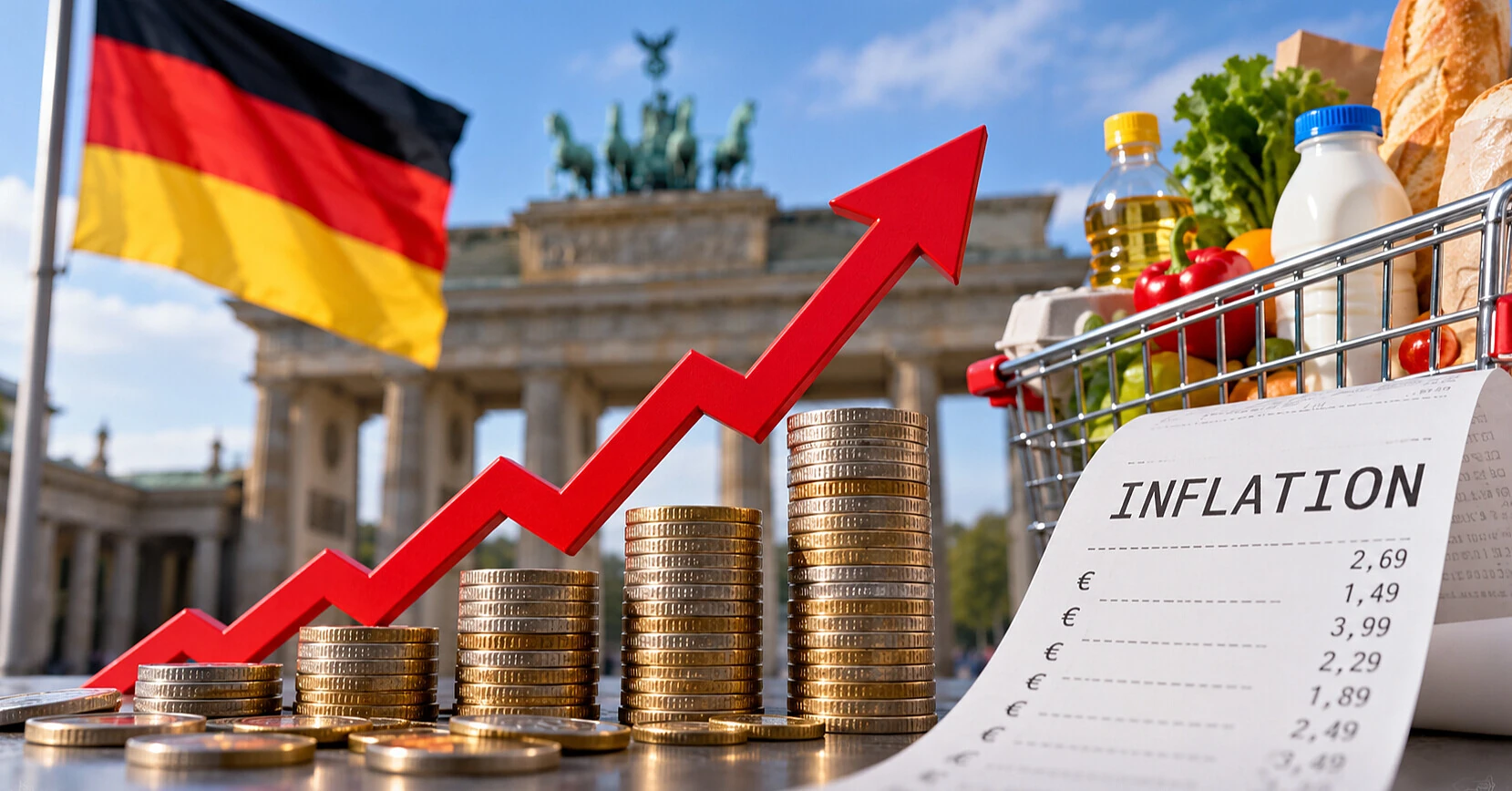
Inflation in Germany accelerated to 3.3% year-on-year in September from 2.9% in August. For the first time since late 2023, consumer price growth exceeded the 3% mark.
The main reason for the new surge remains energy prices. According to preliminary data from the Federal Statistical Office of Germany, in September they cost 14.9% more than a year earlier. By comparison, in August the annual increase in energy prices was 10.5%.
At the same time, core inflation, which excludes volatile food and energy prices, remained considerably lower at around 2.4%. This indicates that the current acceleration of the headline figure is largely due to the energy shock, rather than uniformly rapid price increases across all goods and services.
The rise in energy costs in Germany intensified in the summer amid the war with Iran and high global oil prices. Back in August, the German statistical office recorded a 27.7% annual increase in fuel prices, while light heating oil was up nearly 50%. Meanwhile, electricity and natural gas remained cheaper than a year earlier.
The Federal Ministry of Economics previously warned that the situation on energy markets would remain a key factor for German inflation in the coming months. Futures prices for gas and electricity pointed to further pressure by the end of the year, while oil prices were only slowly declining.
For households, this primarily means higher spending on transport and energy. For businesses, more expensive energy also increases production and logistics costs, part of which may eventually be passed on to final prices.
In August, inflation in Germany was 2.9%, in July 2.8%, and in June 2.3%. Thus, the September figure marked the fourth consecutive acceleration in annual price growth.
Sources: Tagesschau, Destatis
