
PACE called not to recognize the new State Duma of the Russian Federation after the elections
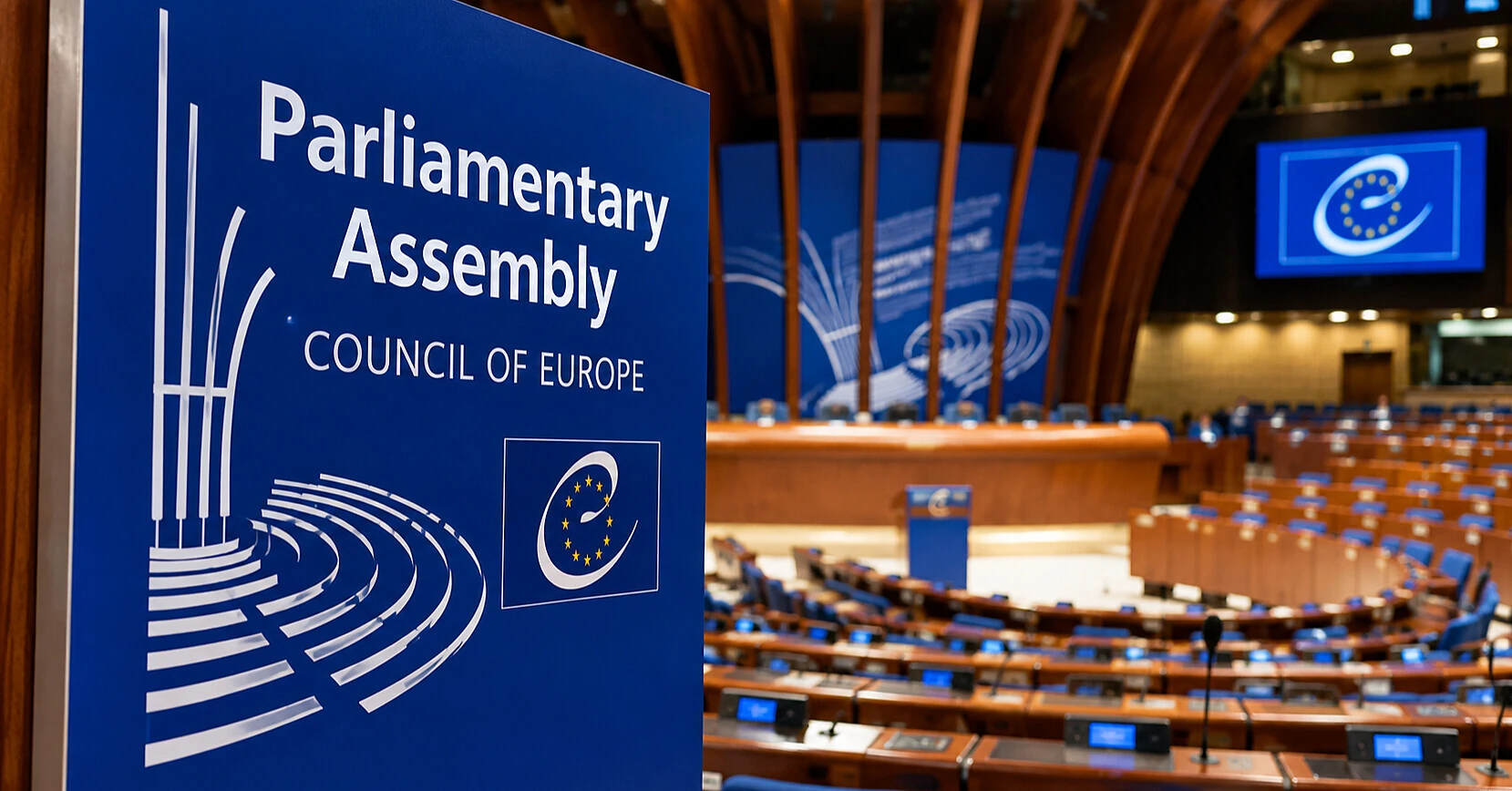
The Parliamentary Assembly of the Council of Europe (PACE) called on the member states of the Council of Europe not to recognize the newly elected State Duma of Russia as a democratically elected and legitimate representative body. The Assembly unanimously adopted the corresponding resolution on September 30 after debates on the Russian elections and hybrid attacks in Europe.
In the document, PACE called on member states and observers of the Council of Europe, as well as European institutions and international partners, to reject the results of the State Duma elections held on September 18-20, 2026. The Assembly also called not to recognize any legal or political consequences of the voting organized by Russia in the temporarily occupied territories of Ukraine.
Separately, PACE recommended refraining from engagement with the new State Duma and reviewing the terms of its participation in international parliamentary cooperation, in particular in the Inter-Parliamentary Union. An exception is proposed to be maintained for channels necessary for peace negotiations and humanitarian issues - exchange of prisoners of war, release of illegally detained civilians, and return of forcibly displaced and deported children.
The Assembly separately condemned Russia's holding of voting in occupied Crimea and Sevastopol, as well as in parts of Donetsk, Luhansk, Zaporizhzhia and Kherson regions. PACE stated that such actions violate international law, the sovereignty and territorial integrity of Ukraine, and cannot have legitimate legal consequences.
In the resolution, PACE also drew attention to the conditions of the elections in Russia itself. The Assembly pointed to the suppression of political opposition, criminalization of dissent, restriction of access to independent information, lack of full political competition, and Russia's refusal to invite OSCE observers. On this basis, PACE stated that the State Duma formed as a result of the voting cannot be considered democratically elected.
The document has a broader context and also concerns Russian hybrid actions in Europe. PACE mentioned cyberattacks, sabotage and arson, election interference, attacks on critical infrastructure and navigation systems, disinformation campaigns, airspace violations and the appearance of drones over European countries. The Assembly called on European states to strengthen joint preparedness for such threats.
This is already the second signal from PACE regarding the legitimacy of the new composition of the Russian parliament. On September 18, before the start of voting, the PACE Platform for Dialogue with Russian Democratic Forces stated that the future State Duma should not be recognized as democratically elected. At that time, it was a statement by the platform, while on September 30 the corresponding position was enshrined in a resolution of the entire Assembly.
Based on materials from: Parliamentary Assembly of the Council of Europe, PACE.
