
Light, water and places to stay for the whole family: how Ukrainian business prepares for winter blackouts
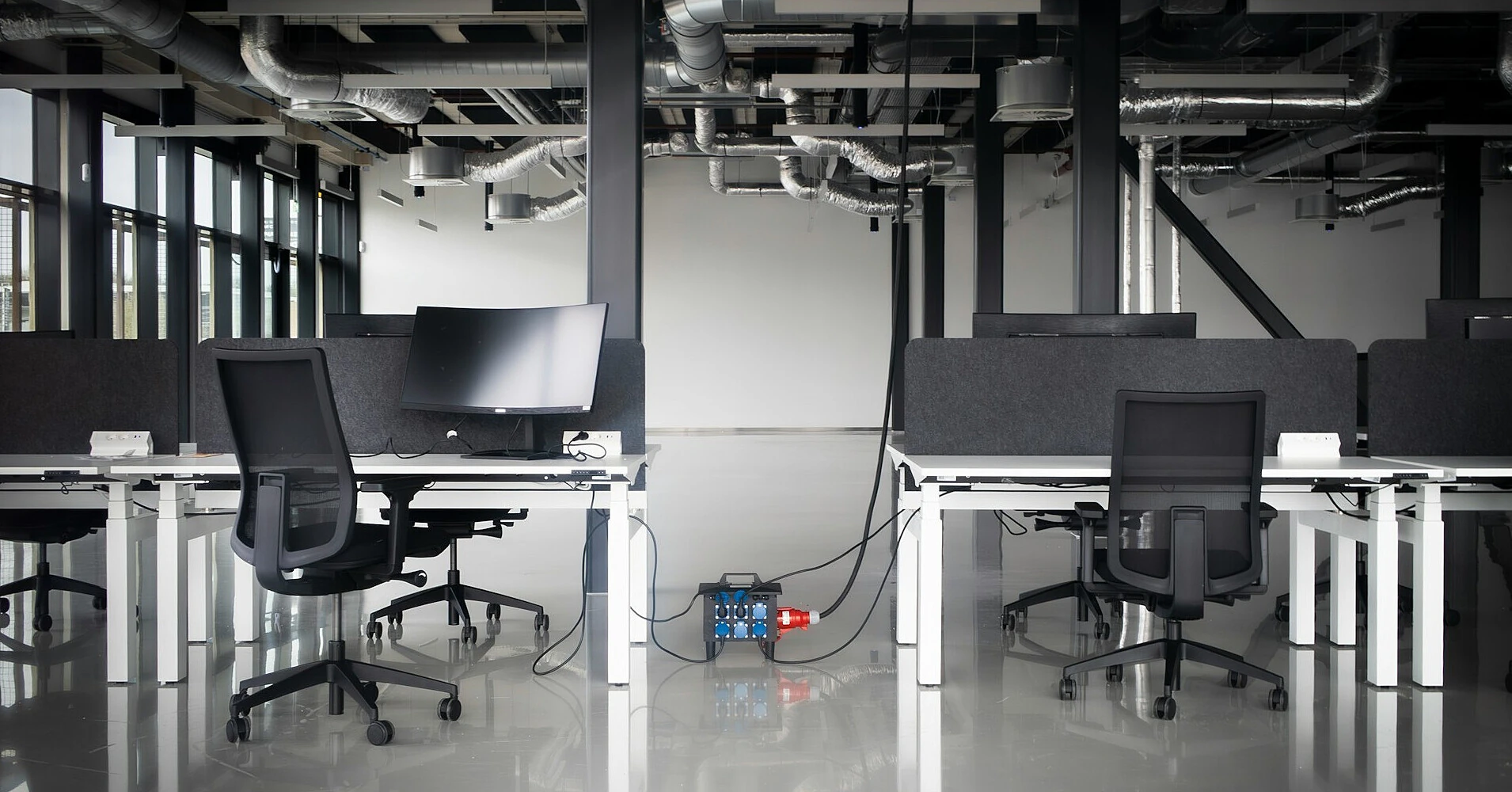
Ukrainian businesses are once again restructuring their operations ahead of winter. Amid intensifying Russian attacks, companies are lifting restrictions on remote work, preparing employees for temporary relocation, and turning offices into autonomous points with light, internet, water, heating, and places to stay overnight.
This is evidenced by fresh data and comments from companies collected by DOU and Forbes Ukraine. Among them are IT companies, Epicenter, and PrivatBank.
What was considered an emergency measure for blackouts several years ago is gradually becoming a permanent part of work organization: employees must have several backup scenarios for power outages, infrastructure damage, or worsening situations in a particular region.
Remote work becomes a safety issue again
One of the first changes is the return to maximally flexible schedules.
At appflame, office employees previously could work from home up to 50 days a year. The company lifted this limit for the winter. At the same time, they removed the restriction for remote workers, who were previously allowed to come to the office no more than four times a month.
This creates an unusual model: the company does not require an employee to commute to the office, but it also does not consider home the only reliable workplace. If light, heat, or internet disappear at home, the office becomes a backup point.
Other employers use a similar approach.
Jooble abandoned the mandatory hybrid schedule. The company's offices in Kyiv, Lutsk, and Warsaw remain open, and in Kyiv and Lutsk employees can stay overnight with their families if needed.
EPAM's Kyiv office was temporarily closed for safety reasons after the building was damaged during a Russian attack on September 23, and employees continue to work remotely.
The office turns into an autonomous hub
Companies are preparing for a situation where the usual workplace at home may stop working for several hours or even longer.
Ciklum's Ukrainian offices have generators and backup power, several independent internet channels, autonomous heating, water supplies, and shelters.
appflame keeps the Kyiv office open around the clock. Water, food, batteries, first aid kits, sleeping bags, sleeping pads, and folding chairs for shelters are prepared. There are even portable toilets in case of water supply problems. If necessary, an employee can come with their family.
Kyivstar.Tech also expects that working conditions from home may worsen in winter and more people will want to use offices. The company provides employees with batteries and other solutions for working during outages.
Essentially, the office ceases to be just a place to come according to a schedule. It becomes part of the business continuity plan — a backup point with light, connectivity, warmth, and the ability to wait out a prolonged outage.
Companies prepare employees for relocation again
The second notable trend is the return of temporary relocations.
Moreover, it does not necessarily mean moving abroad. For many companies, the first fallback option is transferring an employee to another region of Ukraine for the most difficult period.
Ciklum already pays one-time assistance for moving, rent, and settling in for employees from the south and east of the country. If the situation worsens, the company considers similar support for Kyiv and the region.
The company names possible destinations as western regions of Ukraine, as well as countries where it has development centers, including Poland, Romania, Bulgaria, Slovakia, and Spain. Employee requests for relocation have increased compared to last year.
SAP Ukraine has had a temporary relocation program to the west of the country since 2023. In recent days, demand for it has grown by about 50%.
appflame is also ready to help employees with relocation, housing, and transportation. In Ukraine, the company can provide workplaces in Lviv; abroad — offices or coworking spaces in London, Limassol, and Warsaw.
As a result, businesses have several backup scenarios at once: home, autonomous office, another city in Ukraine, and, for some employees, another country.
This is no longer just an IT company story
Large employers from other industries face similar problems.
Epicenter, after the destruction and damage of its facilities since August, has transferred more than 300 employees to work in other regions. The company helps people with relocation and housing.
Candidates' questions at interviews have also changed.
According to Epicenter, people increasingly ask not only about salary and responsibilities, but also about the presence of a shelter, work procedures during air raid alerts, and autonomous power supply.
PrivatBank also notes increased demand for remote work formats, while vacancies with mandatory office presence are becoming harder to fill.
For winter, the bank updates business continuity plans, equips branches with generators, lithium iron phosphate batteries, and autonomous heating, and also budgets for mass attacks and outages — including for employees working from home.
A generator alone is no longer enough for business
Ukrainian companies are gradually moving from the model of "set up a generator and wait out the outage" to more complex autonomous energy systems.
According to Forbes Ukraine, businesses are investing in batteries and solar panels at record rates.
The reason is practical: prolonged autonomous operation requires not only a generator, but also a constant fuel supply, maintenance, and stable logistics. Batteries and own generation reduce dependence on a single energy source.
Large enterprises go further and build their own energy systems.
Electro Cable Group created about 4 MW of own generation, combining gas units, a solar power plant, and an energy storage system. The company claims that this allows it to operate fully autonomously.
In fact, part of Ukrainian business is starting to create its own mini-energy systems that allow continuing work even during prolonged problems with the external grid.
Why companies prepare in advance
It is impossible to predict the conditions of the coming winter. They depend not only on temperature, but above all on the scale of Russian attacks on Ukrainian energy infrastructure.
However, the starting conditions for business are better than a few years ago.
Companies have already accumulated generators, charging stations, and batteries, created backup communication channels, and gained experience from several winters during the full-scale war.
Serhiy Shakalov, co-owner of the energy company KNESS, noted in September that businesses and the state are significantly better prepared for the coming winter than a year ago. At the same time, he emphasized that the final situation will depend on the scale of further attacks.
Therefore, employers increasingly prepare not one but several scenarios simultaneously.
- Stable situation: employees continue to work at home or in the office as usual.
- Prolonged outages: the autonomous office turns into a working hub with light, connectivity, water, and warmth.
- Serious problems with light and heating: temporary relocation of employees is launched.
- Damage to the facility or inability to work in the region: people are transferred to other sites.
What changes for employees themselves
The new conditions are gradually changing the criteria for choosing an employer.
For a person who does not have a powerful charging station, autonomous heating, or backup internet at home, the company's ability to continue working during a blackout becomes quite a practical part of the job offer.
Therefore, before winter, it makes sense to clarify with the employer:
- whether there is a proper shelter in the office;
- how long the office can work without external power supply;
- whether there is autonomous heating, water, and backup internet;
- whether the company helps remote employees with charging stations or coworking payments;
- whether there is a temporary relocation plan and whether it includes assistance with moving and housing.
The war is gradually changing the very concept of the workplace in Ukraine.
Previously, companies competed with salaries, bonuses, insurance, and office comfort. Now added to this is the ability to provide employees with light, connectivity, warmth, shelter, and a backup working scenario.
During the war, an employer's readiness to support work during shelling and blackouts is effectively becoming a new part of the social package — alongside health insurance and other customary benefits.
Based on materials: DOU, Forbes Ukraine, Interfax-Ukraine, The Page.
