
EU preparing new joint energy procurement mechanism
The European Commission is preparing a new joint energy procurement mechanism that is supposed to move from simply matching buyers and sellers to centralized aggregation of EU countries' demand and procurement through a special market operator.
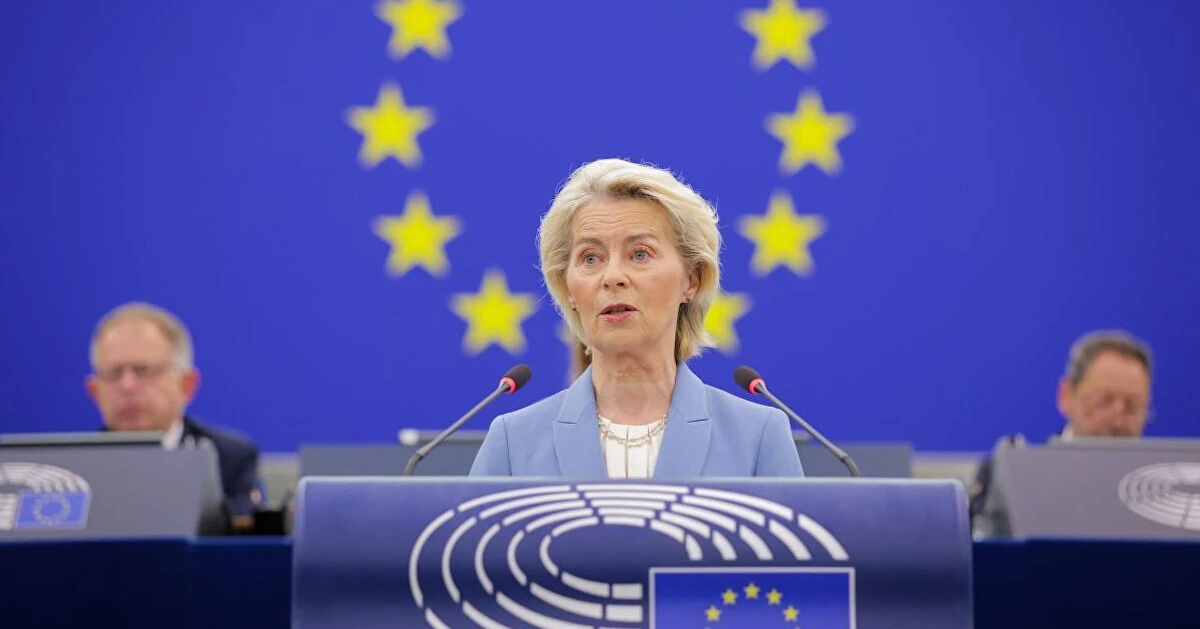
European Commission President Ursula von der Leyen said this on October 6 during a speech in the European Parliament ahead of the European Council meeting on October 15-16. To launch the mechanism, the Commission will create a separate working group that will deal with aggregating energy demand.
According to von der Leyen, EU countries' energy needs remain fragmented due to different generation and consumption structures. Therefore, Brussels wants to aggregate demand and instruct a market operator to conduct joint procurement on behalf of the mechanism's participants.
The new approach develops the model the EU began using after reductions in Russian gas supplies. At that time, European companies aggregated demand through AggregateEU, and the platform helped find suppliers. Now the European Commission wants to go further and add direct joint procurement after demand aggregation.
In fact, this is not about creating a system from scratch. In 2025, the European Commission launched the EU Energy and Raw Materials Platform, which collects buyer requests and supplier offers, allows aggregating demand, and can be used for joint procurement of energy resources and strategic raw materials. The previous AggregateEU mechanism operated in 2023-2025, and 189 companies were registered in it.
The decision to strengthen procurement coordination came against the backdrop of a new spike in energy prices. According to data cited by von der Leyen, since late February, gas in Europe has risen in price by 140%, and diesel – by approximately double. She estimated the EU's additional costs for importing fossil fuels at €100 billion without an increase in the actual volume of energy received.
In parallel, the European Commission plans to extend temporary relaxations of state aid rules for the most vulnerable industrial sectors and start a strategic dialogue with European oil refineries. Its goal will be to reduce costs and ensure sufficient fuel supplies, including for defense needs.
In the medium term, Brussels wants to reduce dependence on imported oil and gas itself. According to von der Leyen, more than 70% of electricity in the EU is currently produced from renewable sources and nuclear energy, and the share of Russian gas in imports has shrunk from 45% in 2022 to about 12%.
The European Commission is also betting on faster expansion of electricity grids. Last year, the EU installed over 80 GW of new renewable energy capacity, but according to von der Leyen, approximately six times more capacity is currently awaiting grid connection. To reduce fossil fuel imports, the EU also plans to increase the share of electricity in final energy consumption from the current less than 25% to approximately double by 2040.
Thus, the new joint procurement mechanism is supposed to be a short-term response to high prices, while the EU's long-term strategy involves reducing dependence on imported fossil energy resources and increasing domestic generation.
Based on: European Commission, European Commission
