
A new border crossing point has opened on the border with Romania
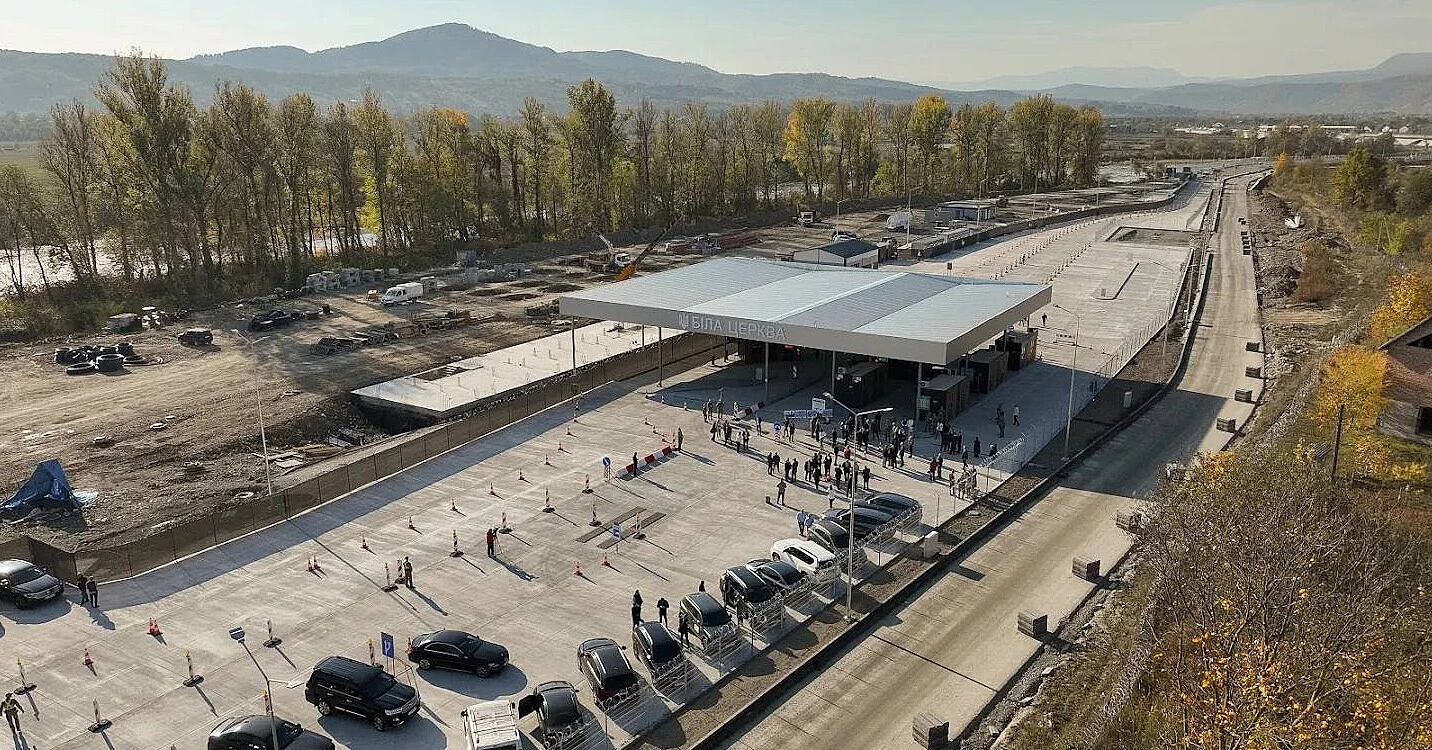
On Thursday, October 8, a new automobile border crossing point "Bila Tserkva - Sighetu Marmației" was officially opened on the Ukrainian-Romanian border in Zakarpattia Oblast. It operates around the clock, but so far it serves only passenger cars.
At the first stage, the throughput capacity of the new crossing will be up to 400 cars per day, the Ministry for Communities and Territories Development of Ukraine reported.
Cars weighing up to 3.5 tons can cross the border through the new point. From the Ukrainian side, temporary modular structures have been installed for border and customs control, and an access road has been arranged.
From the Romanian side, the necessary infrastructure of the crossing point and a new automobile bridge over the Tisza River, which connects the Ukrainian Bila Tserkva with the Romanian city of Sighetu Marmației, have been built.
According to the Minister for Restoration, Infrastructure and Transport, Mykola Kalashnyk, the opening of the new crossing creates an additional route to Romania and will allow redistributing traffic flows between the existing border crossing points.
The next stage will be the opening of the crossing for trucks and buses. For this, it is necessary to complete the construction of permanent infrastructure. After all works are completed, the point will be able to process up to 400 trucks and 50 buses per day. The implementation of this stage is planned for the coming years.
According to the State Customs Service, the planned infrastructure includes six lanes for passenger cars, six for trucks, and two for buses. After full development of the crossing, its throughput capacity should increase significantly.
Recall that on September 17, the Cabinet of Ministers adopted Resolution No. 1130 on the opening of the crossing point "Bila Tserkva - Sighetu Marmației". The document allowed starting its work on temporary infrastructure, without waiting for the completion of the entire complex of construction works.
Based on materials from: Ministry for Communities and Territories Development of Ukraine, State Customs Service of Ukraine.
