

Pentagon may spend nearly $350 million on consultants: what ties of its high-ranking official have attracted journalists
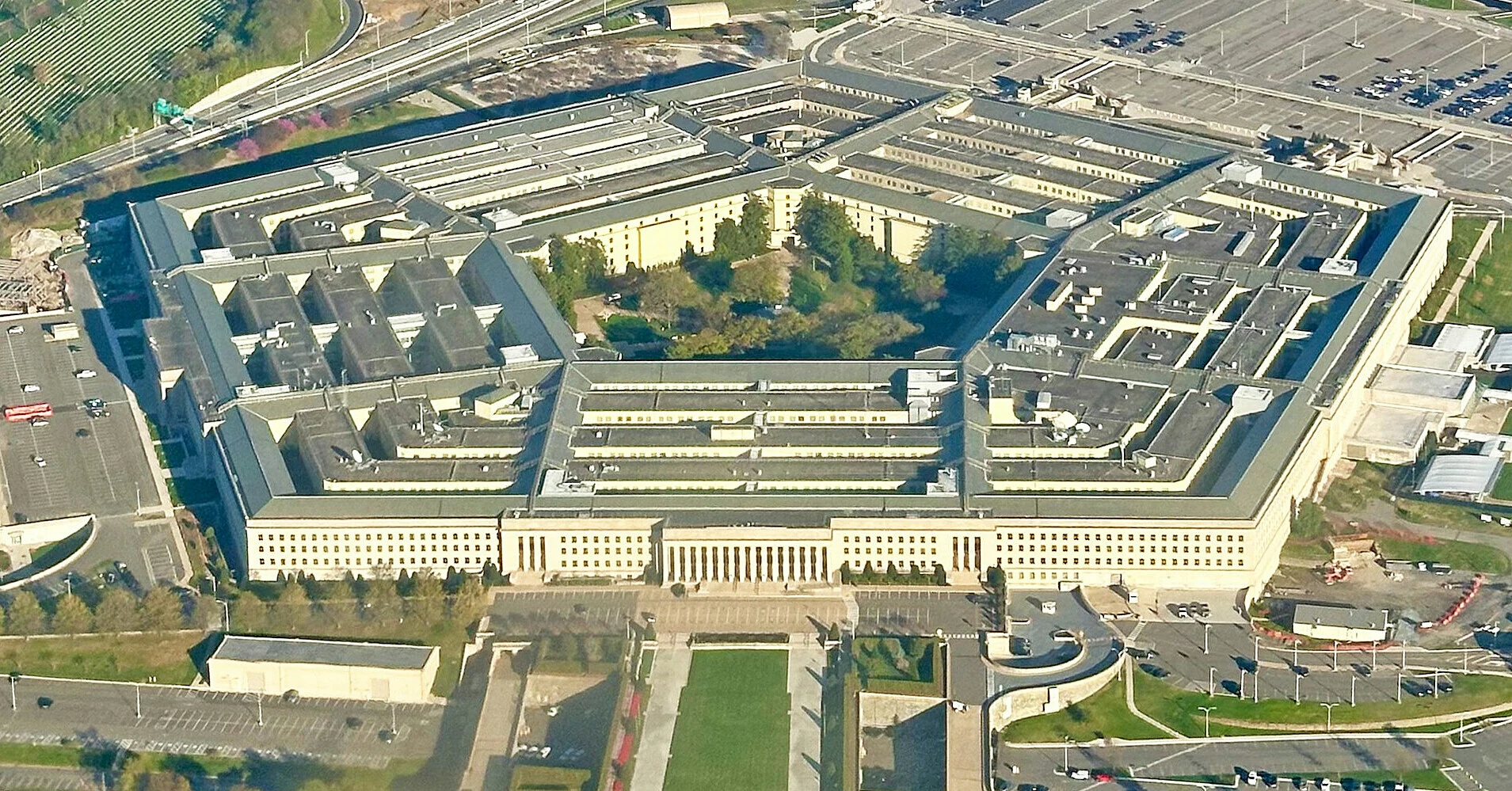
Nearly $350 million in potential Pentagon spending has been linked to a company with close business ties to the former employer of a high-ranking official at the agency. The largest contract—at $281 million—was concluded without a standard competitive tender.
This follows from a ProPublica investigation published on October 9. Journalists reviewed federal spending data, corporate documents, and employment records of George Kollitides II, who holds several important positions at the Pentagon.
Neither ProPublica nor the documents cited in the investigation prove that Kollitides broke the law or personally ensured the company received the contracts. The Pentagon maintains that the official fully complies with legal and ethical requirements.
Why the story drew attention
Before joining the government, Kollitides was a partner at investment firm Alvarez & Marsal Capital for almost ten years.
Even after starting work at the Pentagon, in an April document for regulators, he was still listed as a senior advisor to that firm.
And two months later, the related consulting firm Alvarez & Marsal Federal received a $281 million Pentagon contract.
Moreover, the consultants were to work with the new BOND division, headed by Kollitides himself.
It is precisely this combination—the official's former business ties, the huge amount of the government contract, and the absence of a standard tender—that became the main subject of investigation.
Nearly $350 million is not the amount already paid to the company
Two contracts are at issue.
The first, worth about $67.6 million, was concluded in December. The second—at $281.1 million—appeared in June.
Their maximum combined worth is nearly $350 million.
But it is important not to confuse this with money already paid: according to data cited by ProPublica, Alvarez & Marsal Federal has so far received about $31 million.
Such agreements can run several years, and the contractor is not necessarily paid the full maximum provided for.
The official's company and the contractor are formally different
There is a crucial detail here.
Alvarez & Marsal Capital, where Kollitides worked, and Alvarez & Marsal Federal, which received the Pentagon contracts, are legally distinct entities.
A&M Capital told ProPublica that the companies have separate capital and management, and investment business employees are not involved in the daily work of the consulting division.
The company also said that Kollitides's work at A&M Capital was unrelated to either the defense industry or his government service.
However, journalists found that the two entities maintain close business ties, jointly participate in investment projects, and share some administrative infrastructure.
A&M Capital itself, in corporate materials, describes the relationship with the consulting business as strategic.
Why the $281 million contract was especially unusual
The main question concerns not only who received the money but also how the largest contract was structured.
The Pentagon used an Other Transaction Agreement mechanism—a special agreement that allows transactions to be conducted outside some of the standard rules of federal procurement.
Such an instrument was originally created so that the military could fund experimental technologies and prototypes faster without publicly disclosing all details of sensitive projects.
But in this case, consulting services are at issue.
Government procurement experts interviewed by ProPublica called the use of such a mechanism for a large consulting contract unusual.
One reason is that consulting services can usually be purchased through a standard competition, where several companies offer their terms and prices.
When the special mechanism is used, the public sees significantly fewer details about what the government is actually getting for its money.
What the consultants are supposed to do for the Pentagon
The BOND division was created to address one of the most serious problems in the American defense industry—too-slow production of weapons and difficulties in supply chains.
The Pentagon brings in former executives of large companies to study manufacturers' operations and help find bottlenecks.
According to ProPublica, Alvarez & Marsal consultants accompanied program participants during visits to major defense contractors, including Lockheed Martin, Boeing, RTX, and BAE Systems.
However, a full list of services under the $281 million contract has not been made public.
And it is here that a simple taxpayer question arises: if the government potentially spends hundreds of millions of dollars on consultants, how thoroughly can the public learn exactly what the money is being paid for?
What is known about Kollitides's own role
ProPublica did not establish that the official personally selected Alvarez & Marsal Federal or secured its receipt of the contracts.
It also remains unknown whether Kollitides received payment from A&M Capital at the time the agreements were signed.
His financial disclosures have not been published, since his current status as a highly qualified expert allows such documents to remain confidential.
It is also not publicly known whether he received special permission to participate in decisions that could potentially affect his former business ties.
After ProPublica sent questions to the Pentagon and the companies, A&M Capital stated that Kollitides had ceased work as a senior advisor to the firm several days earlier.
What the Pentagon says
Pentagon deputy press secretary Jacob Bliss told ProPublica that the agency has a multi-layered conflict-of-interest prevention system.
According to him, Kollitides fully complies with current ethics rules and legislation.
An agency representative also said the official does not participate in matters where a conflict related to A&M Capital could arise.
However, the Pentagon did not give journalists direct answers to several specific questions: whether Kollitides received money from A&M Capital during the contracts' signing, whether he participated in choosing the contractor, and whether special ethical clearance was required of him.
Why this story is bigger than one contract
The Pentagon is indeed trying to accelerate the extraordinarily complex weapons-procurement system, and bringing in experts from private business can give the agency experience it lacks within the government system.
But the closer officials are tied to their former employers, the more important transparent rules become—rules that make it possible to understand who makes decisions and who receives government money.
Especially when contracts worth nearly $350 million are at stake, not just a few million, and a procurement mechanism that was originally created for projects requiring heightened secrecy and flexibility is being used.
So far, ProPublica's investigation has not established any violations of the law. But it shows something else: a substantial portion of the information needed to evaluate a possible conflict of interest remains non-public.
And therefore the main question of this story is not only who received the contracts, but also how transparently the government explains to taxpayers why this particular contractor could end up with almost $350 million.
Based on materials from: ProPublica.