

Nobel Prize in Economics awarded for research on stabilizing the economy
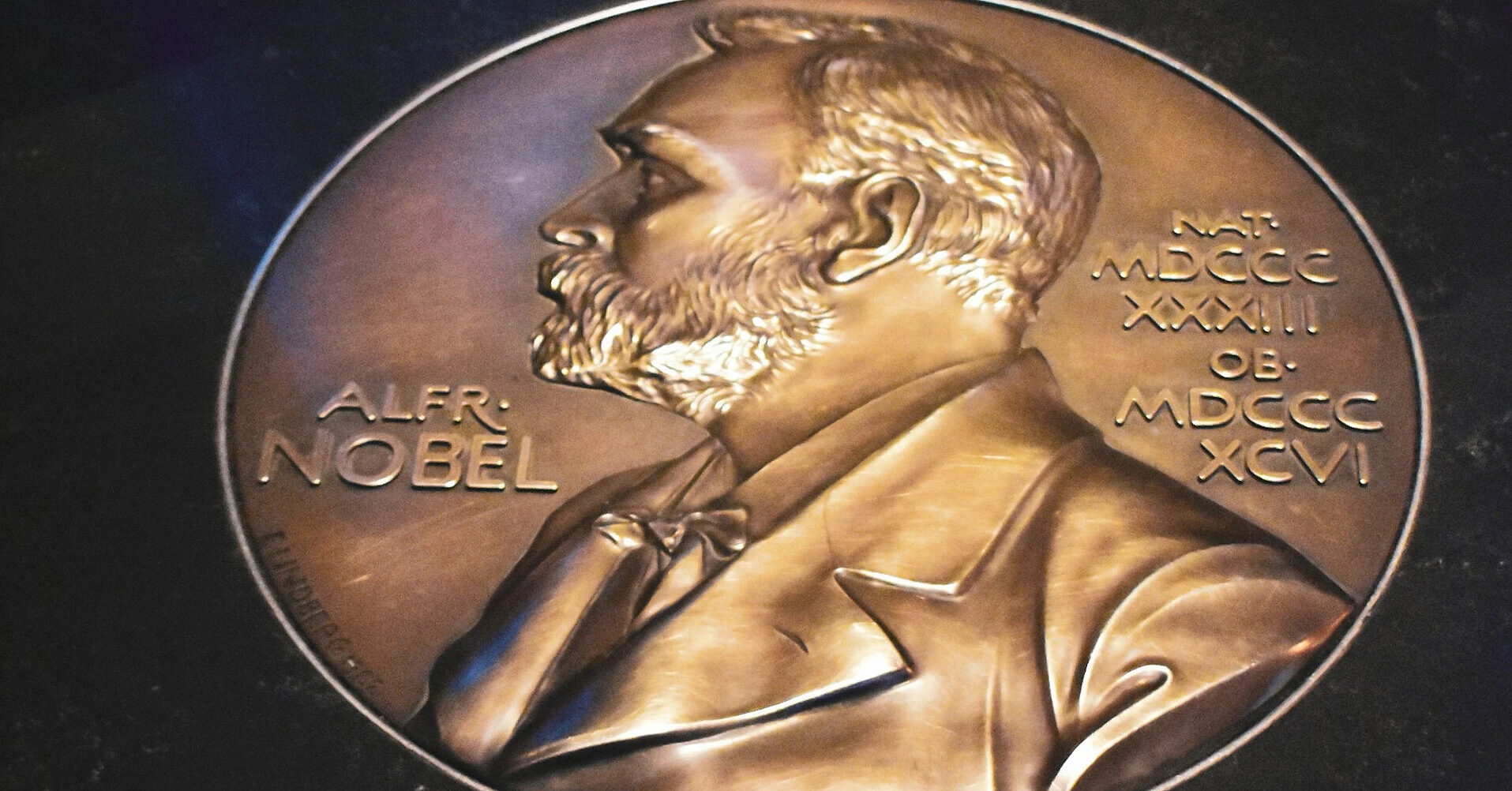
The laureates of the 2026 Nobel Prize in Economics are American scientists Robert Hall and Michael Woodford. The award was given for research that helped improve economic models and make central bank and government policy more effective during crises.
The Royal Swedish Academy of Sciences, which selects the laureates for the Sveriges Riksbank Prize in Economic Sciences in Memory of Alfred Nobel, announced this on October 12.
The official citation for the award is "for the microeconomic foundations of macroeconomic stabilization".
Robert Hall works at Stanford University, and Michael Woodford at Columbia University in New York. Both researchers have made significant contributions to the development of modern macroeconomic theory.
According to the Nobel Committee's decision, the laureates will share the prize of 12 million Swedish kronor - 6 million kronor each.
What research the prize was awarded for
The main achievement of the scientists is the creation of new macroeconomic models that help explain economic fluctuations and determine effective ways to respond to them.
Traditionally, governments and central banks try to mitigate economic downturns by lowering interest rates, increasing government spending, and other stimulus measures. Conversely, during periods of excessive economic growth, they may raise rates and limit budget expenditures to curb inflation.
However, the oil crises of the 1970s showed the limitations of the economic models of that time. Despite the application of traditional measures to support the economy, Western countries faced simultaneous price increases, high unemployment, and weak economic activity.
Hall and Woodford proposed a new approach to analyzing such processes. Instead of relying primarily on statistical relationships between inflation, production, and consumption, they focused on the economic behavior of households and businesses.
A key element of their research was the understanding that citizens and businesses make financial decisions not only based on current conditions but also with expectations about the future.
In particular, households consider future income when deciding how much money to spend or save. Businesses, in turn, take into account the expected economic situation, cost of credit, and demand prospects when making decisions about prices and production.
The results of this research showed that central bank announcements and forecasts can influence the economy even before actual changes in interest rates.
If citizens and businesses understand the future intentions of the regulator, they may adjust their behavior in advance. This allows central banks to more effectively curb inflation or support economic activity.
Laureates' work used in modern economic policy
According to the Royal Swedish Academy of Sciences, models developed based on Hall and Woodford's research have become important tools for macroeconomic analysis for central banks and governments in various countries.
John Hassler, chair of the Committee for the Prize in Economic Sciences, noted that the laureates' work created a solid theoretical foundation for models used in responding to economic shocks.
In particular, they help assess the consequences of energy crises, changes in consumer demand, and other factors that can disrupt economic stability.
Using such models allows for better determination not only of necessary government policy measures, but also of their timing.
What is known about the laureates
Robert E. Hall was born in 1943 in Palo Alto, California. He earned his Ph.D. from the Massachusetts Institute of Technology in 1967. He is now a professor at Stanford University. His research interests include business cycles, consumer behavior, employment, and macroeconomic policy.
Michael Woodford was born in 1955 in Chicopee, Massachusetts. He earned his Ph.D. from the Massachusetts Institute of Technology in 1983. He is a professor at Columbia University, specializing in monetary policy, inflation, and economic expectations.
As a reminder, the Prize in Economic Sciences was established by Sweden's central bank in 1968 on the occasion of its 300th anniversary. It was first awarded in 1969. Unlike the five original Nobel Prizes, it was not stipulated in Alfred Nobel's will, but is awarded according to similar principles.
In 2025, the award was given to Joel Mokyr, Philippe Aghion, and Peter Howitt for research on economic growth driven by technological progress and innovation.
Sources: Royal Swedish Academy of Sciences, Tagesschau, Deutsche Welle