

Zelensky signs law on national minority rights after agreements with Hungary
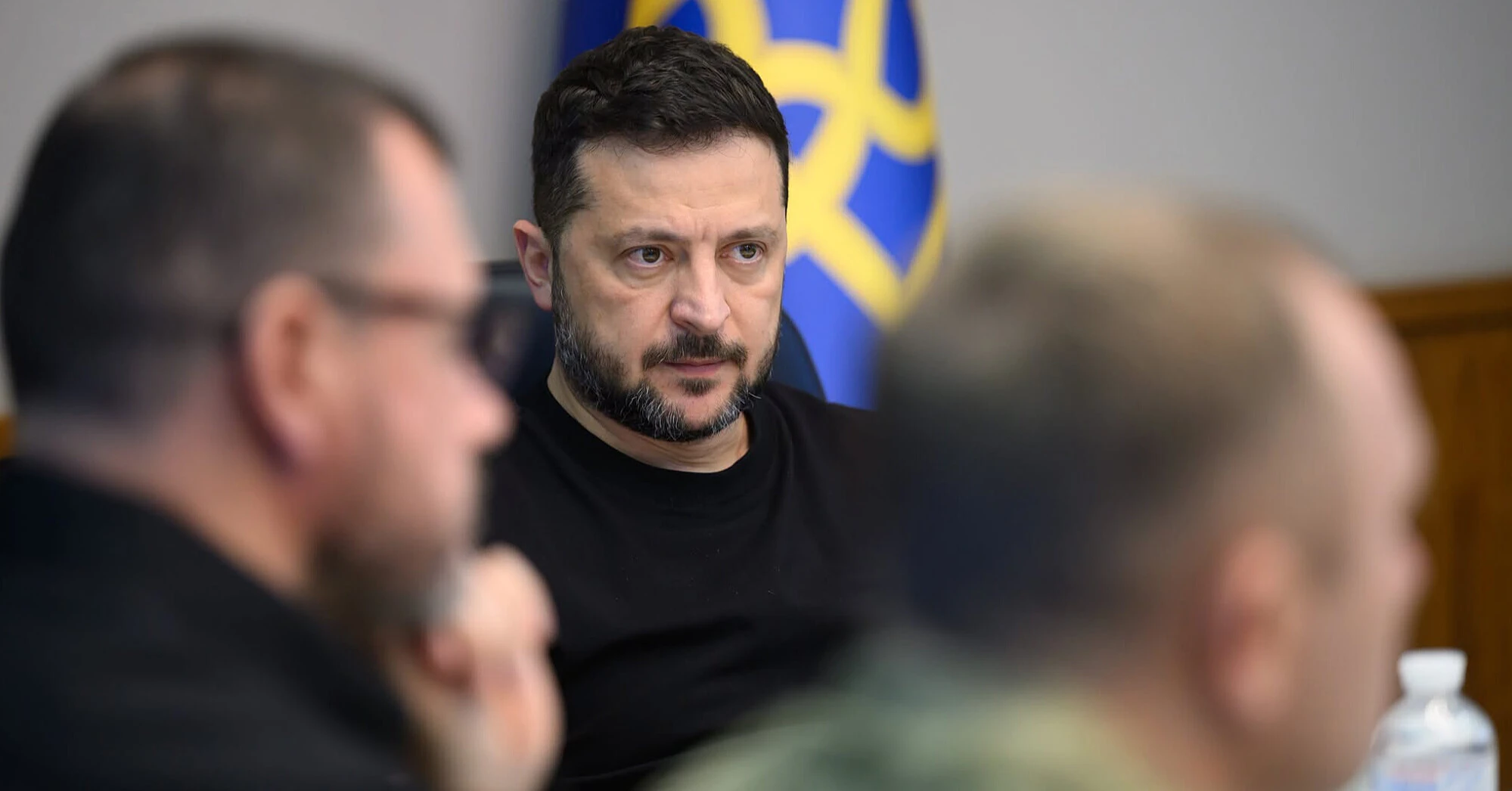
President of Ukraine Volodymyr Zelensky on Monday, October 12, signed a law expanding the educational rights of national minorities and indigenous peoples of Ukraine. The adoption of the document was one of Hungary's key conditions for agreeing to open two new negotiating clusters in Ukraine's EU accession process.
This was reported by the press service of the Verkhovna Rada of Ukraine. According to official information, the parliament has already received law No. 5008-IX signed by the president, which was previously registered as draft law No. 16119.
The document guarantees children from national minorities and indigenous peoples of Ukraine the right to receive education in their native language alongside the state language. The relevant provisions apply to languages of national minorities that are official languages of the European Union.
The law also provides additional guarantees for preserving the linguistic and cultural identity of national communities, while reinforcing the role of the Ukrainian language in the education system.
What changes does the law provide
The new provisions amend legislation on education, the functioning of the Ukrainian language as the state language, and full general secondary education.
In particular, the document provides:
- Education in the native language. Children from national minorities and indigenous peoples will be able to receive education in the respective language alongside Ukrainian.
- Special status for schools. An educational institution will be able to obtain the status of a national minority or indigenous people school if more than half of the students are taught in the respective language.
- Protection of educational rights. In the event of reorganization or closure of a school, opportunities must be provided for continuing education in the language of the respective national community.
- Consideration of cultural specifics. Educational programs will be able to take into account the national history, culture, and traditions of the respective communities.
- Changes in assessment. For certain categories of graduates, the possibility of receiving translated external assessment tasks is provided, while maintaining mandatory assessment of knowledge of the Ukrainian language.
According to the Ministry of Education and Science, the special provisions on the status of educational institutions may primarily affect schools in Zakarpattia, Chernivtsi, Odesa, and Lviv regions.
At the same time, the law does not abolish the mandatory study of the state language. Its task is to ensure a combination of proficiency in Ukrainian while preserving the linguistic and cultural identity of national minorities.
Hungary agrees to advance negotiations with Ukraine
The signing of the law was the final stage in fulfilling one of the agreements between Kyiv and Budapest reached after lengthy consultations on the rights of the Hungarian national minority in Ukraine.
Hungary had for several months been blocking the advancement of negotiations on Ukraine's EU accession in two areas:
- Cluster 2 "Internal Market" — includes issues of free movement of goods, services, capital, and workers, as well as internal market regulation.
- Cluster 3 "Competitiveness and Inclusive Growth" — covers economic policy, taxation, education, employment, and other areas.
As early as October 7, it became known that Hungary had agreed to unblock further procedural advancement of Ukraine on these clusters. However, Budapest linked the final decision to amendments to Ukrainian legislation on education.
On October 12, the Verkhovna Rada adopted the relevant draft law in the first reading and as a whole. 266 people's deputies voted for the final decision.
After the vote, the document was promptly signed by the Chairman of the Verkhovna Rada Ruslan Stefanchuk and sent to the president. On the same day, Zelensky signed it.
Hungary welcomes Ukraine's decision
Hungarian Foreign Minister Anita Orbán positively assessed the adoption by the Ukrainian parliament of the law on educational rights of national minorities.
She made the relevant statement after a meeting with Ukrainian Foreign Minister Andrii Sybiha in Luxembourg.
According to the head of the Hungarian Foreign Ministry, the decision of the Ukrainian parliament was the result of months of joint work and constructive dialogue between the two countries.
Sybiha also reported that the parties discussed the most pressing issues of the bilateral agenda and agreed on further steps toward Ukraine's European integration.
New negotiating clusters may open on October 13
The signing of the law opens the possibility for the next stage of Ukraine's negotiations with the European Union.
According to "European Pravda", on October 12 the Committee of Permanent Representatives of the EU member states (Coreper) plans to agree on joint negotiating positions on the two clusters.
After that, on October 13, an intergovernmental conference Ukraine — EU may take place, at which clusters 2 and 3 will be officially opened.
European Commissioner for Enlargement Marta Kos welcomed the decision of the Verkhovna Rada and confirmed the EU's intention to open two new negotiating areas as early as Tuesday.
According to her, Brussels expects to continue advancing Ukraine's membership in the European Union despite the ongoing Russian aggression.
Thus, Zelensky's signing of the law removes one of the key obstacles to the further negotiating process. However, by itself it does not yet mean the official opening of the clusters — a corresponding decision at the level of the European Union is required for that.
Based on materials from: Verkhovna Rada of Ukraine, law card No. 5008-IX, Verkhovna Rada press service, European Pravda, statement by the Hungarian Foreign Minister.