

Zelenskyy stated the absence of partner warning before strike on Kyiv amid US threats to stop intelligence
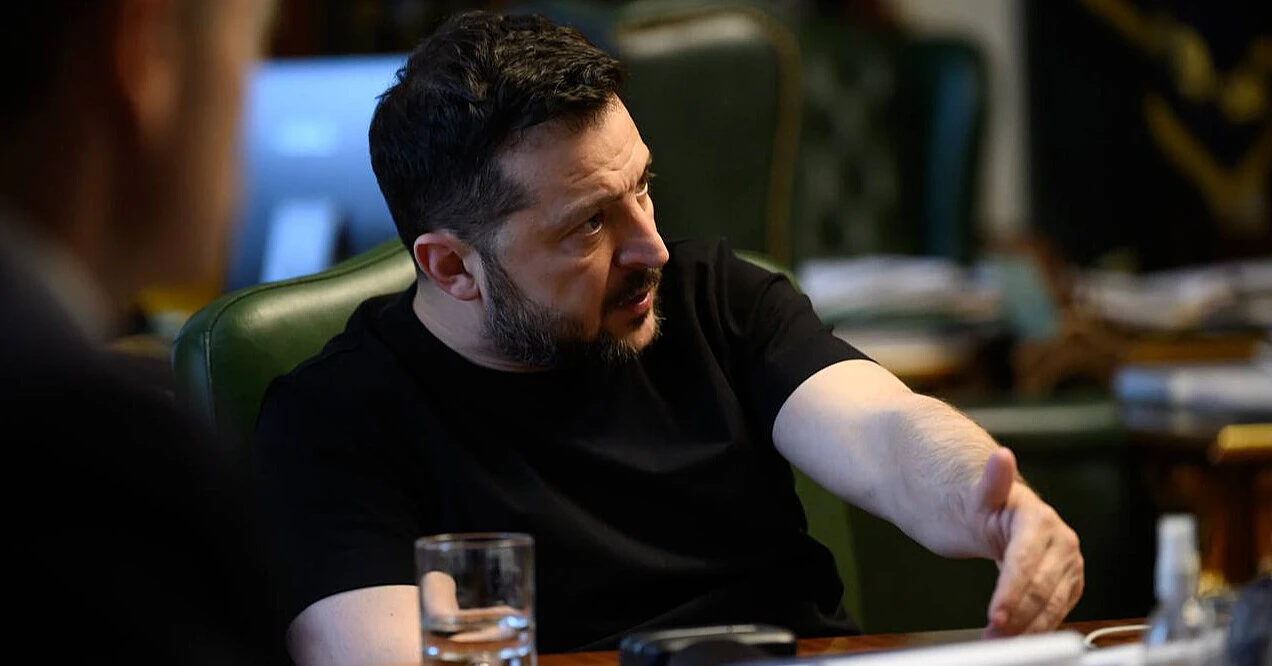
Ukraine did not receive advance warning from international partners about the launch of Russian ballistic missiles that attacked Kyiv on the evening of October 12.
President Volodymyr Zelenskyy called the transmission of such intelligence critical for saving lives. The incident occurred amid reports of threats from the Donald Trump administration to stop intelligence support for Ukraine over strikes on Russian oil refineries.
Zelenskyy reported the absence of warning on October 13, commenting on the consequences of the latest Russian shelling.
"Regarding this strike, unfortunately, there was no warning from partners", the president said, specifying that five ballistic missiles hit civilian infrastructure in the capital.
According to Zelenskyy, information about Russian ballistic missile launches is one of the most important elements of population defense. Receiving such data in advance allows people to be warned about the danger and increases time to go to shelters.
At the same time, the president did not state that the US has already stopped providing intelligence to Ukraine and did not name a specific reason for the absence of warning.
Explosions in Kyiv occurred even before the air-raid alarm
On the evening of October 12, reports of explosions in the capital began arriving from local Telegram channels even before the early notification of the population about the missile danger. The air-raid alarm sounded already during the attack.
Later, the Air Force of the Armed Forces of Ukraine reported that around 10:10 PM, Russian troops struck several districts of Kyiv. In the first report, the military preliminarily estimated the number of ballistic missiles at six.
Ballistic targets were detected by Ukrainian radar only directly during the attack. Information about missile launches from Russian territory did not arrive in time.
In the morning summary of October 13, the Air Force clarified that Russian troops used five "Iskander-M"/S-400 ballistic missiles from the Bryansk region of the Russian Federation.
Yuriy Ihnat, spokesperson for the Air Force, confirmed in the telethon that this time the alarm sounded during the missile strike.
He explained that Ukraine receives various types of intelligence from partners, including satellite data on the activity of Russian aviation, ships, and ballistic missile launches. Such information is shared not only by the USA but also by other NATO countries.
At the same time, according to Ihnat, situations where warnings about launches are delayed or do not come at all have happened before. Ukrainian specialists together with partners must find out the reason for the last case.
US threatened to stop intelligence support for Ukraine
The absence of warning about ballistic strike drew particular attention due to the aggravation of relations between Kyiv and Washington.
As previously reported by "Cursus Ukraine", on October 12, CNN, citing two European officials, wrote that the Trump administration warned Ukraine and allies about the possible cessation of US intelligence sharing.
According to the TV channel, Washington also threatened to stop purchases of American weapons for Ukraine through the PURL mechanism if Kyiv continues strikes on Russian energy facilities.
Relevant warnings were passed by American representatives to Ukrainian and European officials during the weekend. According to CNN, the State Department and the Pentagon were involved in the negotiations.
American intelligence is particularly important for protecting Ukraine from ballistic missiles. It helps to determine launch areas, possible flight directions, and time of threat approach.
Such information is especially important because of the high speed of ballistic missiles, as only a few minutes may remain between launch and possible impact.
At the same time, the very fact of the absence of warning during the attack on Kyiv does not prove that the US fulfilled its threat and stopped sharing intelligence. This could be related to the specifics of detecting a particular type of missile or other technical circumstances that specialists are currently establishing.
As of the moment of preparation of the material, there is no official confirmation of complete or partial cessation of American intelligence support for Ukraine.
Moreover, on October 12, a NATO representative told CNN that American weapons supplies under the PURL program are continuing.
Ukraine stopped strikes on Russian refineries, but Russia continued attacks
In his address on October 13, Zelenskyy also commented on the situation around the so-called energy ceasefire, previously announced by US President Donald Trump.
According to the Ukrainian president, for two days after the American announcement, Ukraine did not strike Russian oil refineries and other energy facilities.
However, Russia, as Zelenskyy emphasized, did not stop attacks on Ukrainian infrastructure.
During this period, Russian troops attacked 19 regions of Ukraine, including strikes on energy and critical infrastructure facilities.
The president stated that Ukraine is ready for mutual steps to reduce the intensity of hostilities, but they must be mirror-like.
He also warned that limiting assistance to Ukraine and complicating defense against ballistic missiles will not contribute to achieving peace.
"Direct or indirect support for Russia, delaying assistance to Ukraine, and complicating the defense of life from ballistics - that is definitely not going to work for peace", Zelenskyy stressed.
Thus, after the Russian strike on Kyiv, the issue of maintaining intelligence support for Ukraine gained particular urgency. Ukrainian authorities confirmed the absence of a specific warning from partners, but it is currently unknown whether this is a one-off failure in information transmission or a change in the volume of international intelligence assistance.
Based on materials from: Volodymyr Zelenskyy, Air Force of AFU, CNN