

The Kremlin stated the absence of agreed terms of the "energy ceasefire" after strikes on Ukrainian thermal power plants
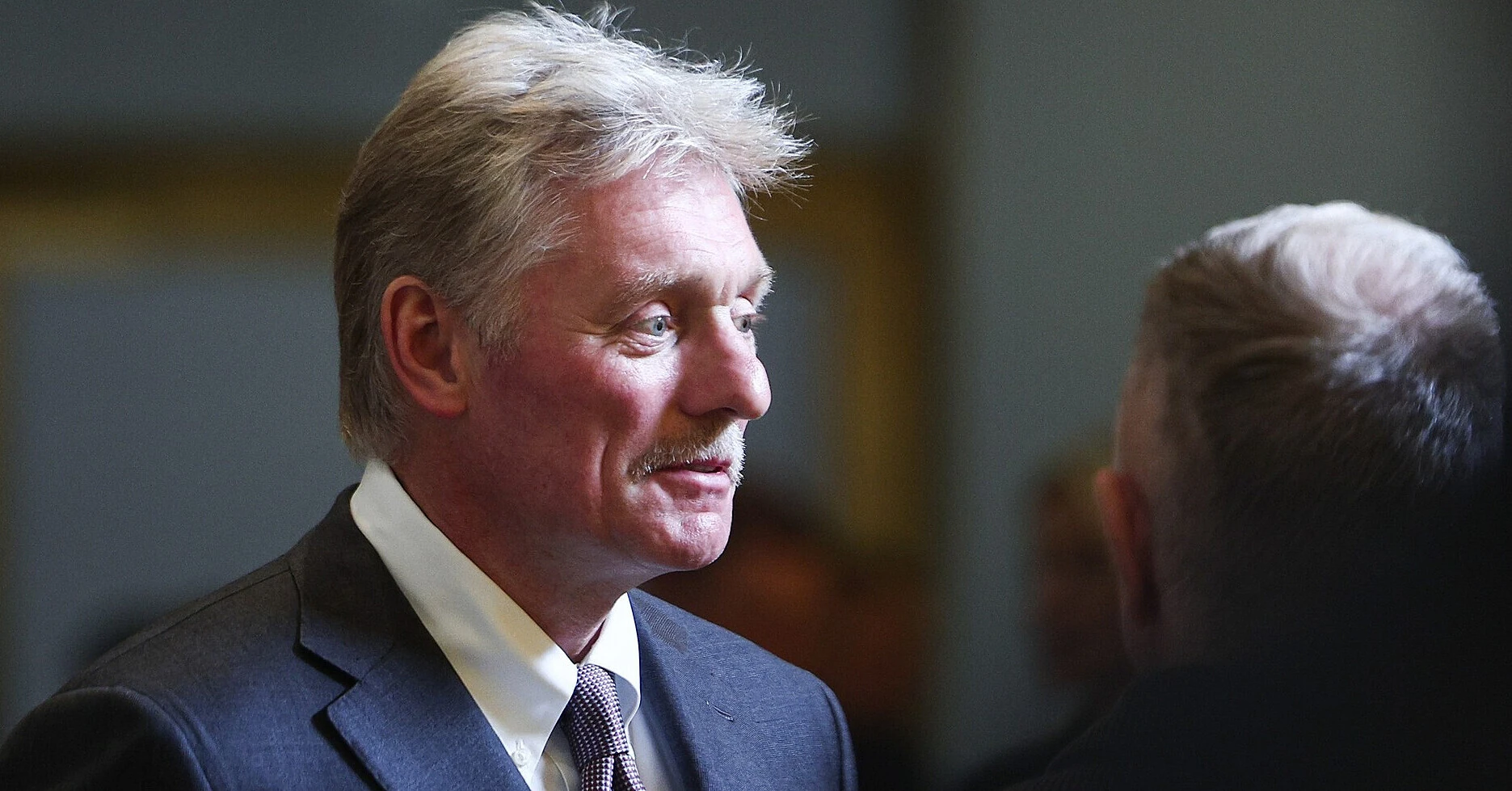
The Kremlin stated that the terms of the "energy ceasefire" announced by U.S. President Donald Trump on October 11 have still not been specified. This is how Moscow explains the lack of grounds to consider new Russian strikes on Ukrainian energy facilities a violation of the agreements. The statement came after a massive RF attack on power plants in Kyiv, Kyiv and Kharkiv regions.
On October 14, Russian presidential press secretary Dmitry Peskov made this statement while answering journalists' questions about the continuation of strikes on Ukrainian energy facilities.
The Kremlin representative was asked whether the reports of the Russian Defense Ministry about hitting Ukrainian power plants mean that Russia is not satisfied with the ceasefire proposed by Trump.
In response, Peskov questioned the existence of agreed parameters of a possible agreement.
"What are the outlined limits of the energy ceasefire, what does it mean? Has it been specified?", - he asked journalists.
After a negative answer, the Kremlin spokesman stated: "You are absolutely right. Therefore, work in this direction continues".
Thus, Moscow has not confirmed that it has taken on specific commitments to stop attacks on Ukrainian power plants and energy networks. At the same time, the Kremlin claims that contacts regarding a possible agreement are continuing.
Russia acknowledged massive strikes on Ukrainian energy sector
On the morning of October 14, the Russian Defense Ministry reported a massive strike on energy and communication infrastructure facilities in Ukraine.
The Russian agency stated attacks on Darnytska TPP-4, Kyiv TPP-5 and TPP-6, Trypilska TPP, Kharkiv TPP-5, Zmiivska TPP, and a number of other facilities.
This is a list of targets according to the claims of the Russian Defense Ministry. Ukrainian authorities did not confirm all the results of hits claimed by Moscow.
At the same time, Prime Minister of Ukraine Serhiy Koretskyi confirmed that during the attack all three city thermal power plants of Kyiv were hit. In addition, Russian troops struck critically important facilities in Kyiv region that provide electricity to the capital and central regions of the country.
According to President Volodymyr Zelenskyy, on the night of October 14, Russia used 39 ballistic missiles and more than 120 attack drones and loitering munitions.
As a result of the attack, 26 electricity facilities and four oil and gas infrastructure facilities were damaged.
As of the morning, about 600,000 Ukrainians remained without power. The President warned that the scale of outages may increase.
After the strikes, Kyiv introduced emergency power outages in Darnytskyi, Dniprovskyi, Pecherskyi, Solomianskyi and part of Holosiivskyi districts. Regular outage schedules were temporarily suspended there.
Trump announced ceasefire, but Moscow did not confirm it
On October 11, Donald Trump stated that an agreement on an immediate cessation of strikes on energy facilities had supposedly been reached between Ukraine and Russia.
The American President stressed that both sides agreed to a ceasefire and called on them not to violate the agreement.
However, at that moment neither Kyiv nor Moscow confirmed the existence of a finally agreed regime for halting strikes.
Volodymyr Zelenskyy said that Trump's announcement came as a surprise to him. At the same time, he expressed Ukraine's readiness to adhere to a mutual energy ceasefire provided Russia makes corresponding commitments.
According to Axios, the White House initially considered a much narrower agreement - a cessation of mutual strikes on oil refineries.
An American official explained to the publication that after halting attacks on refineries, the parties could move to a broader agreement that would include power plants and energy networks.
Such a proposal creates unequal conditions for the sides. Russia has a large network of oil refineries that have been hit by Ukrainian strikes, while Ukraine has only one major refinery in Kremenchuk, which has been repeatedly attacked by Russian forces and is not operating at full capacity.
The Ukrainian side insists that the main priority should be protecting power plants and energy networks on which electricity and heat supply for the population depend.
Zelenskyy called the strikes a demonstration of disrespect for the U.S.
After the massive attack on October 14, Volodymyr Zelenskyy stated that Russia deliberately struck exactly the energy infrastructure for which the U.S. President had proposed a ceasefire.
In the opinion of the Ukrainian President, the scale of the shelling indicates Moscow's unwillingness to de-escalate.
Zelenskyy called the Russian attack a demonstration of unprecedented disrespect for America and called on Washington to react, including by strengthening sanctions and supplying additional missiles for Patriot systems.
At the same time, Peskov's statement indicates that as of October 14, Moscow continues to speak about the necessity of agreeing ceasefire terms, without taking public commitments to stop strikes on Ukrainian energy sector.
So, the "energy ceasefire" announced by Trump has not yet turned into an agreement confirmed by both sides with a defined list of protected facilities and a mechanism for monitoring its implementation.
Based on materials from: Axios, Volodymyr Zelenskyy