

Media reveal payment scheme for Schröder's work in Russia
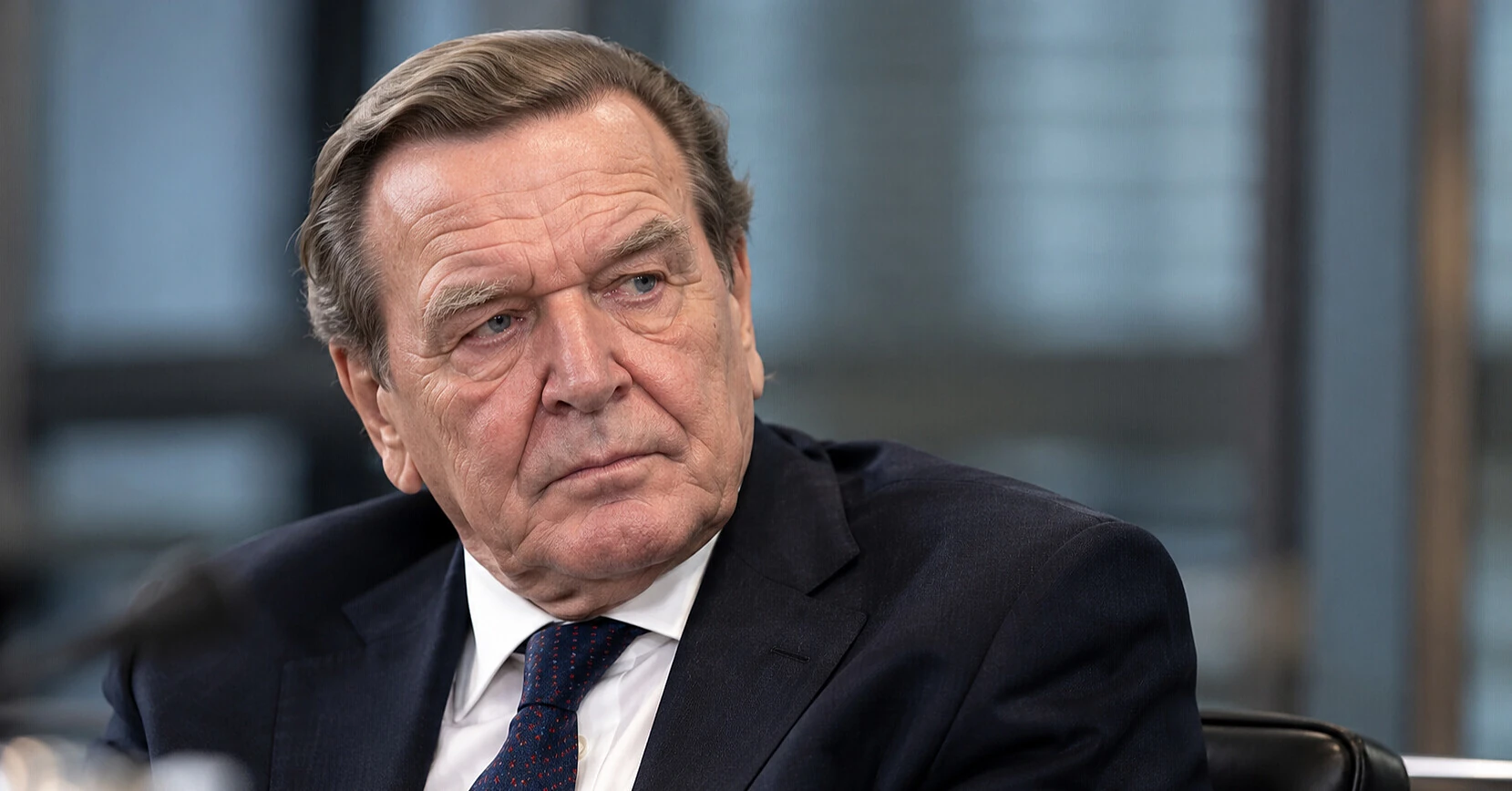
Former German Chancellor Gerhard Schröder, who holds a position on the supervisory board of the Russian supermarket chain Hyperglobus, receives remuneration through a German company. This scheme avoids direct money transfers from Russia, which are complicated by current sanctions restrictions.
This was reported on October 15 by the German magazine Der Spiegel based on its own investigation.
According to journalists, 82-year-old Schröder signed a consulting agreement with TMB Holding, registered in the city of St. Wendel in the federal state of Saarland. The holding is controlled by managers of the German family retail business Globus.
It is through this agreement that the former chancellor allegedly receives remuneration for his activities related to the Russian retail chain. At the same time, direct payments from Hyperglobus do not reach him.
In 2025, TMB Holding took control of the Russian business of Hyperglobus, which was previously part of the German Globus Holding. The chain currently has 23 supermarkets in Russia.
Representatives of TMB Holding confirmed to journalists the existence of a consulting agreement with Schröder, but refused to disclose details of his work on the supervisory board of the Russian company.
A person familiar with the circumstances of the agreement told Der Spiegel that the payment mechanism passed legal review for compliance with sanctions legislation. According to this person, the agreement does not violate restrictions of the EU and the US.
As justification for the cooperation, the source cited Schröder's experience in advising family companies, including strategic issues of operations in foreign markets and in Russia.
The former chancellor himself did not respond to journalists' request about his activities and compliance with sanctions restrictions. The amount of his current remuneration is not disclosed.
After the start of Russia's full-scale invasion of Ukraine, the EU and the US significantly expanded financial restrictions against Russia. As a result, European banks avoid processing payments related to activities in Russian companies due to sanctions risks.
Schröder has already faced such restrictions. In May 2025, the German bank Sparkasse Hannover blocked incoming payments to him from the operator of the Nord Stream 2 gas pipeline.
For chairing the shareholders' committee of Nord Stream 2 AG, the former chancellor reportedly received about 400,000 euros annually. The bank refused to process the payments because of the project's links to Russian capital and returned the transferred funds to the Luxembourg branch of Gazprombank.
The current arrangement with TMB Holding allows payments to be processed through a German company. However, the journalists did not present an independent opinion from regulatory authorities on the agreement's compliance with sanctions legislation.
The new information emerged shortly after Schröder's trip to Moscow. In early October, he visited a Hyperglobus supermarket and then, together with his wife, attended the celebration of Russian President Vladimir Putin's 74th birthday.
Gerhard Schröder headed the German government from 1998 to 2005. After leaving office, he held leadership positions in companies related to the Russian energy sector, including Nord Stream and Rosneft structures. His business relations with Russia have repeatedly been the subject of criticism in Germany after the start of the full-scale war against Ukraine.
Based on materials from: Der Spiegel, T-online.