

The RF General Staff announced the start of massive strikes on Ukraine's energy sector
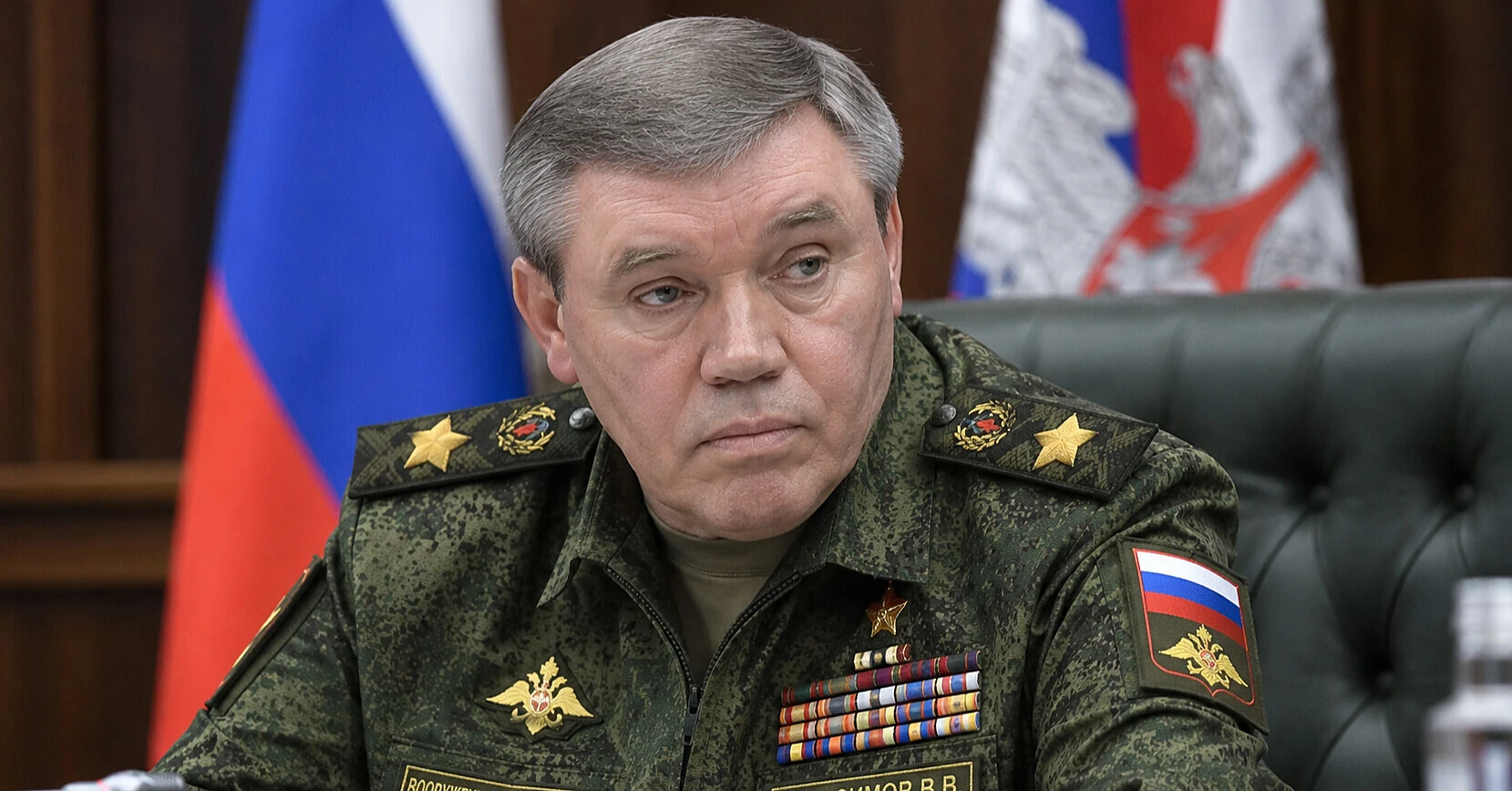
Chief of the General Staff of the Russian Armed Forces Valery Gerasimov stated that the Russian army has begun to carry out massive strikes on Ukraine's energy infrastructure. According to him, the military command has pre-determined the targets for attacks and the means that will be used to hit them.
Gerasimov announced this on October 16 during a report to Russian President Vladimir Putin. His statement was distributed by the Russian state news agency TASS.
“The Russian Armed Forces have begun to carry out massive strikes on energy facilities of Ukraine,” — the Chief of the Russian General Staff stated.
Gerasimov clarified that the Russian command has formed a list of energy facilities and determined the means for striking them.
Thus, the Russian military leadership has publicly confirmed that attacks on Ukraine's energy system are being conducted purposefully and are part of the plans of the RF General Staff.
At the same time, Gerasimov did not specify which specific facilities are included in the list, how long the strike campaign will last, and what scale of destruction the Russian side expects.
Russia continues to attack Ukraine's energy system
The statement was made against the backdrop of large-scale attacks on Ukrainian energy infrastructure that have continued throughout October and intensified in recent days.
According to the Ministry of Energy of Ukraine, on October 16, Russian forces have been striking energy facilities since early morning in several waves using drones.
Energy facilities in Kyiv, Kyiv, Kharkiv, Rivne, Volyn and Odesa regions came under attack. Damage to equipment led to emergency power outages.
The ministry emphasized that the situation remains most difficult in the frontline and border regions with Russia. There, strikes on energy infrastructure occur almost daily, which significantly complicates the restoration of damaged equipment.
As of the second half of the day on October 16, energy workers managed to restore electricity supply to more than a million consumers. However, emergency restoration work continued, as repeated attacks and prolonged air raid alerts prevented specialists from working unhindered at damaged sites.
Hourly outage schedules remain in effect in certain regions of Ukraine. Power consumption restrictions are also being introduced for enterprises and industry, which are necessary to stabilize the operation of the energy system.
Mass blackouts in Lutsk and Rivne
One of the most affected regions was Volyn Oblast. After Russian strikes on the night of October 16, a significant part of consumers was left without electricity.
According to the Volyn Regional Military Administration, in the morning of that Friday, about 370 thousand subscribers were without power. Large-scale power outages and problems with water supply occurred in Lutsk.
City utilities were forced to use backup power sources to ensure the operation of critical facilities.
Later, Russian drones attacked Volyn Oblast again. Civilian infrastructure was damaged in Kovel, including trucks located at a customs terminal.
Serious consequences of the strikes were also recorded in Rivne Oblast.
On the evening of October 16, Ukrenergo reported massive power outages in Rivne and surrounding areas following a Russian attack on high-voltage power networks.
Due to damage to energy infrastructure, normal electricity supply schemes to consumers were disrupted.
Energy workers began restoring electricity supply using reserve schemes. At the same time, the timeframe for complete elimination of the consequences of the attack was not specified.
Emergency outages were also introduced in Kyiv and Kyiv Oblast. In some districts of the capital, emergency power restrictions were applied without adhering to regular schedules.
Scale of the air attack on October 16
According to the information from the Air Forces of the Armed Forces of Ukraine, on the night of October 16, Russia used 149 various types of attack drones.
Among them were Shahed drones, “Gerbera” and imitation drones. According to Ukrainian military, 108 devices were jet-powered.
As of 09:30, air defense forces destroyed or suppressed 114 Russian drones, including 77 jet-powered ones.
At the same time, hits of 27 air attack weapons on 24 facilities or areas were recorded. Elsewhere, traces of falling downed drones were found in another 14 locations.
These data refer to the entire night attack, not exclusively to the strikes on energy infrastructure.
Russian attacks caused not only power outages but also damage to civilian facilities. In particular, a building of one of the lyceums in Rivne was hit.
Gerasimov's statement followed threats from Putin
The day before, on October 15, Vladimir Putin publicly commented on Russian strikes on Ukraine's energy facilities.
During his speech at the “Delovaya Rossiya” forum, he tried to present the attacks as a response to Ukrainian strikes on Russian oil refineries and other infrastructure.
Putin claimed that the Ukrainian side had allegedly first begun striking such facilities, and Russia began to respond.
At the same time, the Russian army has been attacking Ukraine's energy infrastructure since the beginning of the full-scale invasion in February 2022. These attacks have repeatedly led to massive power outages, disruptions in heat and water supplies.
Gerasimov's public statement is significant primarily because the Chief of the RF General Staff directly reported on a pre-formed list of energy targets.
This indicates the planned nature of current Russian attacks, rather than separate strikes on randomly chosen facilities.
Consequences for Ukraine before winter
Intensification of Russian attacks on the energy sector occurs on the eve of the winter period, when electricity consumption and the need for stable heat supply traditionally increase.
Damage to high-voltage power networks, generating capacity and distribution infrastructure can lead to outages even in localities that have not been shelled directly.
For businesses, this entails additional risks of production stoppage, disruption of logistics processes and increased costs for backup power supply.
For the population, the main consequences are interruptions in electricity, water supply and the operation of utilities. The situation can be especially difficult in localities where heating and water supply systems depend on electricity.
The Ministry of Energy notes that they continue to restore damaged equipment and take measures to stabilize the energy system. However, final restoration deadlines depend on the scale of destruction and the safety of repair works.
Sources: TASS, Ukrinform / Ministry of Energy of Ukraine, Ukrenergo, Air Forces of the Armed Forces of Ukraine, Ukrainska Pravda, Deutsche Welle.