

Space companies raised a record $20.8 billion in a quarter: why investors choose rockets and satellites
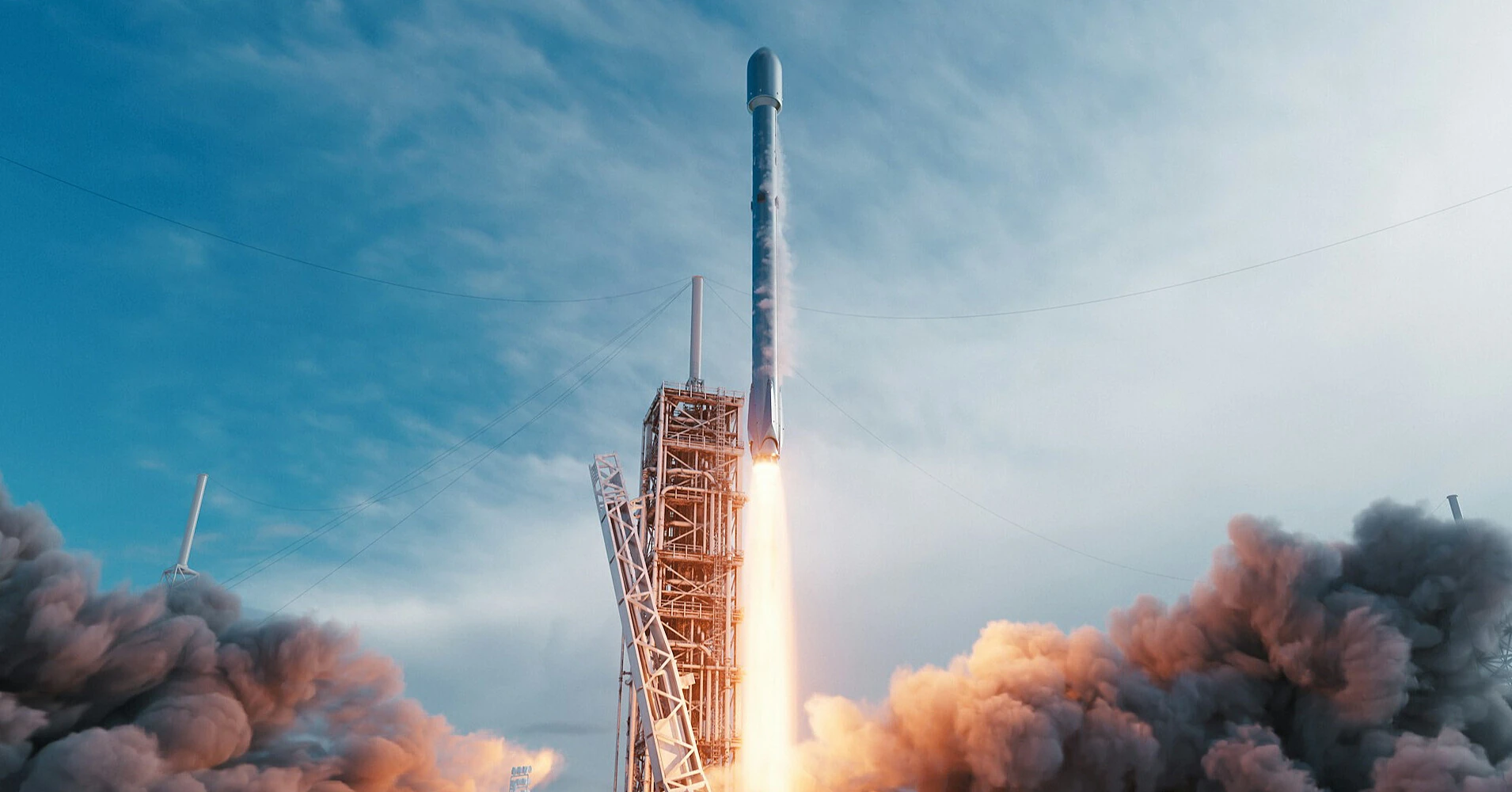
Investors poured a record $20.8 billion into space companies in just three months — almost three times more than the previous quarter. Almost half of that amount went to Jeff Bezos' Blue Origin. But even without its $10 billion deal, the industry set a historic maximum. At the same time, 78% of all money went to just ten largest investment rounds. Why is capital flowing so quickly into rockets, satellites and space infrastructure — and does this record mean that space business is finally becoming profitable?
These results are presented by investment company Seraphim in the SpaceTech Investment Tracker report for the third quarter of 2026.
From July to September, private space companies raised $20.8 billion compared to $7.4 billion in the second quarter. The number of investment deals increased from 140 to 216.
This refers to private financing of space industry companies according to Seraphim's methodology, and not to all global expenditures on space programs. State budgets and ordinary investments by business owners are not included in this amount.
The main conclusion of the study: investors are increasingly financing not only promising technologies, but also expensive infrastructure, without which mass use of space is impossible.
Blue Origin received $10 billion, but the record would have happened without it
The largest deal of the quarter was the financing of Blue Origin, the aerospace company founded by Jeff Bezos.
It raised $10 billion in the first financing round with participation of external investors. According to Seraphim, this is the largest private financing in the history of the space sector.
One company accounted for almost 48% of all investments for the quarter.
However, analysts emphasize that the record is not explained solely by this deal.
If Blue Origin's financing is excluded, the remaining companies still raised $10.8 billion. This is more than in any previous quarter during Seraphim's observations.
For comparison, the previous quarterly maximum for the entire industry was $8 billion and was set in early 2026.
Over the twelve months ending September, private financing of space companies reached $40.1 billion. A year earlier, the corresponding figure was $11.4 billion.
Thus, this is not only about one exceptional deal, but also about a noticeable expansion of investment activity.
Where the money goes: rockets, satellites and factories
The largest share of investments went to companies that provide access to space and create equipment necessary for that.
According to Seraphim, the Space Access segment raised $16.4 billion across 120 deals.
It includes manufacturers of rockets, satellites, components and other technical systems necessary for launch and operation of spacecraft.
Even without Blue Origin, this segment received $6.4 billion — its own quarterly record.
Another $4 billion went to companies developing technologies for operations directly in space: satellite communication systems, Earth observation and orbital services.
About $400 million went to enterprises that use data obtained from space for commercial services.
The difference is indicative: investors now prefer businesses that create and control key infrastructure.
Among the largest recipients of funding were American Hadrian, which raised $1.37 billion for development of industrial production, and Stoke Space, which received $1 billion for development of rocket systems.
Satellite manufacturer K2 Space raised $500 million, and German The Exploration Company — $450 million for development of space transportation technologies.
Such projects require huge initial investments. But if successfully developed, they can serve many clients — from satellite internet operators to government and defense organizations.
Why investors are willing to pay billions for new rockets
One of the main limitations of the space industry today is insufficient launch availability.
The number of companies wanting to send satellites into orbit is growing. They need systems for communication, navigation, Earth observation and data transmission.
But to put a satellite into orbit, a rocket, suitable payload capacity and a free slot in the launch schedule are needed.
According to Seraphim's estimate, delays and technical problems with several promising rocket systems limit the industry's available throughput capacity.
This especially affects small satellite operators, who have to wait for an opportunity to send their spacecraft along with other payloads.
Analysts forecast that launch capacity shortage may persist in 2027–2028. They do not expect significant improvement before 2029, when new rocket systems may transition to more regular commercial launches.
This is a forecast, not a guaranteed timeframe for solving the problem.
However, it explains the investment interest in Blue Origin, Stoke Space and other rocket developers.
Companies that can ensure reliable, frequent and cost-effective launches will be able to claim a significant share of the growing satellite services market.
At the same time, not only space enterprises will benefit from infrastructure development.
Satellite systems are already used for internet communications, navigation, weather forecasting, monitoring fires and tracking transportation routes.
The more accessible delivery of equipment to orbit becomes, the wider the potential capabilities of such services.
Defense orders and satellite communications increase interest in space
In addition to commercial demand, the desire of states to develop their own space infrastructure plays an important role.
Modern defense systems depend on satellite communications, navigation and territory observation.
States need stable information channels and independent access to space technologies. This creates additional demand for satellites, rockets and relevant production capacities.
The Seraphim report emphasizes that private capital is especially actively directed to infrastructure projects where commercial demand is complemented by needs of defense agencies and government customers.
At the same time, the record $20.8 billion does not mean that governments directly allocated this amount from budgets.
This is about funds from third-party investors. But prospects of government contracts can increase the attractiveness of space companies for private capital.
Financing is also supported by growing demand for satellite communications. Commercial and government customers are interested in more robust data transmission systems that can work independently of ground infrastructure.
As a result, the space industry is becoming more closely linked to telecommunications, industry, digital services and national security.
The US leads, China sets records, and Europe loses small deals
North America remains the largest hub for attracting space investments.
According to Seraphim, for the first nine months of 2026, the region accounted for about 70% of global private financing of the space sector.
However, China also set its own record.
In the third quarter, Chinese space companies raised $3.3 billion across 49 deals. This more than triples the country's previous quarterly maximum in terms of financing volume.
Chinese investors support not only rocket and satellite constellation developers, but also companies involved in orbital logistics, spacecraft servicing and computing technologies for space.
The situation in Europe looks contradictory.
In the twelve months to the end of September, European space companies raised $5.3 billion compared to $1.5 billion two years earlier.
However, the number of deals for the same period decreased from 169 to 133.
This means that the total financing is growing, but money is concentrating in fewer companies.
Especially noticeable is the decline in early-stage investments, when young enterprises are just starting to develop technologies.
Seraphim analysts note that European startups find it harder to raise initial capital, despite increased financing for the most developed players.
Unexpected paradox: record money, but most deals became smaller
Perhaps the most interesting conclusion of the report relates to the distribution of investments.
Total financing reached a record, the number of deals grew, and the largest companies received multi-billion sums.
However, the median size of an investment round fell from $14.9 million in the second quarter to $9.8 million in the third.
The median shows the size of the deal in the middle of an ordered list. Unlike the average, it is less dependent on individual giant investments.
That is, the typical financing round turned out to be smaller, despite the record total volume of investment.
Even more telling is the distribution of money among the largest recipients.
In the second quarter, the ten largest deals accounted for 57% of capital raised. In the third, their share grew to 78%.
This means that almost four out of every five investment dollars went to just ten largest rounds.
This indicates growing selectivity of investors.
Large sums are received primarily by companies that have already advanced in development, have a technological base and can demonstrate scaling prospects.
Early-stage projects find it much harder to compete for attention of large funds.
Thus, the space investment boom does not mean that money has become equally available to all industry participants.
Why did stocks of space companies fall amid record investments
An equally interesting situation developed in the stock market.
While private space companies raised record financing, shares of some already publicly traded enterprises fell noticeably.
According to the Seraphim report, securities of Planet Labs, AST SpaceMobile and Rocket Lab lost more than 30% of their value during the third quarter.
Analysts note a divergence between the high willingness of private investors to finance promising developments and the more cautious attitude of the stock market to current results of companies.
The reason lies in the specifics of space business.
Development of rockets, production of satellites and creation of orbital infrastructure require significant costs. At the same time, commercial return may appear only after several years.
A company can raise billions of dollars, but still not receive sustained profit for a long time.
Moreover, technical delays, failed tests and postponements of launches can significantly change financial plans.
Therefore, record investments show interest in the future of the industry, but do not prove that all recipients of financing will become successful.
What will happen with space investments next
Seraphim analysts do not expect that every subsequent quarter will be able to repeat the record of July–September.
Financing of Blue Origin and several other exceptionally large deals made the third quarter unusual even for the rapidly growing space sector.
Therefore, at the end of 2026, investment volume may be lower.
However, the main drivers of demand for space technologies remain: development of satellite internet, need for additional launch capacity, expansion of commercial orbital services and government orders.
All this is gradually changing the economic role of space.
Investors are financing not only experimental projects and ambitious ideas of exploring other planets. A significant portion of capital is directed to infrastructure necessary for operation of communications, navigation, industry and defense systems on Earth.
That is why the record $20.8 billion is not just a new financial milestone.
It shows how costly and at the same time in-demand space infrastructure is becoming.
However, the main question for investors now is not how much money companies can raise, but who will be able to turn multi-billion investments into regular launches, working satellite systems and a sustainable profitable business.
Based on materials: Seraphim SpaceTech Investment Tracker — report for Q3 2026, Seraphim — quarterly statistics of investments in space technologies.